
DARREL EALUM: Closing days of session will feature key legislation
GUEST EDITORIAL: Budget funding will finance important rural programs
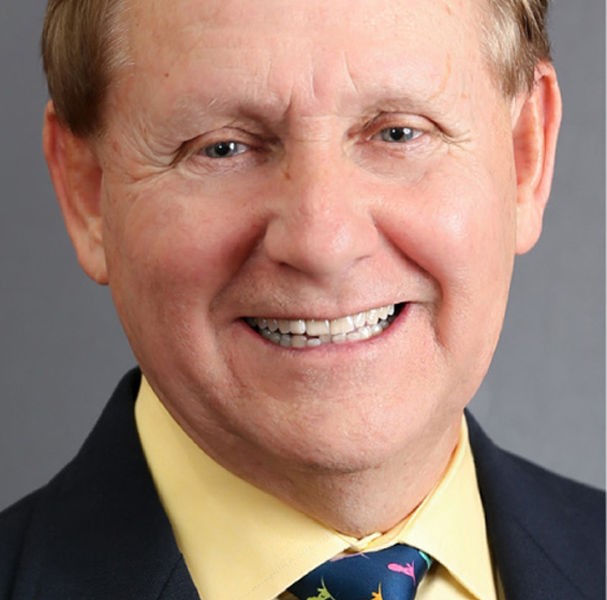
By Darrel Ealum
Dear Friends,
In the people’s House, we have now shifted to consider legislation passed across the hall in the Senate Chamber. Much of our work is now in committee, where we are deliberating their bills. The number of bills we are considering and passing daily has precipitously dropped since Crossover Day; however, the number will gradually increase to a crescendo on sine die, our 40th and last legislative day. We did pass a few very important pieces of legislation, including the Fiscal Year 2019 budget, arguably, the most important bill we will pass all session.
We in the General Assembly are constitutionally required to pass a balanced budget each year. In the House, we took a step toward fulfilling our constitutional obligation by initially passing House Bill 684, the FY 2019 budget. This year’s budget is $50.85 billion and will fund our state’s spending from July 1, 2018, to June 30, 2019. The FY 2019 budget was determined by a state revenue estimate of $26 billion, which is an increase of $1.03 billion, or 4.1 percent, over last year’s budget. The remaining budgeted funds come from federal revenue.
As I addressed in my previous column, the House Rural Development Council’s work during the summer and fall of 2017 has driven significant legislation this 2018 session. As a result of the RDC’s comprehensive study of the issues plaguing rural Georgia, the FY 2019 budget would allocate state funding toward a wide range of initiatives to assist our rural communities. Specific funding aimed at boosting economic development in rural Georgia includes funding for the Department of Agriculture’s Georgia Grown marketing program; a downtown development attorney to help Georgia’s small towns secure redevelopment grants; a deputy commissioner assigned specifically to represent rural Georgia, and the Center for Rural Prosperity and Innovations.
Our budget also includes state dollars for several key rural health programs, statewide residency recruitment fair for rural medical facilities, insurance premium assistance for physicians who practice in underserved counties with one or no physician, 10 regional Emergency Medical Services training positions to train EMS personnel in rural Georgia and the Rural Health Systems Innovation Center. Additionally, the FY 2019 budget includes appropriations that will target our special needs, such as funding for student soft skills training and character education development for rural Georgia’s lowest performing schools, a mobile audiology clinic to provide audiological care to our children in rural Georgia, and birth-to-5 literacy in rural Georgia. I am extremely proud we have prioritized state dollars to target revitalization in our rural communities.
Each year, education funding is one of the largest budget items, and this year is no exception with 55.9 percent of our budget allocated to education. First and foremost, the FY 2019 budget includes $119.5 million for K-12 enrollment growth and $361.7 million for our Teachers Retirement System. The budget also includes funding for two Advanced Placement exams, one STEM exam and one non-STEM exam for low-income students as well as dollars for the new Chief Turnaround Officer program that is already in place in three of our Dougherty County elementary schools.
Additionally, the state budget allots $1.6 million for a student mental health awareness training program, including response and intervention training for students in preschool through 12th grade. Furthermore, the budget includes $111 million for University System of Georgia enrollment growth, $5.5 million for the Technical College System of Georgia enrollment growth, $27.1 million for dual enrollment programs, and $65.3 million for almost 28,000 more HOPE and Zell Miller public scholarships.
Finally, and most importantly, we appropriated $8 million for school security grants to improve security in Georgia schools, which was added in light of the deadly school shootings in Florida. Hopefully, our Senate counterparts will join us in this enormously needed endeavor.
In addition to education funding, health care costs also made up a significant portion of our FY 2019 budget. We included $16.9 million for a 4.3 percent provider rate increase for nursing homes and almost $1 million for increased background checks for long-term care facility owners and employees. Moreover, our budget allocates dollars for essential autism services, such as funding for a program coordinator position and to develop capacity in the Department of Community Health and the Department of Public Health to provide behavioral health services to autistic children under the age of 21.In addition, our budget includes $568,057 towards the Marcus Autism Center to cover the cost of treating autistic children with the greatest needs.
Lastly, Georgia has the highest rate of maternal mortality in the country, and our FY 2019 budget provides the Department of Public Health $2 million to address this pressing issue.
Darrel
Rep. Darrel Ealum represents the citizens of District 153, which includes portions of Dougherty County. He was elected to the House of Representatives in 2014 and currently serves on the Banks and Banking, Defense & Veterans Affairs, Human Relations & Aging, and State Properties committees. He is also a member of the Military Affairs working group.
Related Articles
TARA FLETCHER: Women are often trapped by abusive partners
Today, and every day after, in the United States, three women will be murdered by their significant other.
CARLTON FLETCHER: Great — and maybe not so great — expectations
During his heyday, mostly in the ‘80s and ‘90s, Lewis Grizzard was one of, if not the, most celebrated columnists in America.
MICHAEL FERGUSON II: A family reunion, an AR-15, and the truth America must face
A family reunion should never become a battlefield.
