
KELLY WESSELMAN: Mental health recovery is possible: A personal journey
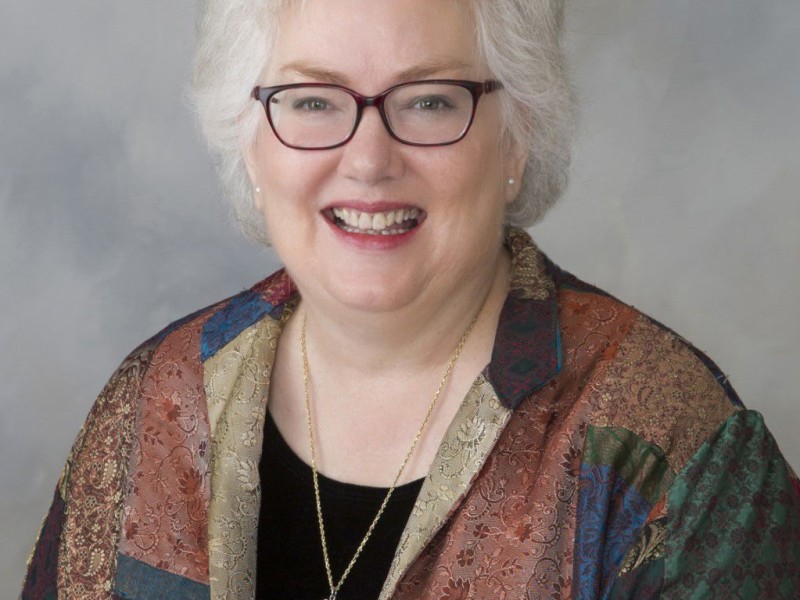
By Kelly Wesselman
[email protected]
I dreamt I was going to die today. A chubby angel with wire-rimmed glasses greeted me this morning with the news as I was preparing to write an investigative story on the mental health crisis in the United States.
Change of plans. Her revelation shocked me, and I was unable to figure out what to do next. Then the angel asked me how I wanted to spend what time I had left on Earth. I paused. Somehow it was plain to me that I needed to tell my story, especially as it relates to my experiences as a person with mental illness.
Echoing the words of TED Talk superstar Brene Brown, I hope that my story of how I am surviving a serious mental illness can become someone else’s survival guide.
First, I am a person who has manic depression. Some folks call it bipolar disorder. I was first diagnosed my junior year of college at The University of Texas at Austin, when all the pressures of academics, dating and getting a solid career path came crashing down on me. It seemed a lost cause that I could ever have a fulfilling life.
I graduated in 1985 with an honors degree in history. My work history is unimpressive, but I got experience as a freelance writer. In fact, I met my husband of 32 years at a daily newspaper. We competed for stories on the police beat. I worked the weekend shift, but he would show up in the newsroom if he heard about a sizzling news story coming over his police scanner.
My one and only child, a red-headed boy with a laugh like a chipmunk, was born in 1991. By April Fool’s Day 1995, we left our roots in Texas and moved to Albany.
It took a lot of hits and misses, but eventually I got the best job I ever had. Having a job has always given my life purpose, and it was essential to support my family. In 1997 I became manager of the first peer-support center of Albany Area Community Service Board (now Aspire).
Artesian Activity Center, located on South Slappey in a now-abandoned lot, was a program designed to support people with mental health issues and individuals with intellectual developmental concerns.
I was struggling to develop leadership skills, but almost immediately members led the way. They created a quilt of individual hand-made squares that they sewed into a whole spread of many colors and designs. Hanging in the front hallway, it became the unofficial symbol of Artesian.
Popular events were a weekly yoga class, a pottery wheel that produced many hits and misses (some unusual creations came out of that kiln) and even ballroom dancing. Double Trouble Recovery Group — designed for people facing addiction and mental illness — was one of the vital support groups Artesian offered.
I had many personal successes. I was Region 4 representative to Georgia Mental Health Consumer Network. In 2000 I won a scholarship to “Alternatives,” a mental health conference National Empowerment Center hosted in Nashville.
My job required that I work weekends and all major holidays. Fourth of July picnics around Artesian’s Weber grill were fun, but where was my family? My staff and I cooked Thanksgiving dinner for our members and the residents of Touchstone 28-day program. A meaningful outreach, but when I got home I was too exhausted to celebrate my own family’s Thanksgiving.
Eventually my spirit was broken. I had flung myself into a job, losing all sense of self-care and neglecting my family.
I crashed into full-blown mania. It was painful to admit I could not return to that job. I went through countless hospitalizations at Phoebe Putney Memorial Hospital and Emory University Hospital in Atlanta. At some point, I requested copies of the records from my Phoebe hospitalizations.
It took several years and a humiliating interrogation in front of a judge before I was eligible for social security disability. It was like the last nail in my coffin when my therapist at the time said I could never work again and should never respond to the Social Security Administration with the words, “I’m fine.”
The saving grace in this dark period was a weekly support group with Phyllis Jeter, a Phoebe therapist, who made a big difference for a lot of people suffering from a lot of pain.
Somehow my success rate with Albany psychiatrists, public and private, was poor. A fruitful relationship with a private doctor ended badly, and he fired me. Another psychiatrist in the public sector was nearing retirement and he had no patience for me. Our final session he flipped out, calling me a devil and pointing to a photo of a University of Georgia building where students like himself had electroshocked and dissected the brains of dogs.
I finally took the advice of a gentleman in my church and searched for a psychiatrist in Americus. That relationship remains solid. I did burn up my car’s engine trying to make it to an appointment on time, but I am blessed to continue to have transportation to his office 40 miles away.
Access to competent mental health professionals in our community and across rural Georgia is at the heart of the mental health crisis nationwide. What psychiatrists we are able to attract here are overburdened and underpaid.
It’s important to realize that mental health recovery does not mean you won’t get sick again. My last hospitalization was January 2017. Even when I am a compliant patient, life can get in the way.
In the summer of 2016, I found out I had Stage 4 chronic kidney disease and had to get off lithium, an effective mood stabilizing drug. I remember watching Donald Trump’s inauguration sitting heavily medicated in front of a wide-screen TV in Emory’s mental ward.
Hope came to a dead stop for me. Around 2019 I made a pilgrimage to Washington, D.C,. with my husband (yes, I am a privileged person) and attended my second “Alternatives” conference. I was exposed to people from all over the world with new ideas and experiences. That trip helped save my life and gave me a renewed sense of the power of peer support and the importance of mental health advocacy.
Closer to home, my heart was jump-started by Arnedia “A.J.” Parker at a leadership conference of NAMI (National Alliance on Mental Illness) Georgia in Atlanta. The mind needs time to heal, she said. Albany is past due for a place where people of limited income can get long-term care and therapy.
That weekend in February 2020, the NAMI workshops were informative and inspiring. Little did we know the COVID pandemic would hit Albany with such tragic force.
Now I am a member of NAMI Albany’s leadership team. In this period of restructuring, NAMI Albany continues to offer free, life-changing support and education. I am grateful this grassroots group inspired me to emerge from my cave and join the living.
We all have reasons to celebrate. Join us for the NAMI Albany Walk Oct. 14 in Albany State University’s Homecoming Parade. We will gather behind St. Paul’s Episcopal Church, 212 N. Jefferson St. by 8:30 a.m. and walk over to Pine Avenue. Come stomp out the stigma of mental illness and make mental health for all a reality. For additional information call (229) 881-1678.
Author
Related Articles

CARLTON FLETCHER: Looking for a modern-day Rosa Parks
The year was 1955, and while the civil rights movement was slowly building momentum in the United States, laws such as the one enacted in Montgomery were common.
Squawkbox – July 4, 2026
Regarding the changes to the Squawkbox… Lee County officials encountered a screw-up with… Bo and Preacher Lorenzo and his disciples should reflect on why…
CARLTON FLETCHER: Lousy customer service leaves a fowl taste
Before I get into this, let me say from the get-go that I understand that we all have bad days, that the aggravations of life can put a damper on everything that gets in our way on a given day.
