
PATRICIA JACKSON: Osceola Macarthy Adams: A hometown hero
By Patricia Jackson
Community Journalist
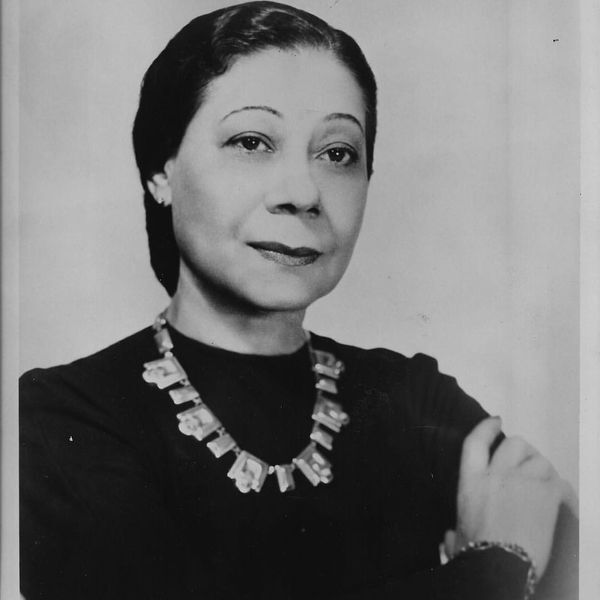
As we close Black History Month, it is fitting to highlight Osceola Marie Macarthy, who was born June 13, 1890, in Albany to Charles and Julia Macarthy. She attended Albany Normal College (the predecessor of Albany State College), Fisk University, and her alma mater, Howard University (Class of 1913), where she studied Ancient Greek History and Philosophy.
It was at Howard University that she, along with 21 other young women, founded Delta Sigma Theta Sorority in 1913. Aside from this distinction, she was also an actress, drama teacher, director, clothing designer, newspaper columnist and woman suffragist. She taught at Bennett College before moving to New York City, where she was a director of the Putnam Country Theater for many years.
Before heading off to the big city, Macarthy lived with her family at 214 S. Jackson St., at the corner of Jackson and Highland Avenue in Albany’s Harlem District. In her father’s obituary, The Savannah Tribune described their home as “a palatial residence with all of the necessary comforts.” Her father, Charles Hannibal Macarthy, was an insurance executive and owned a barbershop/liquor import business that featured billiards for the public’s enjoyment. He was recognized as one of the most successful black merchants in the South by the Tuskegee Institute and his death was noted in the Negro Yearbook published by the Tuskegee Institute.
Of her upbringing, Oscela Macacrthy wrote, “I had a normal, relatively happy childhood and a genteel upbringing, and my father was active in civic and community life and was held in high esteem throughout the state.” In 1921, her father was elected president of an area professional Negro baseball league organization called the Southeastern League. The Savannah Tribune wrote the following in his obituary: “The deceased always lived in Albany, and there he was beloved by citizens of every walk of life, regardless of race. There, he was connected with every civic movement, and his stamp of approval meant success.”
Osceola Macarthy married Dr. Numa P. G. Adams, who was the first dean of the Howard University School of Medicine. Macarthy Adams worked under the last name of Archer and appeared in several plays. Her acting and directing credits are quite extensive, including theater, radio, film, television drama and commercial.
As Osceola Archer, she debuted on Broadway in “Between Two Worlds,” in October 1934. She also appeared in “The Emperor Jones” with Paul Robeson and later acted in Arthur Miller’s “The Crucible.” As a director and teacher at the American Negro Theater from 1940 to 1949, she was instrumental in starting the careers of Sidney Poitier and Harry Belafonte. She directed them in “Days of Our Youth” for their dramatic debuts. Belafonte wrote about Archer in his 2011 autobiography “My Song: A Memoir.”
She also worked with other notable actors such as Ossie Davis and Ruby Dee. Additionally, she was active in theatrical unions, working especially to end racial discrimination in the theater. She was a member of the ethnic minorities committee of Actors Equity and the Actors Equity Council, the union’s governing body. During World War II, she was on the executive committee of the Stage Door Canteen.
Osceola Macarthy Adams will be remembered as one of the founders of Delta. The sorority currently has more than 1,000 collegiate and alumnae chapters located in the United States, Canada, Japan (Tokyo and Okinawa), Germany, the Virgin Islands, Bermuda, the Bahamas, Jamaica, West Africa, Southern African, United Arab Emirates and the Republic of Korea.
Osceola held her sorority close to her heart throughout her lifetime. At its inception, she was instrumental in organizing Delta Sigma Theta to march in the famous 1913 Woman Suffrage Procession down Pennsylvania Avenue on the eve of Woodrow Wilson’s inauguration. This courageous action was the first public act of the new sorority.
She continued to serve the sorority in a variety of positions of responsibility and the Deltas established an arts award in her name. At the 1969 Delta Sigma Theta annual conference held in Baltimore, the theme of the conference was “One Nation or Two?” and she addressed issues of racial integration and separatism.
Aside from Delta, Macarthy received awards from the USO for distinguished service during World War II. She also received an award from Detroit mayor Coleman Young in 1974 for her contributions to American theater.
She died Nov. 20, 1983, in New York City at the age of 93.
Author

Related Articles

WILL THAULT: Can Ranch dressing cool our differences?
A German tourist driving through Georgia marveled at our landscape, discovering Waffle House and Buc-ee’s for the first time
CARLTON FLETCHER: Looking for a modern-day Rosa Parks
The year was 1955, and while the civil rights movement was slowly building momentum in the United States, laws such as the one enacted in Montgomery were common.

Squawkbox – July 4, 2026
Regarding the changes to the Squawkbox… Lee County officials encountered a screw-up with… Bo and Preacher Lorenzo and his disciples should reflect on why…
