
RALPH NADER: Facilitating civic, political energies for the common good
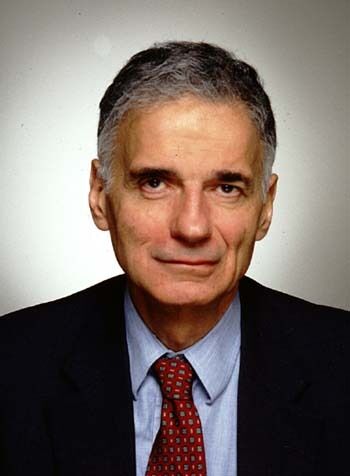
Ralph Nader
By Ralph Nader
Some readers responded to one of my earlier columns urging the national progressive civic groups, with millions of members back home, to overcome the dominance of giant corporatism with a Ten-Year Plan budgeted at $1 billion a year. Readers wanted to know more about the plan and where the money would come from to implement this grand initiative.
New billionaires are proliferating in numbers reflecting the record stock market surges. Some are enlightened and worried enough to gather with citizen group leaders to review the plan, the strategy, timetable and required budget. Those who count themselves in, and want to back the plan, would pledge to contribute the total pledges of $10 billion for the 10-year effort. After the funding is secured, (possibly augmented with internet crowdfunding), the plan commences in several coterminous stages.
The First Stage is to get through Congress, vetoproof if necessary, the long overdue necessities for half of the U.S. population, which is poor, with collateral benefits for the entire country.
A brain trust will expertly draft legislation addressing the elements of ending endemic poverty. These include a living wage, Medicare for all insurance (already well-drafted in H.R.1976 and supported by more than 118 co-sponsors), affordable housing, adequate nutrition that abolishes hunger in America, personal and environmental health care with emphasis on prevention, necessary public services for families and communities, and a system of private retirement savings to supplement Social Security.
These conditions for good livelihoods, which were mostly secured years ago by some Western countries, lead to larger market demand, have consistent left/right support in Europe and in the U.S., and they make for strong economies.
The driving pressure to implement the plan would come from civic offices staffed by two full-time people in each of the 435 Congressional Districts and for U.S. Senators in all 50 states plus territories. Groups would be established with an expanding corps of citizen volunteers committing 500 hours and $500 annually, forming a grassroots juggernaut. These citizen groups would focus intensely on their members of Congress, using precise petition-backed citizen summonses to their Senators and Representatives to appear at town meetings, which these organizers arrange with detailed and broadly supported agendas.
The yearly cost to establish these offices and recruit significant numbers of volunteers as the ever-deepening force is about $100 million a year. This sum would include inter-district coordinators and other facilities to organize the self-funded, expanding volunteer corps.
Passage of vital and overdue bills is less difficult than assumed by a society that is presently AWOL from the playing field of legislation. Such catch-up legislation can already count on the overt support of about 30% of Congress, with the latent support of at least a quarter of Congress once the organized rumble from the eople is heard. (That was the case with Nixon Republicans in the 1960s and early ’70s.)
Once the political tea leaves become clear, lawmakers become responsive. This is what happened in corporate Nixon’s first term, sometimes leading to great majorities behind environmental, consumer and labor bills. Nixon even sent to Congress a basic minimum-income plan, a better health insurance proposal than Clinton offered as president, and congressional voting rights legislation for the District of Columbia. Congress did not pass these three reforms coming from a Republican White House. Nonetheless, Nixon felt he had to propose these bills.
The Second Stage, parallel to the first, is to create facilities that invite and enable an accelerated banding together of willing people in their various roles. People can have rights and remedies under the law, but without organized groups they are mostly not used, defended or improved. Whether you are customers of insurance, utility and banking companies, or tenants, or consumers of food, energy, transportation, and health care or using government services, or have been wrongfully injured, membership in these “communities,” as organized advocacy groups is essential. Such groups would work to fundamentally change existing dysfunctional systems, extending to protections of children, services for students, and corporate control of the vast commons (public lands, public airwaves, etc.) that we the people already own.
Daily seeking their own interests, corporations are organized to the teeth by comparison to millions of citizens. This is why corporations control the major sectors of our government, our economy, and other societal institutions day by day. The large drug companies have 500 full-time lobbyists regularly working on Congress with large industry back-up forces. The people are vastly outmatched. So what do we expect without a strong citizen team on the field?
Corporate power stems not from votes (corporations don’t vote, yet) nor so much from the campaign money. It comes as a byproduct of the almost wholly unorganized populace not utilizing its powerful exclusive sovereignty under our Constitution. In our country’s history, it is remarkable what a small percentage of people (often less than 1%) when organized and representing broad public concerns, have achieved against all odds.
Much of the conceptual work on these legislated facilities has been developed and used to produce pilot projects vis-à-vis electric utility giants years ago by citizen organizations.
To get these facilities set up and into action all around the country, with seed money for 10 years, would annually cost about another $100 million. They would put the people and their expert champions at the table in more ways than one, with near immediate results. Right now, for example, according to consumer advocate, actuary, and former Federal Insurance Commissioner Robert Hunter, about $30 billion is not being returned as state laws require, to motor vehicle owners by auto insurers that received a windfall when the pandemic reduced auto traffic and claims. Without state-by-state insurance consumer organizations, there will be few of these refunds.
Forthcoming columns will describe the uses for the remainder of the $800 million in the first of 10 years.
Author
Related Articles

Squawkbox – June 27, 2026
Albany’s “leadership” is involved in criminal activity and will be… Franklin Graham and the other pastors of “super churches”…
My Grandpa Was Killed in World War II. I Met Him Through His Letters Home
Gina Wolf’s grandfather died before she was born. His letters sent to her grandmother from Europe during World War II made it possible to know what kind of man he was.

TARA FLETCHER: Women are often trapped by abusive partners
Today, and every day after, in the United States, three women will be murdered by their significant other.
