
SCOTT LUDWIG: Open to misinterpretation

Scott Ludwig
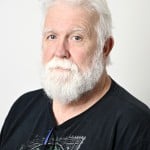
By Scott Ludwig
One day I passed by a construction site for a new home and noticed a pile of random pieces of wood in the middle of what would eventually become the front lawn. I knew from experience that the construction workers would eventually burn the pile of wood to save themselves the trouble of hauling it off or loading it into a Dumpster.
Since I thought the pieces of wood might come in handy in my basement workshop for future projects, I stopped to ask the construction workers if I could have them. There were four of them to ask, and not one of them could speak a word of English. Not. One. Word.
So what I did was pantomime my question to them. I struck an imaginary match. Then I tossed the imaginary match on the pile of wood. I stretched out both arms to indicate a blazing fire. Finally, I pointed to the pile of wood, and then to myself to let them know I wanted the wood.
If it had been a game of charades, I’m pretty sure my partner would have figured out what I was trying to say in a heartbeat.
Only these “partners” didn’t happen to speak English. They were from Mexico, and they only spoke Spanish. (In high school, I chose French instead of Spanish for my foreign language requirement. That’s because the French teacher was — je ne sais quoi — hot.)
I crossed my fingers, hoping they didn’t misinterpret what I was trying to say. For all I knew, they might have thought I wanted to be burned at the stake.
Fortunately for me, they figured out what I was trying to say.
But things don’t always work out that way. One reason is that there are more than 7,000 languages spoken throughout the world. It would take a miracle for us all to be on the same page.
For example, even a word as simple and unique as “pissed” has different meanings in different countries. In America it means angry, while in England it means drunk, the latter making intoxication practically sound quaint. Football is another word with different meanings. In America, we all know exactly what football is. But everywhere else no one seems to have a clue, because everyone thinks it’s soccer.
Something as universal as numbers can mean different things to different cultures. Italians don’t care for the number 17, because it’s perceived to be unlucky. Why? Because 17 in Roman numerals is XVII that, when rearranged, can become VIXI — the Latin term for ‘I lived,’ a phrase commonly found on … tombstones. Here in America, no one is particularly fond of the numbers 13 or 666, as they are both thought to represent bad luck. One more so than the other, of course.
Take a look at colors. In many countries — including North America, South America, and Europe — red is a symbol of love and passion. In Indian culture, red represents wealth, love, purity, beauty, marriage, and — maybe this next one has something to do with that last one — fear. In China, red indicates luck and fertility. In African cultures, red is symbolic of death and grief. It makes me wonder: Is Valentine’s Day celebrated globally? (Fun fact: It is.)
Nonverbal cues are even harder to interpret. A thumbs up usually indicates agreement or approval. But not in Bangladesh, where a thumbs up is perceived as an insult. Or the Middle East, where a thumbs up is actually a very offensive thumbs down.
But, wait, that’s just the tip of the iceberg. There’s more.
In the USA, a repeated bending of the index finger is used to request someone to come or step forward. In Asia, the same gesture isn’t welcome for human consumption because it’s used to beckon dogs. Using it in the Philippines could get you arrested. Using it to summon me makes me want to break your index finger.
Former President Richard Nixon found out many years ago about this next one the hard way: The “OK” sign made by touching the tips of the thumb and the index finger together. It means something entirely different in Brazil than it does in the U.S., as he discovered when a crowd in Rio de Janeiro responded to his gesture with a chorus of boos. It was equivalent to an extended middle finger, also known as a New York hello.
Sometimes it’s a wonder we all exist on the same planet.
To prove that last point, I’ll end with this from The Most Famous Examples of Misinterpretation (Translator Thoughts, April 29, 2014):
Mistranslation leads to death of about 250,000 people
The debate over whether the USA was right to drop the atom bomb on Hiroshima and Nagasaki often centers on the argument that countless soldiers would have lost their lives in a conflict with the seemingly un-surrendering Japan.
Even when the U.S. issued the Potsdam Declaration — demanding total surrender or else complete destruction — the Japanese government was unwavering. At least, that’s what the Americans thought.
Following persistent pressure for a response to the Potsdam Declaration, Japanese Premier Kantaro Suzuki called a news conference in which he effectively told the reporters “No comment. We’re still thinking about it.” However, the word he used for “no comment” was “mokusatsu,” which can also mean “we’re ignoring in contempt.”
Author
Related Articles

Regional catering business finds new home at Warrior Creek Mercantile
For months, Marchbanks said she had been asking God for an opportunity to serve others. “I just kept praying, ‘God, use me as a servant,'” she recalled. “I didn’t care what it was. I just wanted to be used to help people.”
Houston, Ford advance in contentious Lee County school board race
According to unofficial election results, challenger George Parrish Houston led the three-candidate field with 534 votes, or 42%, followed by incumbent Donna Ford with 478 votes, or 37.6%. Candidate Lavendra Shootes received 261 votes, or 20.5%.
RecX to bring outdoor equipment, activities to Moultrie during three-day show
“We’ll have the latest four-wheelers, side-by-sides … Kawasaki, Honda, Polaris and more/ There will be small recreational land management equipment from Kubota, Koyote, Mahindra. There will be a lot of different things … campers, just a lot going on.”
