
YONATAN HAMBOURGER/TZALI REICHER: The presidents and me

Rabbi Yonatan Hambourger
By Yonatan Hambourger & Tzali Reicher
[email protected]
As an American rabbi, the relationship between our leaders and the Jewish community have always held a personal fascination for me, and the recent observance of Presidents’ Day provided a valuable opportunity for contemplation and indulgence to this area of interest. It was particularly interesting to look into the history and lessons that we can glean with 250 years of history behind us.
From the inception of the United States with George Washington, the early presidents were generally devout and religious, maintaining a mutual respect for the Jewish community. John Adams eloquently wrote to Thomas Jefferson, “I will insist that the Hebrews have done more to civilize man than any other nation.” Subsequent presidents such as John Q. Adams, Abraham Lincoln, Teddy Roosevelt, Woodrow Wilson, and Warren G. Harding expressed their aspirations for the Jewish people to re-establish a formal state in their homeland of Israel.
Notably, Millard Fillmore and Martin Van Buren denounced anti-Semitic attacks and discrimination, while Rutherford B. Hayes displayed a unique gesture of solidarity for his day by attending a Passover seder with Jewish soldiers under his command. A seder is now celebrated annually in the White House. The only Jewish expulsion in American history occurred in 1862, orchestrated by then-Union General Ulysses S. Grant in parts of Tennessee, Mississippi and Kentucky. Grant, however, sought to make amends for this regrettable incident during his presidency.
In more contemporary history, the presidents’ relationships with the Jewish community have been more complicated.
Franklin D. Roosevelt’s legacy is hotly debated for his actions during the Holocaust. However, it is a fact that he played a pivotal role in leading the war effort against Nazism, regardless of his underlying motivations. Harry Truman, in a contrasting vein, recognized Israel’s independence within 11 minutes of its declaration, yet his public remarks about Jewish people were occasionally derisive.
Despite the Kennedy family’s historical association with Nazis, they proudly identified as Zionists, while Richard Nixon, despite personal animosity toward Jews, strategically supported Israel during the Yom Kippur War. Jimmy Carter’s actions before and after his presidency offended many in the Jewish community; a situation partially remedied by Ronald Reagan’s warm embrace of overt religiosity and Israel.
Subsequent administrations showed varying degrees of warmth toward America’s primary ally in the region. Despite his much speculated ambivalence toward the Jewish state, George H.W. Bush facilitated the airlift of 14,325 Ethiopian Jews living in peril, to Israel in a 36-hour period. While Barack Obama maintained relatively cooler ties, Bill Clinton, George W. Bush, Donald Trump, and Joe Biden consistently fostered positive relationships with Israel and extended gestures to the Jewish community during their respective presidencies.
There are a few things we can see from the dynamics between America’s leaders and a small, albeit proud, faith group well-represented in the United States.
The first is that even before the establishment of the modern state of Israel in 1948, the historical significance and importance of the land of Israel to the Jewish faith was always understood and respected by the U.S. The Muslim faith has Mecca along with 49 Muslim countries and 22 Arab countries, while the Jewish people have but a sliver of land in the Middle East, smaller than New Jersey.
While there has been a continual presence of Jews in Israel from time immemorial, they did not have self-rule for almost 2,000 years until their dream was realized, thanks in large part to U.S. support. What’s clear is how presidents practically dealt with Israel dictated their relationships with American Jewry for better and for worse. Yes, American Jews are proudly American, but there is always Israel in their hearts, because there are three basic pillars of Judaism from which all else springs: The God of Israel, the Torah of Israel, and the Land of Israel.
Another standout lesson is how lucky we all are that our leaders have remained true to the founding principles of this great country. Founded with a call for religious freedom and liberty to all, the United States has been a light unto the world, inspiring generations who have been attracted to promises and privileges afforded to those fortunate enough to live here.
After centuries of persecution, the Jewish community in the United States is the largest outside of Israel, and a proud and important fabric in this amazing tapestry that connects all Americans, regardless of race, religion or creed. It’s an honor American Jews do not take for granted.
Author

Related Articles
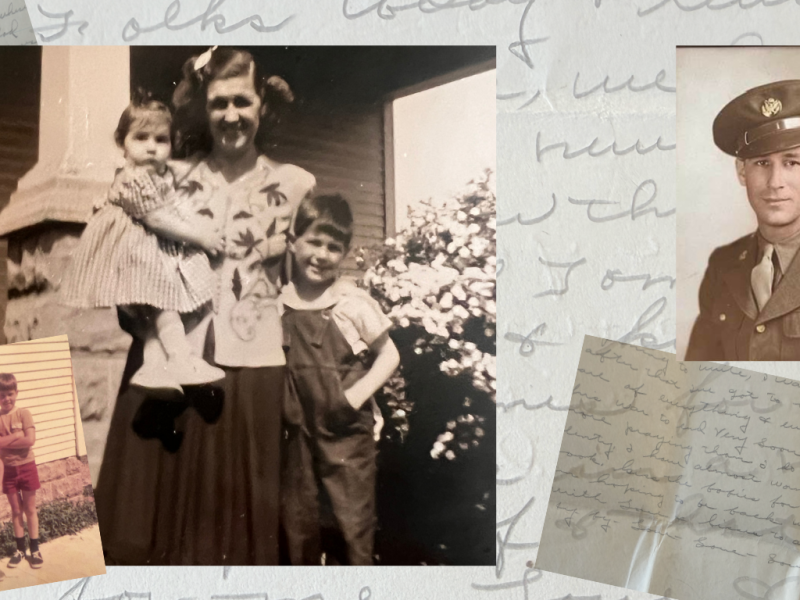
My Grandpa Was Killed in World War II. I Met Him Through His Letters Home
Gina Wolf’s grandfather died before she was born. His letters sent to her grandmother from Europe during World War II made it possible to know what kind of man he was.

TARA FLETCHER: Women are often trapped by abusive partners
Today, and every day after, in the United States, three women will be murdered by their significant other.
CARLTON FLETCHER: Great — and maybe not so great — expectations
During his heyday, mostly in the ‘80s and ‘90s, Lewis Grizzard was one of, if not the, most celebrated columnists in America.
