
As high school baseball begins, pitch-count rule a concern
New measures take effect this season
By Tim Morse
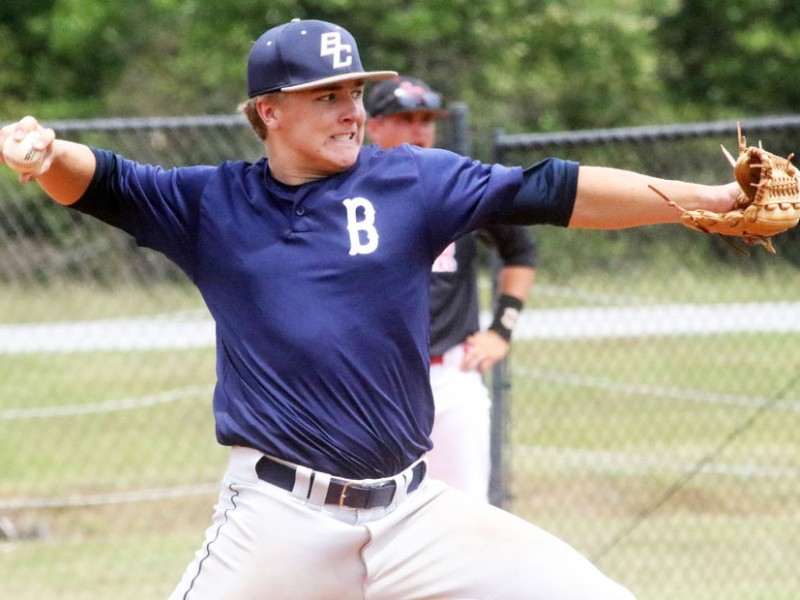
ALBANY — Monday is the opening day for baseball for Georgia high schools competing in the Georgia High School Association.
And perhaps the most radical change in recent memory will involve the mandatory pitch-count rule.
The GHSA unanimously approved the new measure at its fall executive committee meeting last August.
Rest is a key part. If a pitcher throws 86 or more pitches, the pitcher is required to rest for three days. Pitchers throwing 61 to 85 pitches will be required to have two days of rest.
Pitchers who throw 36 to 60 pitches are required to take a day of rest.
No rest would be required for pitchers throwing 35 or less pitches. However, a pitcher would have to take a day off if he throws a combined 60 pitches on consecutive days.
The rule gets more complex in the postseason where pitchers won’t be allowed to throw more than 120 pitches in a series unless weather extends the series. Any pitcher who reaches 40 pitches or more in a single state tournament game will be restricted to the same days of rest as designated during the regular season.
A day of rest is defined as a calendar day. For example, a pitcher who reached the 110-pitch limit on a Tuesday would not be allowed to pitch again until the following Saturday.
Under previous rules, there were no pitch counts and pitchers were limited to 10 innings per calendar day and a maximum of 14 innings in four consecutive calendar days.
But that will change this season.
“It’s a great idea for the health and safety of the players’ arms,” Lee County coach Brandon Brock said.
While most all coaches agree the safety of players is the most importance, the rule is expected to hurt smaller schools that don’t have the pitching depth.
“Terrell will be blessed to have about five guys on the mound this year,” Terrell County coach Patrick Cuff said. “But it’s going to hurt a lot of smaller schools who don’t have as many pitchers. I agree with the safety and I love protecting the kids, but it’s going to be a disadvantage for the smaller schools.”
The Georgia Independent Schools Association doesn’t allow its schools to play their first game until later this month. But like the GHSA, the GISA adopted similar measures.
Deerfield-Windsor coach Jonathan Davis has had enough pitching depth during the Knights’ last two state championship runs. However, he knows the new rule could affect his team later.
“I don’t think it’s going to affect us much until the postseason,” Davis said. “You get into a three-game series with somebody and there’s no telling what could happen.”
One of the bigger concerns for GHSA schools was how the pitch counts were going to be monitored. The process will be completed by an individual who is registered with a local GHSA sanctioned umpire association. The Pitch County Monitor (PCM) will be paid a 1/2 game fee plus travel. The PCM will enter the pitch counts for each school into the GHSA MIS system.
Pitch County Monitors will be paid $29.50 per varsity game plus $15 travel. It increases to $45 in state tournament play. Sub-varsity PCM’s will be paid $25.50 per game. The additional costs could put a significant strain on local baseball budgets.
“I think we figured up something like $1,500 that we’re paying (PCMs) for our ninth-grade, junior varsity and varsity teams,” Brock said. “We’re fortunate that we can absorb that, but there will be some schools that can’t.”
And the GHSA will offer stiff penalties for offenders.
Violators will be subject to a $250 fine and a two-game suspension for the head coach. A second offense would net a $500 fine and a minimum suspension of four games. The coach would also have to be re-instated by the GHSA executive director.
Related Articles
Padres edge Braves on Manny Machado’s 10th-inning single
Manny Machado’s first-pitch single in the bottom of the 10th inning Tuesday night lifted the San Diego Padres to a 7-6 win over the visiting Atlanta Braves.
NFL blasts Brendan Sorsby for dodging accountability, denies draft petition
Brendan Sorsby’s path to the NFL hit another dead end on Tuesday when the league denied his petition for entry into the supplemental draft.
Falcons agree on 3-year, $54M deal with TE Kyle Pitts
The Atlanta Falcons agreed to a three-year, $54 million deal with tight end Kyle Pitts on Tuesday that includes a reported $36 million fully guaranteed, Pitts’ agents told ESPN.
