
Moving the Chains: It’s all about the money
‘It’s never about the money. It’s always about the money.’
By Scott Ludwig, [email protected]
‘It’s never about the money. It’s always about the money.’
Although it may sound like it, these words weren’t spoken by a professional athlete. You know, someone whose job it is to play a sport for a living.
It actually came from the mouth of boxing promoter Bob Arum. But he didn’t say it just recently. He actually said it more than 50 years ago, when the highest paid baseball player was making less than what Aaron Judge of the New York Yankees now makes in two days. Back when the winner of the Masters went home with a green jacket, $25K, and if the stars aligned just right, a pimento cheese sandwich. Back when, for the average fan, sports was more affordable.
Fifty years later, can you imagine what Arum might say today? I’m guessing ‘help me to the restroom’ or ‘where is my medicine?’ But that’s because today he’s 94 years old. Otherwise, if he was still a younger man, he might amend what he said originally and modify it to ‘it’s ONLY about the money: end of story.’
(I will now get on my soap box and directly address the PGA Tour.)
Jack Nicklaus, arguably the greatest professional golfer of all time, earned less than $6 million in prize money in the entirety of his illustrious career. His actual career earnings playing golf ($5.73 million) amounts to approximately $27.5 million in today’s dollars. Not too shabby by any stretch of the imagination – especially when all he did for a living was hit a little white ball over six miles of gorgeous terrain in marvelous weather … and take every winter off.
Now, compare Nicklaus’ career earnings (in today’s dollars) to the $19.5 million that the top earner on the PGA tour, Scottie Scheffler, made last year. Simple math indicates that Scheffler made over 70% of what Nicklaus made throughout his entire career in just one year. (Technically, Scheffler did it in just eight months, since he only played on the tour from January through August. Then, like Nicklaus, he took the winter off.)
(I will now step from one soap box to another.)
And it’s not just golf that has gone off the monetary rails:
- Dak Prescott is paid $60 million annually for being a slightly better than average quarterback for the Dallas Cowboys.
- The Boston Celtics’ Jason Tatum gets nearly $63 million a year to dribble a basketball up and down the court and take a lot of shots.
- Shohei Ohtani makes $70 million from the Los Angeles Dodgers to play baseball (they’ll say it’s because they’re getting ‘two for one’ because Ohtani can pitch as well as hit).
- The Edmonton Oilers pay Leon Draisaitl $14 million a year to skate on ice and slap around a puck, which is a ridiculous amount of money because, well, because it’s hockey.
Where is this going, you ask? I’ll tell you where.
Money. To be more specific, minimum wage.
When Bob Arum expelled his words of wisdom about money in the early ‘70’s, minimum wage in this country was less than $2 an hour.
Today, employers are subject to the Fair Labor Standards Act and therefore must pay the current Federal minimum wage of a whopping … (drum roll) … SEVEN DOLLARS AND TWENTY-FIVE CENTS PER HOUR!
Now for a comparison. In 1972 the average ticket for a Major League Baseball game was $3. Today it’s ballooned to $38.
So in 1972, 90 minutes of labor at minimum wage covered the price of a ticket. Today a ticket would require more than 5 hours working for minimum wage.
It hardly seems fair, does it? You know, for such a huge disparity between the athletes who get paid a whole lot of money and the people who pay to watch them making a whole lot less?
I realize what Scottie Scheffler does for a living doesn’t compare to what a school teacher does for a living, but the fact that it would take the latter 260 years to make what the top money winner on the PGA Tour made in just one year can’t be anything good.
In Scheffler’s case and for all the others who are paid to play sports for a living, Bob Arum was right. It is always about the money.
And for teachers and everyone else with a regular job, the same holds true for them as well.
Because without money, even though it might be nowhere close to the millions of dollars professional athletes are making, regular people like you and I wouldn’t be able to survive.
Let alone take in a game of Major League Baseball.
Author

Related Articles
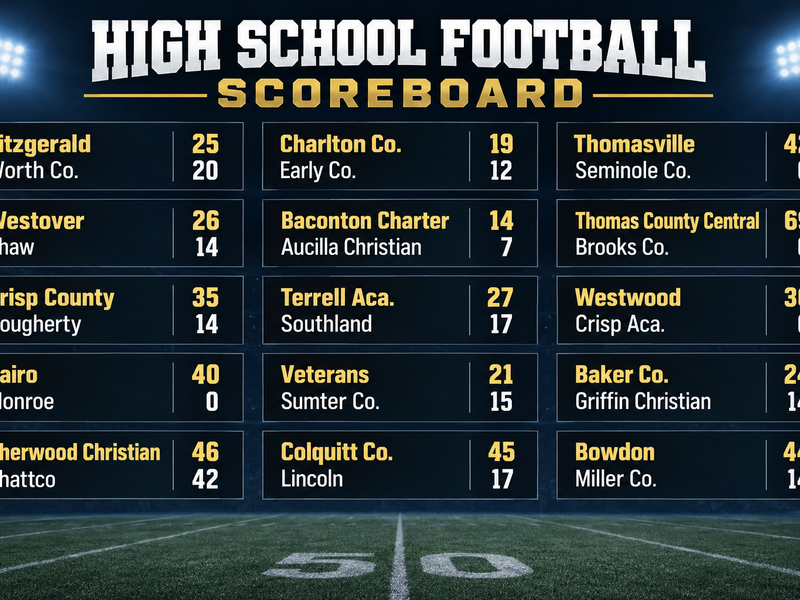
High School Football Scoreboard
Scores from Friday night

Braves clinch playoff berth against Astros as Tyler Mahle stars
Michael Harris II, Ronald Acuna Jr. and Matt Olson slugged two-run home runs, and deadline acquisition Tyler Mahle continued his exceptional pitching for the visiting Atlanta Braves, who secured a postseason berth with a 6-2 victory over the Houston Astros on Friday.

Westover football survives Shaw rally for 26-20 region win
A three-touchdown lead had disappeared. Shaw had seized the momentum, and what had looked like a Westover runaway suddenly had become a Friday night fight.
