
Moving the Chains: Solitary Refinement
Professional golfer Tony Lema once said ‘golf is like solitaire. When you cheat, you cheat only yourself.’
Professional golfer Tony Lema once said ‘golf is like solitaire. When you cheat, you cheat only yourself.’
***
I knew from an early age that golf was the hardest sport in the world to become competent in. However, it took me years to realize it can also be the biggest waste of time … outside of throwing a perfectly good clock into a garbage can. (I’ll wait.)
One other thing I knew from the beginning about golf is that it is the easiest sport in which to cheat. (This doesn’t apply, however, to the .00000000001% of the population that plays golf professionally. I assume primarily because people are watching.)
I have to admit, some golfers can be rather creative when it comes to finding ways to cheat.
I used to play golf with a man – his nickname was ‘Mark’ for reasons that will soon be obvious – who always marked his golf ball on the greens with his ‘lucky silver dollar.’ Here’s where the cheating comes in: once he hit his ball on the green, he walked ahead of everyone else in the group to get to his ball and mark it before anyone else could see where the ball actually came to rest. He would squat down, flick his lucky silver dollar closer to the hole – similar to how you would flick a marble – pick the ball up and put it in his pocket. Then, when it was his turn to putt, he would ‘re-mark’ his ball wherever the silver dollar stopped rolling, giving him a much shorter putt than he actually would have had if he marked his ball where it ended up.
One time when Mark flicked his silver dollar, it bounced and rolled past the hole and ended up all the way on the other side of the green. So he had to pull another coin out of his pocket to mark his ball. I saw what happened, so I made it a point to pick up his runaway silver dollar. Of course, I made sure Mark knew about it: ‘Someone left a silver dollar on the green! It’s just like yours, Mark! What are the odds?’ Then I put it in my pocket.
Mark never asked for it back. I still have it to this day.
At one time I played in a golf league after work. There was this man – I’ll call him ‘Ken’ because it’s easier to say than ‘Kenneth’ – who always volunteered to write everyone’s scores on a large posterboard in the snack shop after all the scorecards were turned in. One afternoon I played in the same group as Ken, so I was cognizant of how he was playing and what his score should have been.
I noticed he wrote down a score of ‘5’ for himself on #12, and I knew darn well it was actually much higher than that. So I asked him if I could take a look at his scorecard. I noticed there was an ‘8’ penciled in for Ken on the 12th hole. In his own handwriting, no less.
When I pointed out the discrepancy, he said ‘well, it looked like a 5. My mistake.’ Anyway, that’s what came out of his mouth. However, what I saw inside of his thought balloon isn’t appropriate for me to say. But what I will say is mistaking what was clearly an ‘8’ for a ‘5’ was about as likely as me walking into a lamppost and thinking I’d just bumped into Sydney Sweeney.
Granted, mismarking a golf ball on the green and fudging scores aren’t the only two fish in a very deep water hazard. The possibilities for cheating in golf are endless:
- Dropping another ball from your pocket when you think no one is looking. (I used to play with someone whose nickname was ‘Radar.’ He never lost a golf ball, regardless of how deep into the woods the ball went or how big of a splash it made when it landed in a lake. He ALWAYS ended up finding his ball – one way or another. Ergo, ‘Radar.’)
- Using a ‘foot wedge’ in the woods or heavy rough to move the ball into a more favorable position. The foot wedge goes by a number of other names as well: the extra club, the shoe shine, and the Trumpty-Bumpty – otherwise known as the ‘presidential pardon.’
- Moving the ball away from trees or other obstacles. This is usually done when no one is looking, but not always. Remember ‘Radar?’
- Trampling down or fluffing up the grass behind the golf ball to improve the lie.
- (If you play golf, insert your method of choice here. Go ahead; be honest.)
Commenting about an honest game of golf, P.G. Wodehouse once said:
‘Golf is the infallible test. The man who can go into a patch of rough alone,
with the knowledge that only God is watching him, and play his ball where it lies,
is the man who will serve you faithfully and well.’
Paul Harvey, alternatively, described the game like this:
‘Golf is a game where you yell ‘fore,’ shoot six, and write down five.’
I’ll end with mine:
‘Golf is a game that you can play by your own rules.
Just don’t get caught.’
Author

Related Articles
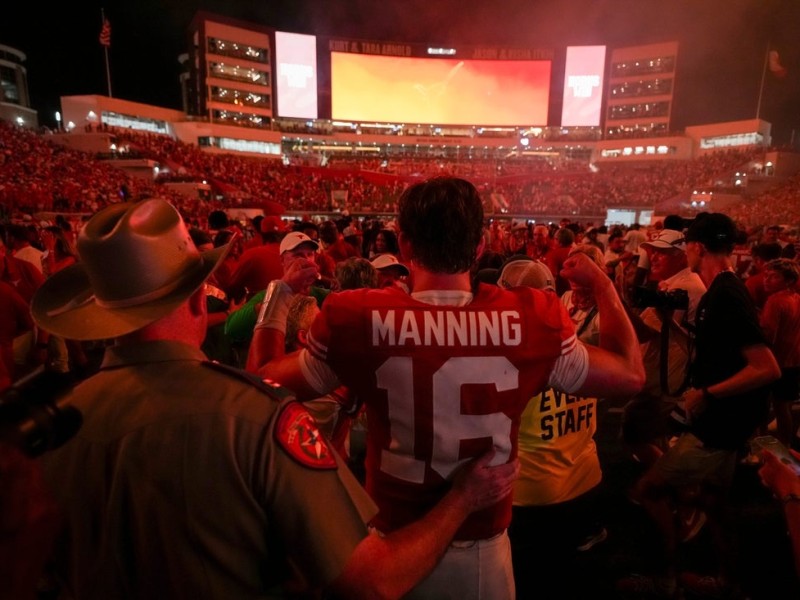
Texas’ comeback over Ohio State scores ESPN/ABC record ratings
Texas’ comeback victory over Ohio State on Saturday was ratings gold as it became the most-watched Week 2 game on record, Front Office Sports reported Wednesday.

Khalil Barnes happy to be home
Khalil Barnes is back on familiar ground.
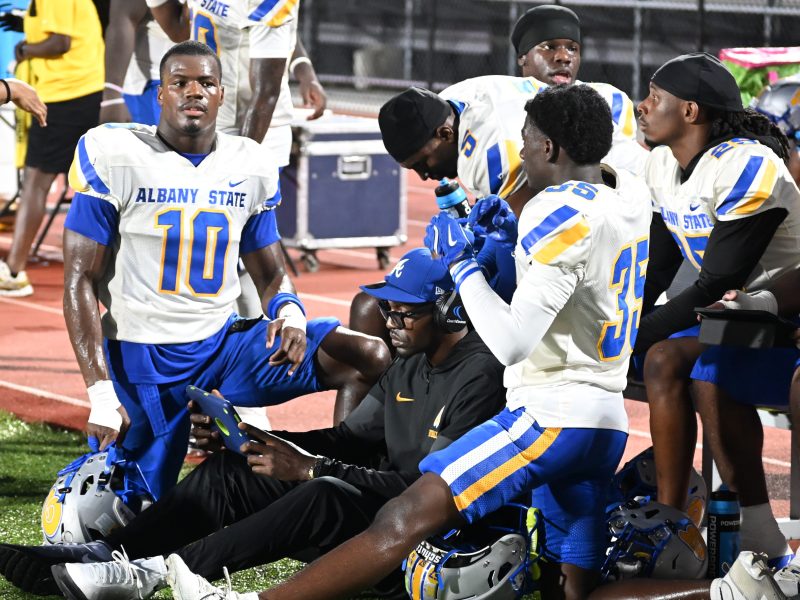
On the road again: Albany State heads to South Carolina
Albany State finally got the fast start David Bowser had been looking for Saturday.
