
Dougherty County Commission gives OK to battery energy storage systems
The Dougherty County Commission approved on Monday a measure that will allow, and also regulate, battery facilities that store electricity.
ALBANY – The Dougherty County Commission approved on Monday a measure that will allow, and also regulate, battery facilities that store electricity, with the approval coming as two developers were waiting for the approval to move forward with projects.
Previously, battery energy storage systems in the county were limited to installations that linked to a solar generation system.
One of the companies interested in adding battery storage is the solar development on Highway 133 in Dougherty County, which was awaiting the county’s decision despite being eligible under the previous ordinance, while the second is looking at a site near the former Georgia Power plant on old Georgia Highway 3 south of Putney.
“Our previous ordinance just didn’t address it,” Albany-Dougherty Planning Services Director Paul Forgey said during an interview after the conclusion of the commission meeting. “They are allowed, but only as part of a solar development.”
The Albany-Dougherty Planning Commission voted unanimously to recommend allowing non-solar battery facilities in July. County commissioners approved that recommendation in a 6-1 vote, with Commissioner Anthony Jones casting the opposing vote.
As the price of batteries used to store power has decreased, more companies are looking to develop them near electrical substations, Forgey said.
“The way these work when they are not part of the solar grid (is) they’re collecting energy during the time when excess electricity is being generated,” he said. “The stored electricity is available for use when there is demand for it. They’re collecting energy off the grid that wouldn’t be used.
“It helps ensure there’s a usable flow of electricity rather than it being wasted. This way, they can store it when there’s less demand and put it into the wires when it’s needed.”
Under the ordinance approved by the commission, battery storage sites would be required to comply with state standards and to have a special-use permit issued by the county. It also includes setback requirements setting a minimum distance from roadways and nearby properties and limiting the volume of noise that can be heard at nearby residences and businesses.
The ordinance also establishes fencing, lighting and buffer requirements for operators, as well as those for wiring, signage and floodplain management.
Placement of the installations will be allowed only on property zoned for manufacturing or agricultural use.
In explaining his “no” vote, Jones said that the facilities could be intrusive to residents in rural Dougherty County who live there for the serenity and quiet that entails.
“I’m just concerned about the noise,” he said during a public hearing held on the issue prior to the vote. “That’s a concern for me. You go outside your home and it’s constantly run, run, run. That’s going to be a problem.”
Cooling units for the battery packs as well as the noise from other system components like inverters and transformers come with the battery storage systems, and the industry has identified it as a concern.
The likelihood of more operators looking to locate battery storage systems in the region is not small, according to Forgey.
“This is going to be more common,” he said.
No audience members signed up to speak either in favor of or in opposition to the ordinance prior to a vote on the issue.
Related Articles
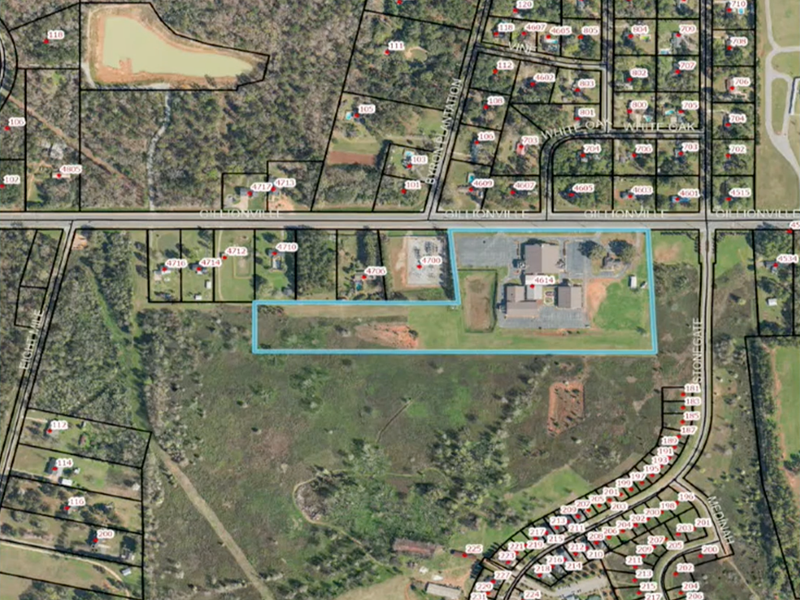
County approves 198-foot Gillionville Road cell tower; no speakers at public hearing
Dougherty County commissioners unanimously approved a 198-foot cell tower behind a church on Gillionville Road, with no one speaking for or against it at the public hearing.

An insider’s (semi-fictionalized) look at Cruising Albany’s Slappey Boulevard
Graylon Brunson has written and published a pair of books about Cruising Slappey Boulevard as a teenager.
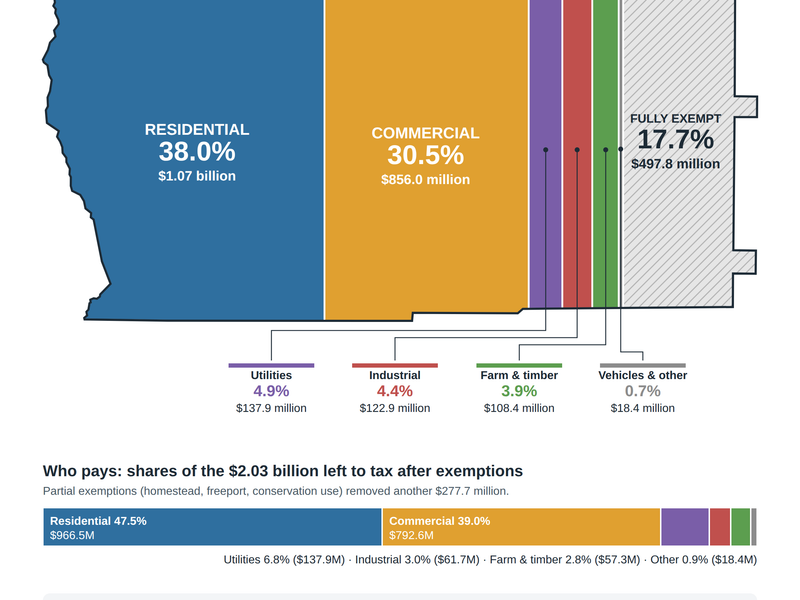
Who’s not paying?
Nearly 1 of every 5 dollars of property value in Dougherty County pays no property tax at all.
With new assessment notices hitting hard after Dougherty’s first full revaluation since 2007, and many residents are facing sharply higher values, the question of who carries the tax base is no longer abstract.
