
In Leesburg, stewardship is the quiet engine of good government
In an era when stories of government often center on budget shortfalls, cost overruns and questions of accountability, examples of stewardship rarely make headlines.
LEESBURG — In an era when stories of government often center on budget shortfalls, cost overruns and questions of accountability, examples of stewardship rarely make headlines.
They don’t come with ribbon-cuttings or ceremonial checks. More often, they are found in the quiet decisions made every day by people who view public resources as something entrusted to their care and not just something to spend or allocate.
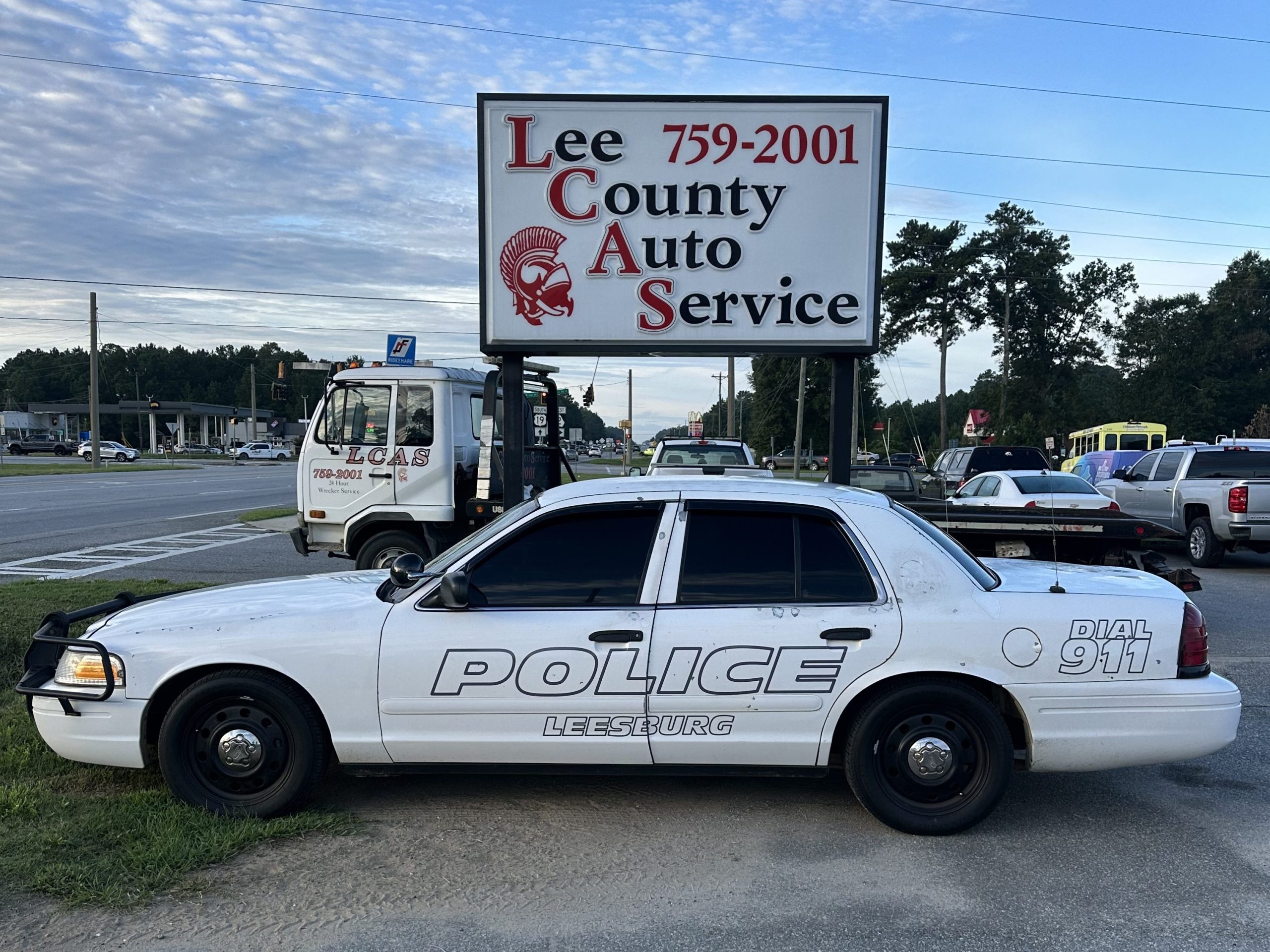
Last week, that philosophy surfaced during an otherwise routine Leesburg City Council meeting when Police Chief Christopher Prokesh and Mayor David Daughtry shared a brief exchange about a 2008 Ford Crown Victoria Police Interceptor that had accumulated more than 364,000 miles before the council approved the purchase of its replacement. As of Friday morning, Daughtry said the odometer had climbed to 387,200 miles — and the cruiser remained in active service protecting the community.
The mileage drew a few smiles around the council table. But behind the number was a larger story about a culture of stewardship that extends beyond one vehicle or one elected official.
In an interview with The Albany Herald, Daughtry acknowledged that his long-standing commitment to maintaining the city’s fleet — particularly its Ford Crown Victoria Police Interceptors — has become something of a running joke.
“I’ve seen those things hold up in wrecks. I’ve seen them save officers’ lives,” Daughtry said. “There’s always been an ongoing joke about it because, don’t get me wrong, it is the ugliest car we have in the city. But if I had to get in any of our cars, other than maybe our brand-new ones, and drive it to California, I would get in our old white Interceptor.”
But reaching nearly twice the lifespan of the average passenger vehicle, he said, requires more than a dependable mechanic.
“Our chief and our police officers are top notch, and they treat those vehicles as if they were the ones paying for them,” Daughtry said.
Since opening Lee County Auto Service in 2004, Daughtry has helped maintain the city’s fleet, often viewing the work as another form of public service. When repairs are minor, he said there are times when he quietly absorbs the cost himself rather than bill the city. He was initially reluctant to discuss the practice, saying he feels grateful that his business has been successful enough to do it.
“If a law enforcement car comes in and it’s a hundred dollars to fix it, I just eat it,” the mayor said. “I’m paying for it, not the taxpayer.”
He is quick to point out that he is only one example of a broader culture that exists throughout Leesburg.
“I’m not the only one that does this,” Daughtry said. “The reason why we’re able to keep vehicles up the way that we do is because we have business owners that go above and beyond, like myself, and give back to the community, and people have no idea.”
For Daughtry, stewardship predates public office. Long before becoming mayor, he approached every city vehicle as though his own family would be riding in it. Preventive maintenance, Daughtry said, can be one of the simplest forms of stewardship.
“You have to use good parts,” he said. “You have to have good drivers that don’t just abuse the vehicles.”
“And the way that I treat them is as if I were going to be driving it.”
That philosophy, he said, is rooted in public safety just as much as fiscal responsibility.
“If somebody’s breaking into your house, you want that police officer to get to you as fast as he possibly can,” Daughtry said. “If he’s in an unsafe vehicle, then he’s putting his life more at risk to come and save yours.”
The city’s ability to stretch the life of expensive equipment reflects the financial realities facing many small municipalities.
Leesburg has roughly 3,500 residents, but its daytime population swells dramatically as commuters, visitors and thousands of students arrive each weekday.
“Our population tonight at nine o’clock, when everybody goes to bed, will be 3,500,” Daughtry said. “At eight o’clock tomorrow morning, I’m going to have 15,000 in my city.”
“We have seven schools here.”
That growth creates demands well beyond what the city’s tax base would suggest.
“We only get a budget of 3,500 persons’ worth of T-SPLOST money,” he said. “I have to provide for up to 15,000 people on a 3,500-person budget.
“I have to pay law enforcement. I have to pay for water. I have to pay for the sewer. I have to keep the roads up. We don’t get any extra money for that. So that’s why we are so frugal with our money.”
The 2008 Ford Crown Vic is proof of that philosophy. Daughtry still considers the Interceptor the benchmark for law enforcement vehicles.
“If I could find an entire fleet of old Ford Crown Vic Interceptors that had less than 100,000 miles on them, I would buy them and donate them to the city because they would outlast me,” he said.
“That was the absolute best vehicle ever built for law enforcement.”
Even with nearly 400,000 miles on the odometer, Daughtry said the Crown Victoria isn’t being replaced because it can no longer do the job. Rather, modern policing increasingly demands vehicles capable of sustained higher-speed travel and quicker emergency response than an aging patrol car can reasonably provide.
“The reason many departments replace vehicles today isn’t because they won’t run anymore,” Daughtry said. “It’s because of the higher-speed requirements and the demands placed on officers.”
Rather than retiring the Crown Victoria, he said the city plans to keep it in service as a backup patrol vehicle.
“As of this morning, that 2008 Crown Vic has 387,200 miles on it,” Daughtry said. “It’s still going strong and protecting our citizens.”
Despite the attention the patrol car has received, Daughtry insists the story isn’t really about one vehicle, or even one person.
Instead, he sees it as an example of what happens when public employees, elected officials, business owners and residents quietly take ownership of their community and stewardship is practiced by people who may never receive public recognition. Whether it’s police officers treating equipment with care, city employees stretching limited resources, or local business owners donating time, labor and expertise, Daughtry said he believes those small acts accumulate into something much larger.
The conversation itself began as a routine purchasing decision. Prokesh asked council members to approve the purchase of the replacement Ford Police Interceptor Utility from Brannen Ford under the state contract for $45,500, along with a $15,700 factory-installed police equipment package that will allow the vehicle to be placed into service immediately rather than spending months traveling between vendors for installation of radios, prisoner partitions and other specialized equipment.
The council unanimously approved the $61,200 purchase. But after the vote, Prokesh pointed toward Daughtry as discussion turned to the Interceptor the new vehicle will replace.
“David can be my witness to this because he’s been doing the maintenance on it,” Prokesh said. “That police car has 364,000 miles. … We’ve paid for that car about seven times, saving money by rebuilding engines and transmissions and everything else.”
In a time when public trust is often tested by stories of waste and mismanagement, the aging Interceptor’s 387,200 miles offer a different measure of government, one that is inseparable from simple, everyday decisions that make limited resources, and old vehicles, go farther.
In communities where every dollar counts, it seems stewardship may be one of the most valuable public assets of all.
Related Articles
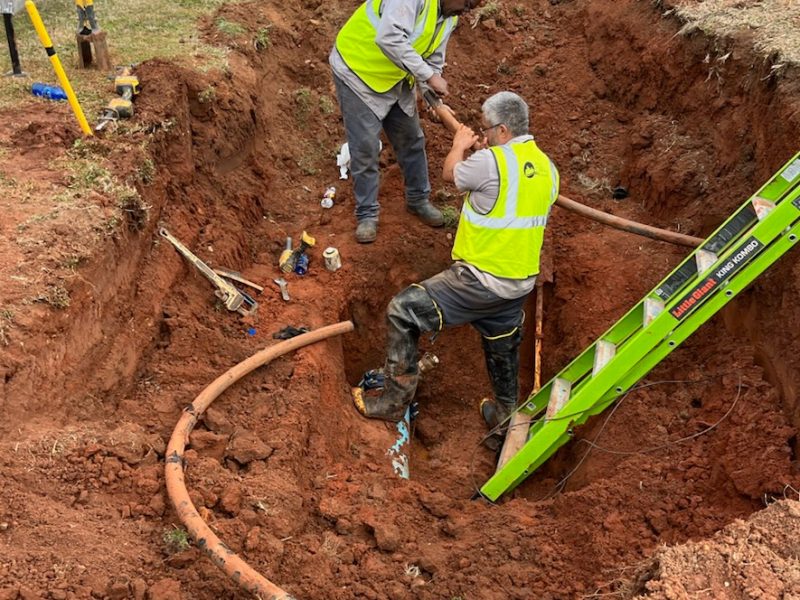
What you can’t see can hurt you. Albany embarks on water main replacement project to address aging system
“At some point you have to stop kicking the can downt the road. We don’t want the state to say ‘You have to do this.'”

Pay the fine. Skip the permit?
A unanimous vote Wednesday approving retroactive renovations on a 1918 Craftsman duplex at 412 W. Residence Ave. quickly evolved into a broader discussion over repeat violations, contractor accountability and whether the city’s existing penalties are sufficient to deter property owners who bypass Albany’s historic preservation review process.
City of Albany makes workforce housing a priority
“We need housing for teachers. We need to create a pipeline for folks to get their situation together so they can buy a house.”
