
Lily Pad, law enforcement work together to seek justice for assault victims
For 13 years, starting in 2004, Duane Ballard had victimized at least 12 women and young girls.
By Tara Fletcher
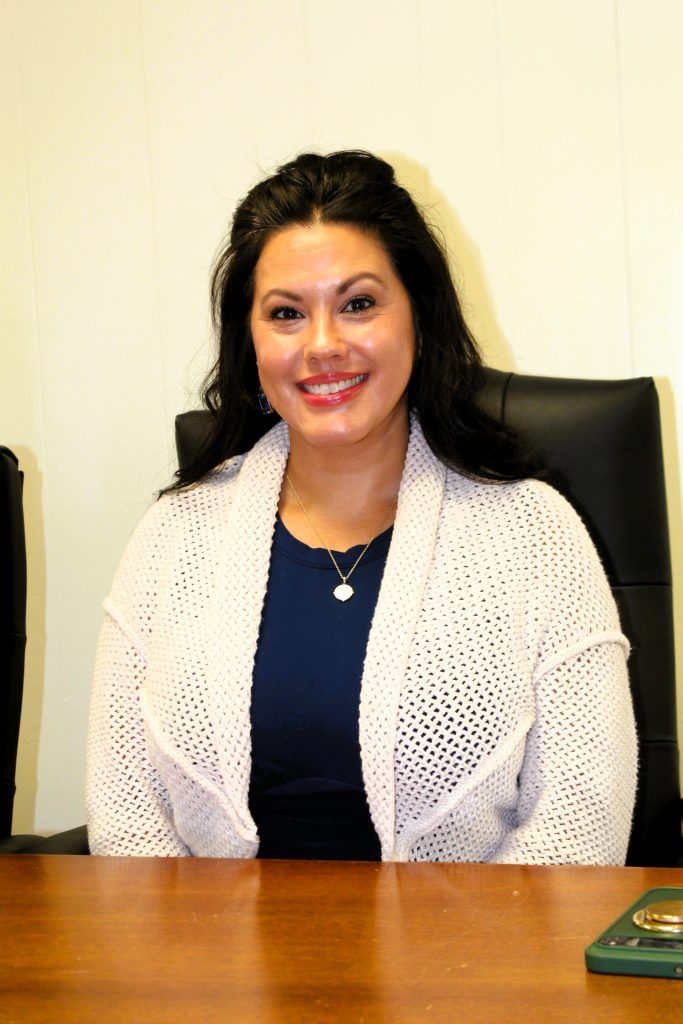
ALBANY — When you’ve worked for a nonprofit as long as Mary Martinez, the executive director of the Lily Pad SANE Center Inc., has, you learn to choose your battles. But when it comes to getting justice for the victims of sexual assault and rape, Martinez doesn’t hesitate to pull out every weapon in her arsenal.
To get to the rest of this story, let’s go back. In 2015, an investigation uncovered 1,351 untested rape kits in storage at Grady Memorial Hospital in Atlanta. That inquiry was the catalyst for passing the 2016 law enacted as Senate Bill 304 that established the current timelines for testing and handling sexual assault kits, specifically that Law enforcement agencies must take possession of kits within 96 hours and submit them to the Georgia Bureau of Investigation within 30 days and that all previously unsubmitted sexual assault kits be sent to the crime lab by August of 2016.
The problems with kits weren’t just in Atlanta. Rape kits all over Georgia, many sitting for more than a decade, were being located and processed, including many from Dougherty County. Once the GBI entered the DNA information into its sytem, there were hits on multiple cases that belonged to one assailant. Dougherty County had a serial rapist.
For 13 years, starting in 2004, Duane Ballard had victimized at least 12 women and young girls. In November of 2022, Ballard was convicted of 16 felony counts, including rape, child molestation and aggravated assault. He was sentenced to life plus 100 years.
The Duane Ballard case was the reason Dougherty County and the Lily Pad were chosen to be the pilot program for the current sexual assault kit processing program, SAKI, or Sexual Assault Kit Initiative. This system tracks each kit from the manufacturer to the Lily Pad, to the police station’s evidence locker and to the GBI. Not only can it be tracked by law enforcement and the Lily Pad, the victims can log in and see the progress.
For a number of years, this system, along with the 2016 law, had been working smoothly. But in recent years, Martinez noticed there was a breakdown in the system, and kits weren’t being processed in a timely manner. Around 33 kits had taken one to two years to process, and 13-15 kits still were unprocessed.
“Can you imagine what it’s like to be a victim, coming forward and putting yourself through the testing process only to log on to SAKI and see over and over again that your test hasn’t even been sent to the GBI?” Martinez asked.
After multiple meetings involving, the Albany Police Deptartment and the Dougherty County district attorney’s office, Martinez decided to take a more public approach and publicized her frustration in a Facebook post: “48 rape kits I’ve found so far. Turned in years late or not at all. Does that make you feel safe? Begging for the bare minimum.” The post got a lot of attention, but still the rape kits were not moving.
Lily Pad board member Karen Hanner saw the post on Facebook and thought, “This is not OK.” She personally called APD Chief Michael Persley and asked to set up a face-to-face meeting regarding the kits. They met the next day at 11 a.m. By 1 o’clock that afternoon, Persley had identified all of the outstanding kits and they were driven directly to the GBI. Simultaneously, Martinez was on the phone with the district attorney’s office.
Finally, the squeaky wheel was getting the grease, and the victims were closer to justice.
Although that problem was solved, there were still questions: How did this happen and how can we make sure it doesn’t happen again?
“We’re human; we’re not perfect,” Persley said. “When we drop the ball, all we can do is figure out what we can do to fix it. When a sexual assault occurs, the sexual assault nurse gives the kit to an investigator, then it goes to property, where an evidence tech completes the paperwork and it is loaded into two systems. Then it is delivered to the GBI.
“We are going to make sure that the policies and rules are updated, and we re-educated everyone in the department.”
Persley also took it upon himself to call his peers in the region, reminding other chiefs to make sure they’re processing their kits according to the law.
“This situation shows that community partnerships are important,” the APD chief said. “Victims need advocates with strong voices, and sometimes we need reminders, checks and balances. If everything is going right, I question what’s missing.”
Related Articles
Take what you need — even the house
The old house at 577 Orange St. has spent much of its life being asked to become something else.
Now the old giving house needs a favor in return.

Albany officials debate walking trail as South Madison Street-Alice Avenue drainage project moves forward
As heavy equipment reshapes land for a long-awaited drainage project in south Albany, Ward 6 Commissioner Diane Brown is pushing the city to make sure the neighborhood gets more than a holding pond.
Albany City Commission hears from residents opposed to group home in residential neighborhood
“We are not here to speak bad of the young men that will possibly be coming into our neighborhood,. Our concern is the proposal at this particular property.”
