
Group promotes ethics in government
Pete Skiba
ALBANY, Ga. — It may surprise some, but Georgia ranks last among states dealing successfully with ethic problems. New Jersey, Illinois and Louisiana rank at the top of that list.
That word came to Albany on Wednesday evening at the Carnegie Library, home of the Albany Area Arts Council, from William Perry, executive director of Common Cause Georgia. State Sen. Josh McKoon, R-Columbus, joined Perry to tell the small group that showed up — a total of three seniors — how a change could be made.
“In Georgia, there is no cap on what lobbyists can give anyone in the State Assembly,” McKoon said. “We are one of three states without regulations. As long as it is disclosed, it is legal. We think that is wrong.”
Lobbyists and special interest groups spent $2 million on the Legislature, McKoon said. He is dead set against that, he added.
While the turnout Wednesday at the Albany meeting was miniscule, there was interested in ethics reform last summer. In the July 31 party primary elections in Georgia, Democrats asked their voters whether lobbyist spending on state lawmakers should be capped, and 72.6 percent said it should. Republicans went even further, asking voters in their party whether lobbyist spending on a lawmaker should be capped at $100. More than 87 percent of GOP voters said yes.
The two members of the Georgia Alliance for Ethics Reform came to Albany as part of a statewide swing to communicate what ethics reform can look like, ask people their thoughts and seek their support.
McKoon, who represents Senate District 29, plans to sponsor a four-legged bill with amendments to the state Constitution to put Georgia No. 1 in ethics enforcement.
The comprehensive bill would put a $100 limit on gifts, including food and travel. Because there are 12 people currently working in the ethics commission that oversees more than 4,000 elected officials, McKoon said, the bill would guarantee funding through the Constitution for an expanded ethics commission.
Investigating corruption would be turned over to the state Attorney General’s Office. It would include the mechanism to empower a statewide grand jury to hand down indictments.
According to McKoon, members of the Legislature and other state employees would have a waiting period before they could take other jobs with companies doing business with the state. And the Georgia Open records Act would apply to the General Assembly, which is now exempt.
Asked if Gov. Nathan Deal would be on board with the changes, McKoon said he thought so. “The governor has already instituted a limit of $25 on his branch (of the government). I think he is open to meaningful ethics reform.”
Sitting across the table from McKoon, Ben Clenney said, “You tell him if he can’t do it, I’ll come up there and do it for him.”
Related Articles
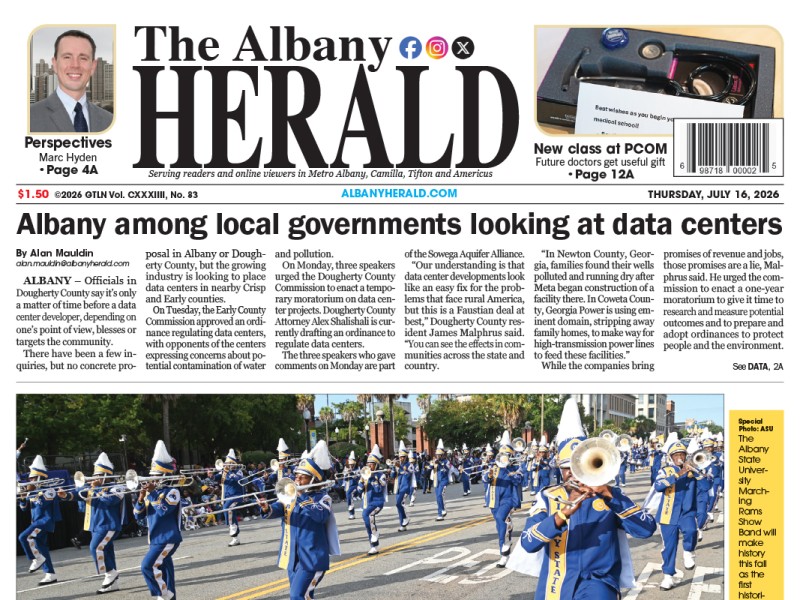
Albany Herald – July 16, 2026
Albany among local governments looking… ASU Marching Rams first HBCU band
invited…

Classifieds – July 16, 2026
Jobs; Cemetery Lots; Garage Sales; Public Aucitons; Etc…

Adult leadership group spreads concept to high school students
“The purpose of Albany Junior Leaders is to pull together leaders from all over the community. We wanted to give these youth the same experience and the same exposure we’re getting in Leadership Albany.”
