
Still Pond Winery and Distillery brought agritourism to Calhoun County; could other farms do the same?
By Lucille Lannigan
[email protected]
ARLINGTON – The Cowart family has defied expectations on their Calhoun County farm since they first planted muscadine grape vines.
Charlie Cowart, the co-operator of Still Pond Winery & Distillery, said when his granddaddy first started to plant vines in the 1960s, he was told that only peanuts, cotton and corn grow in southwest Georgia. But he wasn’t deterred.
Today, the farm is one of the largest commercial vineyards in the state at 180 acres.
When Charlie and his father, Charles Cowart, first decided they were going to start up a wine-tasting room in rural Calhoun County, they were told it would never work because of the rural location. But they did it anyway.
“We said rather than be in a destination area, we’d be the destination,” Charles said.
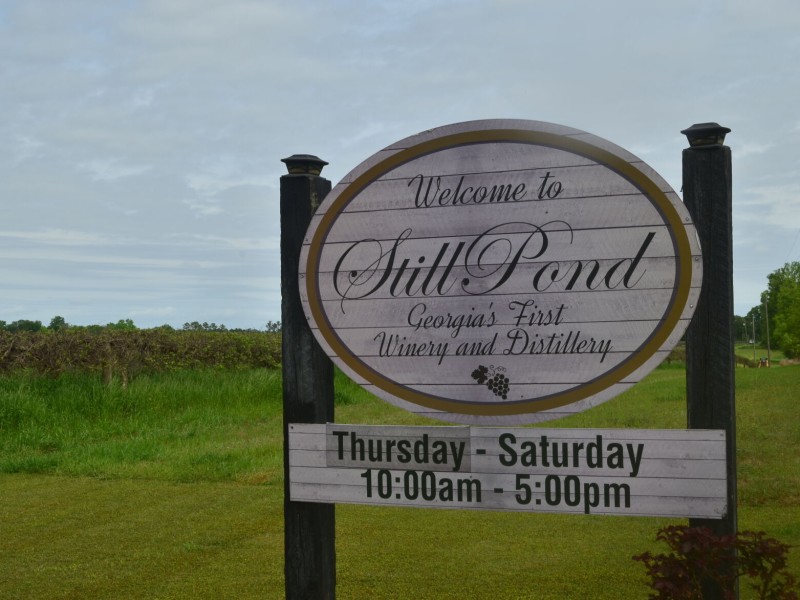
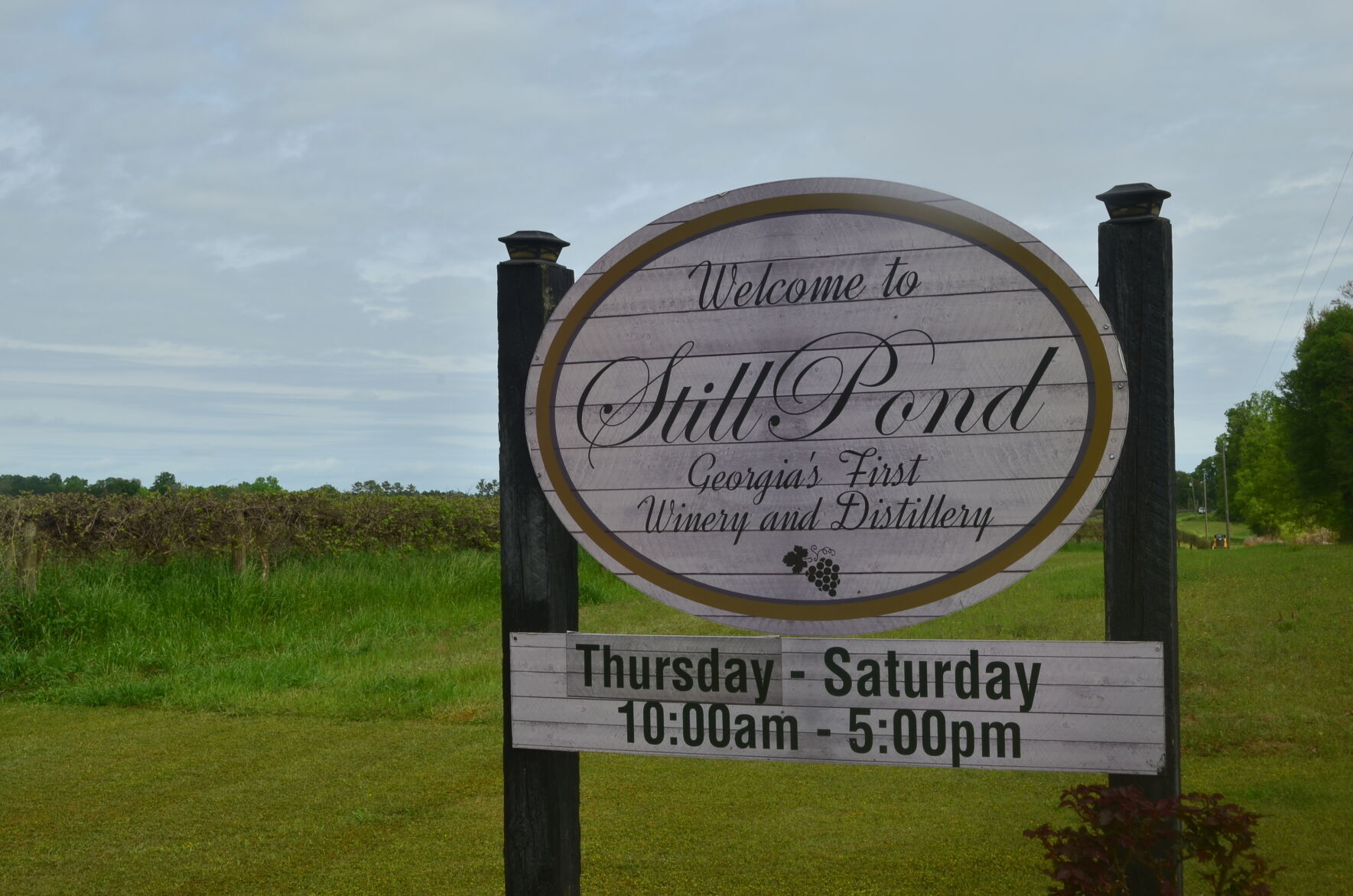
Now, their wine-tasting room is open Thursdays through Saturdays. They serve an average of 50 customers on their most popular day – Saturday. Most of them travel from nearby metro areas like Albany or Dothan, Ala., but Charles said they’ve welcomed people traveling from as far as Brazil and Australia. Visitors can enjoy charcuterie boards and try from a selection of more than 20 muscadine grape wines – rose, white, sparkling, dry or sweet – all produced in-house.
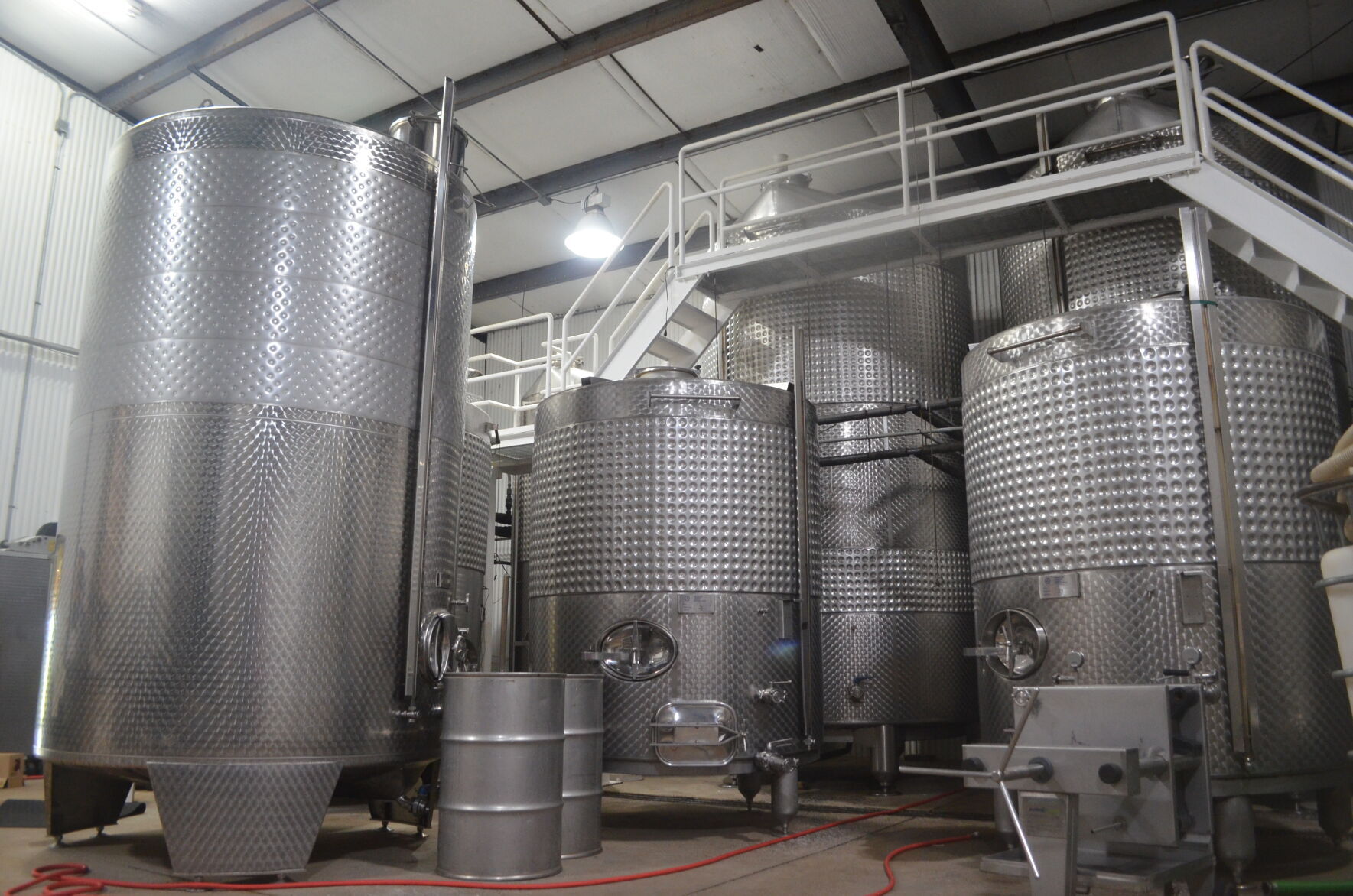
Still Pond became the first combined winery and distillery in the state in 2012. The distillery produce vodka, gin, bourbon and moonshine as well.
Still Pond’s alcoholic beverages are sold across the state. One of their most popular wine bottles is the Notchaway White – a nod to the Ichawaynochaway Creek that flows through Calhoun County. The winery/distillery has received countless awards and recognitions.
Charlie said it’s the only agritourism opportunity in the county. Agritourism describes farms that contain a recreational or educational enterprise component like tours or self-harvesting fruit. It’s a way for farmers and ranchers to diversify their operations. The USDA reports that it also has potential to help revitalize rural economies, educate the public about agriculture and preserve agricultural heritage.
“We were agritourism before agritourism was cool,” Cowart said.
Charles said Calhoun County welcomed the new winery and distillery because the county needed something to draw people in.
“A lot of people say we’re not in the middle of nowhere – we’re 10 miles from nowhere,” Charlie said.
Still Pond is situated somewhere between Arlington and Leary. To get there, visitors have to make a turn down a 2-mile, unpaved, orange dirt road. Once you get halfway down the road, there’s a sign that reads “Still Pond: One mile.”
The Cowarts said they put this sign up because most customers aren’t used to driving on the rural roads and assume they’re lost. Charlie said when they do finally make it to the end of the dirt road, they are surprised by what they see.
“They’ll say, ‘Well, we were expecting a few grapevines and maybe a small building,’” he said.
Instead, they’re met with hundreds of acres of rows of grape vines wrapped around trellises. There’s ample outdoor space for kids to play and benches and tables for people to sit. There’s a space for live music.
Inside, Still Pond is equipped with a bar and a brand new closed-in seating space that offers a climate-controlled space for people to sit and drink at all times of year – especially in the warmest, gnat-filled months.
Charles said people love to enjoy the space that the family may take for granted.
“We walk in the winery, and we don’t smell the wine in the tanks,” he said. “Going into the distillery, we don’t smell the bourbon and the barrels. The birds? We don’t hear them chirping. But for people that don’t have the opportunity to get out into the countryside and onto a farm, they hear it all … smell it all … see it all. It’s a rewarding experience for them.”
Agriculture is the only industry in Calhoun County. Charles notes that there is no business within the county that doesn’t rely on agriculture to exist. Because of this, he said it could be an advantage for other farmers to consider looking into agritourism opportunities on their own farms.
Charles said he’s seen a shift in curiosity from the farm’s clientele. He said more people than ever want to see how and where their food is grown – which is what agritourism is all about.
Dustin Sherer, the Farm Bureau’s government affairs director, said this interest grew especially during the COVID-19 pandemic when grocery stores saw food shortages.
“For many years, Americans … had all of the choices they wanted on a shelf, and when those choices started to go away, they didn’t understand it,” he said. “There was a general increase in the curiosity of what food production looks like from the farm to the table.”
Charles said he has customers who want to know what a peanut tree looks like (peanuts grow on vines) and what that “white stuff” on the side of the road is. (Spoiler alert: It’s cotton.)
“There’s so much out there in the agricultural industry that the vast majority of the people don’t have a clue about,” he said.
However, Charlie said, you have to be willing to accept the challenging part – learning how to do it and getting people to enjoy it and actually give you money for it.
He said business for Still Pond’s tasting room was slow at first while they were trying to let people know it existed. They relied heavily on word of mouth, newspaper advertising and now, social media, which he said has ramped up their visibility.
Still Pond has hosted events to draw people out, including live music and festivals. Charlie said surrounding local businesses would ask him when they were hosting the next one because the events brought people into other Calhoun County businesses as well.
Conner Collins, chairman of the county’s Board of Commissioners, said Still Pond is a good business to supplement the county’s farming operations. It draws people in and creates jobs within Calhoun County.
He said the county also sees people who visit the well-known nearby White Oak Pastures, a farm and agritourism operation in Bluffton. Collins’ grand-daughter and her husband also created a wedding venue on their family farm, Nubbintown Farms, in Edison – another example of utilizing the unique farm space to draw outside people in.
“People come out, and they’re amazed at the things that the farmer does,” Collins said.
Ultimately, Charlie said Still Pond’s main business plan is treating the customer right, which encourages them to tell someone else about the great experience they had at the winery/distillery.
He said you have to be willing to adapt constantly.
“What worked last year might not work this year,” he said. “You name it, and we’ve probably tried it.”
Charlie said agritourism can also be something very valuable for family-owned operations to look into.
“When you grow a plant that creates a fruit or whatever, you’re creating; when you create a product or experience out of it, from an economic standpoint, you’re getting more net return,” he said.
Charlie said the resources are there for farmers, it’s just taking the next step to create the destination.
“It’s rewarding, and it feels good to see families enjoying themselves and having a good time at something we’ve worked generations to create,” he said.
The family hopes to implement winery and vineyard tours as well as host different events for special occasions like a Mother’s Day brunch. Right now, though, Charlie said they’re focused on their new climate-controlled front seating space and building up a consistent customer basis on the weekends.
He said Still Pond isn’t just something customers stumble upon. It’s a destination that people plan to visit. It’s a business that attracts people to a depressed area of the state.
“We’re glad we can contribute and do better,” Charlie said.

Author

Related Articles
That ATV you drive around might not be legal. Edison, GA, looks into passing local ordinances
The use of golf carts, UTVs and ATVs and low speed vehicles has grown in popularity in recent years. Some cities have specific ordinances, allowing these different vehicles. Others, like Edison, never developed any local laws to address them, but Edison Councilman Curtis Adams said he’s noticed more and more on the streets. This prompted discussion on potential ordinances during Edison’s council meeting,
Arlington business owner accuses Police Department of failing to make arrests for repeated robberies
An Arlington business owner plans to close two of his businesses in the city next Wednesday in protest of what he said is “unequal protection under the law.”

No. 2-ranked Calhoun County wins thriller over Monroe, 63-60
The No. 2-ranked Calhoun County Cougars (8-0) remained undefeated Friday night with a hard-fought 63-60 victory over Monroe in front of a packed home crowd in Edison.
