
Mark Chesnutt remains country to the bone
Despite changes in country music, star Mark Chesnutt has remained faithful to the genre’s roots.
Warning to country music fans who prefer the genre’s modern incarnation: Don’t approach country veteran Mark Chesnutt with the idea of discussing the merits of today’s country music.
“What country radio started playing in the late ’90s was a betrayal, a betrayal to country musicians like me, George Jones and others who believed in traditional country music,” said Chesnutt, who practically owned the ’90s and has had a Hall of Fame career already that includes eight No. 1 songs, four platinum albums and an accumulation of several awards, all during the ’90s. But as the decade was fading into the new millennium, Chesnutt’s star faded almost as quickly as it had enjoyed its meteoric rise.
The country star blames that demise on country radio’s turn to the so-called “bro country” and “hick-hop” versions of the music that carried country away from its roots in the direction of pop music.
“Yeah, we pretty much had doors slammed in our faces, the people who didn’t turn away from the traditional country we’d grown up on,” Chesnutt said during a recent conversation with The Albany Herald. “When I first started breaking into the country mainstream, everybody wanted to be like us, the traditionalists. Then Garth Brooks turned country into pop, became a pop act doing rock concerts. Shania Twain added to it, and country music went to hell.
“And for those of us who refused to conform to what these folks were doing, well, country radio just turned their backs on us.”
Chesnutt, as country fans know, has stuck to his guns, refusing — with one huge exception — to give in to those clamoring for him to climb on the new country bandwagon.
“I did do the Aerosmith song ‘I Don’t Want to Miss a Thing,’ but it was at the insistence of the studio executives,” he said. “It was a big hit (reaching No. 1 on country radio), but it didn’t feel right. When the record company came back and said they wanted to do that again, I just said no. After that, the industry pretty much wouldn’t give me the time of day.”
But Chesnutt, 61, has persevered. Aside from some health issues that kept him sidelined for a period, he’s continued to bring loyal fans the music that attracted them to him in the first place.
Chesnutt talked about the ups and downs of the industry and his career plans with The Albany Herald in advance of his Aug. 22 show at the Albany Municipal Auditorium.
ALBANY HERALD: I appreciate the opportunity to talk with you about your show in Albany in August. But before we get started, I wanted to ask about your health. I understand you’ve had some serious health issues lately.
MARK CHESNUTT: Everything’s great right now, but it hasn’t been easy. I had some pretty bad health scares going back to about ’21. I had back surgery, and after they fixed that up, I had to have emergency quadruple bypass surgery. I’m feeling good now, but for a while there it was one thing after another.
AH: My wife used to work in country radio here, and she told me you played in Albany before several years ago. Any specific memories of playing here?
MC: Not really, right off hand. I’ve been performing for more than 30 years now, and when you play that many shows, they all seem to run together. But I’m sure I played there … of course, I’m pretty sure I’ve played just about everywhere.
AH: Artists with any sort of longevity get linked to the era where they’ve had the most success. The ’90s belonged to Mark Chesnutt. What was that like for a good ole Texas musician who’d been playing clubs and bars for a decade?
MC: That was an amazing time for me. I’d played clubs and honkeytonks throughout Texas all through the ’80s, and some of the people I played with told me I needed to go to Nashville, see if I could get a foot in the door. That paid off for me. I was doing good in south Texas, and that led to an eventual record deal with MCA. Things took off like a huge boom.
AH: Let’s see … a major label deal, eight No. 1 songs, platinum albums, awards. That had to be a whirlwind for you. What do you remember most about that time?
MC: I’d been playing more than 10 years and had never played a big venue. It was a new world for me. And the big thing about it: I got to meet and perform with my heroes, the ultimate being George Jones. He’s from the same part of Texas I’m from, and I’d heard stories about him all my life. We became friends, toured and recorded together. When he built his country music park around Beaumont, I played there all the time. Yeah, during the ’90s, I met and sang with George, Merle Haggard, Waylon Jennings, Conway Twitty, the Judds, Alabama, Reba McEntire. I got a chance to meet and play with all these amazing people.
AH: When country radio chose to pretty much abandon the traditional country that you and all those people you mentioned played, you chose to remain true to your roots. A lot of music fans appreciated and respected you for that. Was it difficult not to chase the latest trends as so many artists did?
MC: Well, it’s what led me to leave MCA. Yeah, all of a sudden, people I’d worked with in the industry wouldn’t return my calls. I did do the Aerosmith song, but I did not want to do it. In fact, George Jones got mad at me for doing it. And when the song stayed at No. 1 for four weeks, the record company said I should keep doing it. But it wasn’t the fans that made “I Don’t Want to Miss a Thing” No. 1 for me. In fact, the album that the song was on just didn’t sell at all. It was the radio stations pushing this new pop/country sound. The record company came back and told me they wanted to find another song like that, and I just flat told them no. So we parted ways.
AH: You’d done the independent thing for a decade in Texas early in your career. Did that help you adjust to the new reality of no major label deal?
MC: Yeah, it made things easier. I had built a fan base, and they didn’t want me to do pop records. I recorded what I thought were some really great songs, and my fans in Texas, the Southwest and the Southeast supported me. But it certainly affected my career. It did everyone from that era. I think Alan Jackson was about the only one who didn’t sell out but stayed among the top country acts.
AH: You’ve already had a great career. What keeps you out there, playing for true country music lovers?
MC: Yes, it’s been a great career, but I ain’t got enough money right now to sit around counting it. Plus, this is my job. It’s all I know. This is how I’ve made a living since I was 17 years old. I had an old Army sergeant who was working with me at Montgomery Ward in Beaumont. One day he said to me, “What the hell are you doing here, doing this and playing all those small clubs? Cut this crap and go play music.” I quit that day and never looked back. So what am I gonna do? No, I haven’t had a hit in years, but I’m still out there.
AH: You’ve done a lot in what’s been a pretty great career. If you could go back and change anything along the way, what would it be?
MC: I wouldn’t do anything different. There are some business decisions I made that I’d maybe do a little bit different. I’ve quit drinking, so I’m making better decisions now. I really thank God for the things I’ve been able to do.
AH: OK, I’ll make this the last one. I’m going to ask you this, but I want to preface it with something that happened when I was interviewing Robert Earl Keen a few years ago. I always read up and do research on artists before I interview them, so I asked him a question based on a tidbit that was on his website. He said, “That never happened.” I told him it came directly off his website, and he said, “Never happened.” So, in reading about you, I came upon this wonderful quote: “I’m still here; I’m still country. I’m not changing with the times.” Was that you?
MC: (laughing) That’s me to the bone. I’m 61 years old, too old to change. As long as people want to hear me, I’ll keep playing for them. Hey, I can see doing this another 30 years. Maybe I’ll try to chase down Willie.
Author

Related Articles
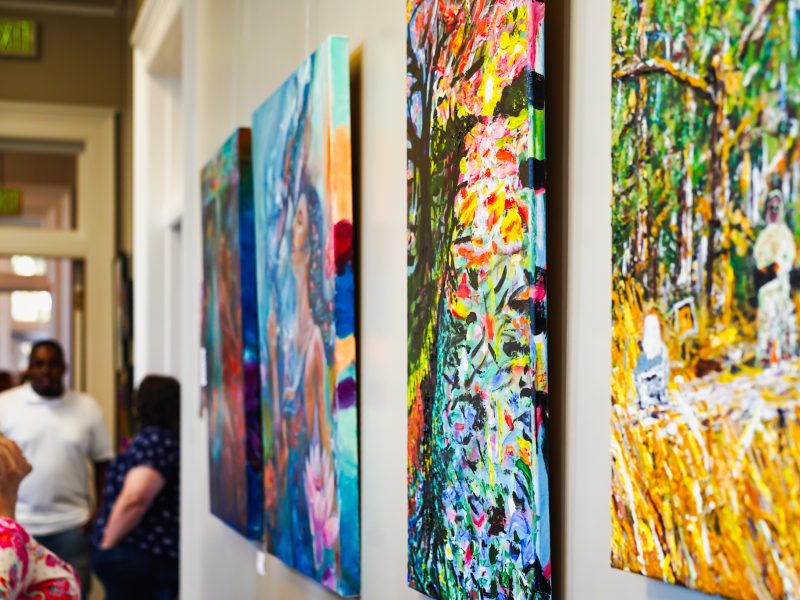
Southwest Georgia artists recognized at packed opening of exhibition
The annual juried exhibition, one of the region’s largest showcases of visual art, features approximately 46 artists and nearly 90 works spanning painting, sculpture, ceramics, photography and mixed media.
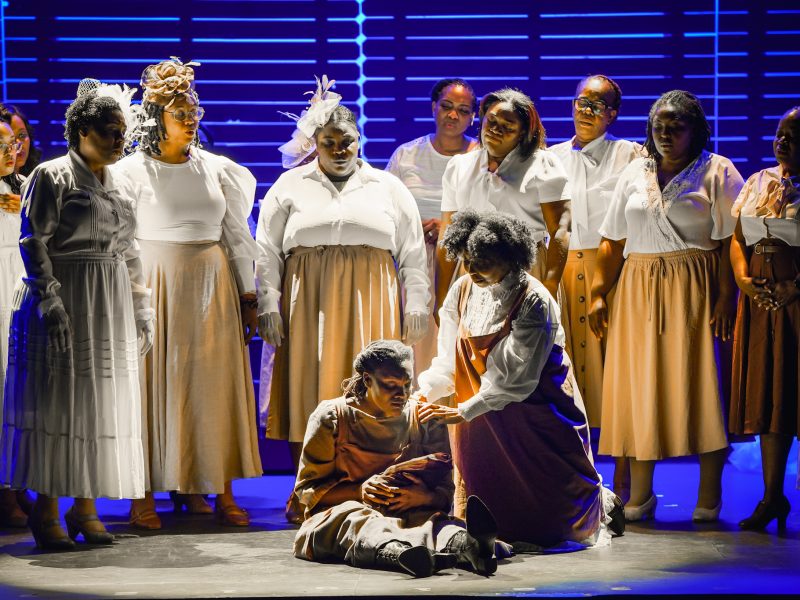
Powerful performances drive Theatre Albany’s ‘The Color Purple’
From the street, strands of purple ribbon wind around the white columns of the historic theater, hinting at the story waiting beyond its doors. Inside the foyer, a carefully curated slideshow flickers across a large screen, cycling through the faces of the cast. Some are seasoned performers. Others are stepping onto a stage for the very first time. Teachers stand alongside former students. Parents perform beside their children. People who worship in different churches, work different jobs and come from different corners of Southwest Georgia gather beneath the same lights to tell the same story.

Annual exhibition showcases southwest Georgia talent, community connections
Now in its 26th year, the exhibition features work by artists from across Southwest Georgia and offers residents an opportunity to engage directly with the area’s creative community.
