
Cancer walks play vital role in research funding
Phoebe Cancer Center announces new study
By Cindi Cox
ALBANY — Hundreds, perhaps thousands, of breast cancer awareness initiatives take place in this country each October, and those who want to show their support get involved in an assortment of ways from wearing pink ribbons to making financial donations to gathering sponsors and walking to raise funds.
Each year, a significant portion of the money raised nationally and locally goes to research, prevention and toward helping low-income or uninsured women get medicine, treatment and emergency help.
One of the largest breast cancer fundraising events is the “Race for a Cure” to benefit the Susan G. Komen Foundation. This year, the Foundation has organized numerous three-day walks all over the U.S., including one in Atlanta that took place Oct. 13-15 and drew 475 walkers. The event covered 60 miles in and around Atlanta.
The Komen Foundation is the world’s largest breast cancer organization, funding more breast cancer research than any other nonprofit outside of the federal government while providing real-time help to those facing the disease. The foundation has set a bold goal to reduce the current number of breast cancer deaths by 50 percent in the U.S. by 2026. Since its founding in 1982, the Komen organization has funded more than $956 million in research and provided more than $2.1 billion in funding to screening, education, treatment and psychosocial support programs serving millions of people in 60 countries worldwide.
According to the Susan G. Komen website, there were 252,710 new cases of breast cancer diagnosed in the U.S. last year. And there were 40,610 deaths.
On Oct. 13, the Komen organization launched its first crowd-funding initiative to raise more funds for cancer research. Through this initiative, donors have the opportunity to contribute directly to the pioneering work of four scientists and their teams that are making discoveries that could significantly improve outcomes for patients suffering from metastatic breast cancer. Metastatic breast cancer refers breast cancer that has spread beyond the breast to other organs in the body, most often to the bones, lungs, liver or brain. Metastatic breast cancer is incurable and is responsible for most of the nation’s annual breast cancer deaths.
To date, the Komen Foundation has invested more than $180 million toward metastatic breast cancer research, and more than 41 percent of Komen’s 2017 grants are devoted to metastatic research. Once the first four research grants are fulfilled, the Komen Foundation plans to introduce additional researchers from its extensive network. Donors will have the opportunity to hear the researchers’ stories, learn about their work and better understand the impact that each researcher is making. Those interested in supporting and learning more about the crowd-funded grantees are encouraged to visit BeMoreThanPink.org.
In Atlanta, Kim Goff heads an organization called “It’s the Journey,” which sponsors an annual two-day walk that is scheduled to take place Nov. 11-12. A percentage of the funds raised through that event benefit local breast cancer patients and survivors.
“We give out grants with the money we raise,” Goff said. “Last year we gave to the Phoebe Foundation for research. We’ve also given out grants to the Southwest Georgia Cancer Coalition.”
Diane Turner of Dahlonega participates in the It’s the Journey breast cancer walk and in many other events in Georgia and in Florida. She began walking for breast cancer 15 years ago on behalf of her aunt, who was battling cancer and had just finished taking chemo at the time.
“My sister was shaming me into walking by saying maybe I was too old. I guess I did it to show my support and to prove her wrong,” Turner said.
Turner walked the first time with her sister and two friends. Over the years, her Circle of Friends group has grown to include anywhere from 40 to 50 who come together to join a walk.
“We have raised over $100 million dollars in just over 10 years,” she said.
Ten years ago her daughter, Janet Elliott, joined her group of friends on a breast cancer walk. Elliott eventually went on to start the Albany Pink Breast Cancer Walk in 2012. That walk is held in March.
With proceeds from the walk, Albany Pink has established a special fund through the Phoebe Foundation that helps those with breast cancer with emergency funds for rent or mortgage payments, utility bills, child care or other emergency needs.
Sarah Hosking, CEO of the National Breast Cancer Foundation, says a committed community throughout the U.S. has contributed to a strong investment in breast cancer research through ongoing fundraising efforts on a local, regional, national and global level. According to published reports, 100 percent of the NBCF funding comes from community groups.
“In 2016, NBCF invested over $13 million in life-changing research projects that will help to diagnose and treat breast cancer more effectively, allow people to live longer better lives, and ultimately stop people dying from breast cancer. It takes a momentous community effort to fund world-class research,” Hosking stated in a press release.
Since 1994, the NBCF has funded more than 430 breast cancer research projects with 34 new research projects launched last year.
One such study is taking a look at how breast cancer evades the immune system by hijacking onto healthy cells or switching off immune system regulators, which allows cancer tumors to hide in plain sight. Researchers say that Chimeric Antigen Receptor T-cell therapy is a novel form of immunotherapy where genetically modified white blood cells are transferred to the patient to boost her immune system. Preliminary data demonstrate that the immune system then develops a memory response and is able to fight recurring tumors.
According to NBCF reports, this study is gathering data for a clinical trial. If successful, it would be one of the most effective new breast cancer therapies and could significantly reduce breast cancer mortality in the next five to 10 years.
Understanding why some women are more at risk of dying from breast cancer than others is the focus of another major research project launched by the NBCF. While breast cancer has one of the highest survival rates at 90 per cent, hundreds of women still die within five years of being diagnosed with the disease. Researchers at the Centre for Population Health Research at the University of South Australia will pull together all the data from hospitals, radiotherapy centers and tissue banks to help answer the question of why 10 percent of women are still not surviving beyond five years.
A July 2017 NBCF blog said researchers are looking at new ways to use existing drugs to kill cancer stem cells. A pilot project also looks at the role diet and exercise may play in cancer prevention and survival.
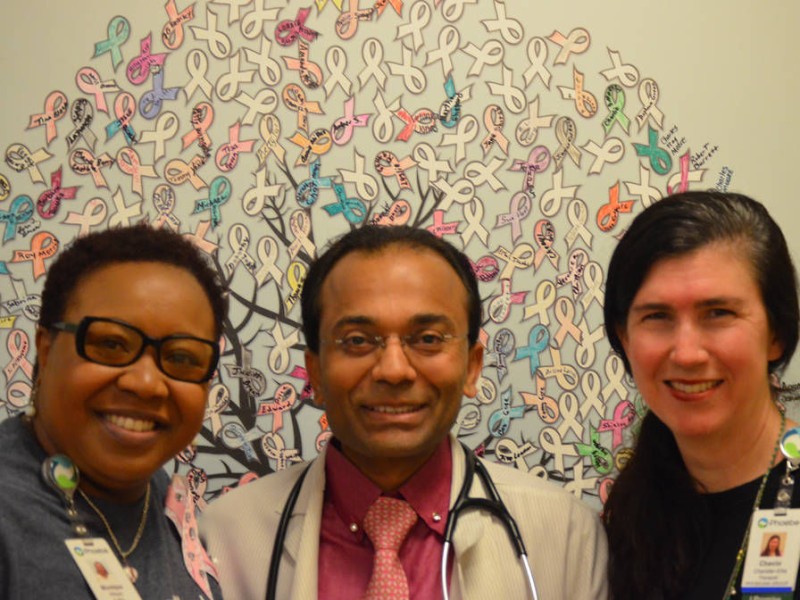
In Albany, the Phoebe Cancer Center has also received funding for breast cancer research. On Oct. 13, Phoebe sent out a press release announcing a new clinical trial that could help determine whether weight loss may help protect patients from a second cancer diagnosis.
“Our Breast Cancer Weight Loss (BWEL) study seeks to determine whether the higher risk for breast cancer recurrence in women who are overweight or obese when they are diagnosed with breast cancer could be reduced or eliminated if weight is lost,” Dr. Chirag Jani, an oncologist at Phoebe Cancer Center, said. “We hope the results of the trial will help us determine if weight-loss programs should be a part of breast cancer treatments.”
Phoebe is currently involved in several clinical trials for various types of cancer in cooperation with a number of organizations. All trials are monitored by a committee of doctors, nurses and local community leaders called an Institutional Review Board.
“The ultimate goal of all or our trials is to gain knowledge that will help us improve treatments, resulting in better outcomes for our patients,” Jani said.
Patients may be eligible to participate in BWEL if they have been diagnosed with stage II-III breast cancer within the last 12 months, if they have completed surgery and chemotherapy or if they are interested in taking part in a weight-loss program. Study participants will be randomly assigned to one of two groups. The Weight Loss Intervention Group will take part in a weight-loss program. The Health Education Group will receive helpful information about breast cancer topics. Participants will complete health questionnaires and submit to weight measurements and a fasting blood draw at different points in the study.
“This is an important and ongoing trial,” Jani said. “Since October is Breast Cancer Awareness Month, it is an appropriate time to highlight this study and encourage more participation.”
Any woman interested in participating in this clinical trial is asked to contact Phoebe’s Clinical Research Department at (229) 312-0405.
Related Articles
My Grandpa Was Killed in World War II. I Met Him Through His Letters Home
Gina Wolf’s grandfather died before she was born. His letters sent to her grandmother from Europe during World War II made it possible to know what kind of man he was.
‘Sounds Like a Mutiny.’ Secret Recording Exposes Claims of Toxic Leadership After a Marine’s Suicide
This week’s War Horse story follows the systemic failures before and after the death of Cpl. Drew Mobley who was the third in two years at Marine Corps Base Quantico to die by suicide.

Southwest Georgia artists recognized at packed opening of exhibition
The annual juried exhibition, one of the region’s largest showcases of visual art, features approximately 46 artists and nearly 90 works spanning painting, sculpture, ceramics, photography and mixed media.
