
Coal may be gone, but the mercury remains
By David Dixon
[email protected]
ALBANY — The Georgia Environmental Protection Division Air Protection Branch recently completed a report on the effects of mercury concentration in fish tissue. This trend analysis (2006 to 2020) was conducted to examine the impact of mercury emission controls, specifically in coal-burning plants, on methylmercury accumulation in the fish tissue at various sites throughout Georgia.
Mercury is a potent nerve toxin. It enters water by wet and dry depositions, where it is converted into methylmercury by bacteria. The methylmercury works its way through the food web and eventually accumulates in the top predator species of the environment.
The fish tissue trends were compared to the Georgia EPD’s water quality criterion for mercury in fish tissue of 0.3 milligrams of mercury per kilogram of fish tissue (mg/kg). This value represents a level expected to protect human health and aquatic life. The value is primarily based on the slight cancer risk to humans who consume these fish.
While the report shows an overall downward trend in mercury in fish tissue in Georgia’s lakes and streams, in the lower Flint River basin the value actually increased over this time period from 0.260 mg/kg in 2006 to 0.320 mg/kg in 2020, a rise of more than 20%, placing it above the water quality criterion.
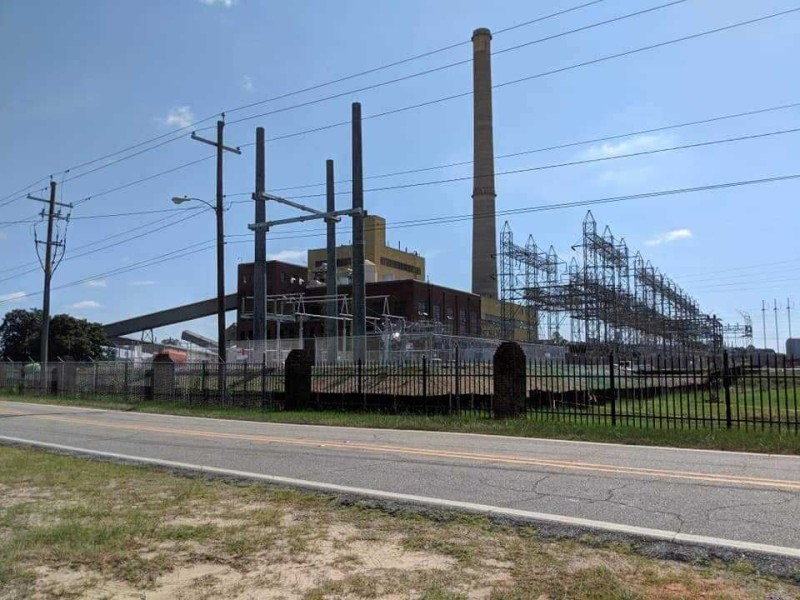
The test site on the lower Flint River was just below confluence with Ichawaynochaway Creek. The fish species was Largemouth Bass, a top fish predator in this area. This site was primarily chosen because it is downstream and during certain portions of the year downwind (prevailing) of the now-closed and deconstructed Georgia Power Plant Mitchell on the Dougherty/Mitchell County line.
Mercury exists naturally in the environment. It is released naturally into the atmosphere through volcanic eruptions and wildfires. It is also produced through human activities such as combustion of coal to produce electricity. This activity produces the largest source of mercury into the environment. For decades, this source of mercury was unregulated or poorly regulated, not just in Georgia but through the USA and the world.
Per Georgia EPD, there are only two remaining coal-fired power plants (with eight units) still operating, and all have installed mercury controls. Twenty-four coal-fired units in Georgia have been either shut down or converted to burning natural gas. Since the beginning of this study, a 98.4% reduction of mercury emissions (to the air) from coal-fired power plants was achieved.
In the time period of 2015 to 2017 the three coal-burning plants in the lower Flint Basin discontinued burning coal. These sources were Plant Mitchell on the banks of the Flint River downstream of Albany, MillerCoors (now MolsonCoors) in Dougherty County, and the Crisp County Power Commission plant beside Lake Blackshear at Warwick.
Since no more coal is being burned locally, one could reasonably expect the Flint River fish tissue mercury to also decrease in concentration, but it rose slightly. It is perfectly reasonable to wonder why.
The answer is likely not simple. Once mercury is deposited into the environment, it can remain and cycle for decades. Mercury also can be transported in the air for hundreds of miles, so is it is not just what happens in our region that affects mercury levels in fish tissue in the Flint. Our typical high-level wind currents of west to east could allow transport of mercury from far away.
Could mid-western and western coal burning affect Georgia? Our prevailing northerlies during the cool months and southerlies during the warm months at ground level could transport pollutants from units that continue to burn coal in other parts of Georgia, Tennessee or Florida.
Mercury in fish tissue also can vary from fish to fish of the same species caught at the same time.
Mercury can continue to seep out of the poorly regulated coal ash ponds. Coal ash is the leftover, unburned portion of the coal combustion process. In our case, the ponds were at the Plant Mitchell site and Crisp County Power site and either have or are being remediated. But they were situated in limestone karst (very porous) geology with no liner, essentially percolating dissolved and solid materials into the Floridan Aquifer with each rain event plus floodwater sufficient to raise levels inside the dikes.
The Crisp County ash pond was excavated and removed to a lined landfill in Crisp County. Georgia Power is currently in the process of removing the ash ponds off the old plant site along the Flint River.
This is, overall, good news for our region with regard to mercury reduction levels: Local combustion has ceased, ash ponds are being remediated, and remaining plants in Georgia have high-tech scrubbers installed. But it is obviously taking time, at least in some locations, for mercury levels in fish tissue to come down.
Others are the Ocmulgee a bit downstream of Macon and Warner Robins, and in some of the blackwater systems in southeast Georgia. At present, Georgia EPD is recommending a continuation of fish tissue study every 10 years for selected sites in Georgia, including the Flint River. This hardly seems sufficient.
While once every 10 years may be fine for those sites in Georgia where levels have come down to levels that are deemed safe for humans, sampling more frequently should be the norm for sites where levels remain dangerous until the data show that contamination has stabilized at safe levels.
“River advocates, Georgia EPD, and those that burn or once burned coal should be proud of the fact that mercury levels in fish are dropping,” Flint Riverkeeper Gordon Rogers said. “I vividly recall while serving as Riverkeeper for the Satilla the struggle to make sure that protective measures were put in place, looking forward at the time to the day when good results could be measured. Now is the time to finish the drill, not relax.
”Hot spots obviously remain. Whether due to the particular nature of the food webs at key sites, such as blackwater streams, or to continued possible contamination, we need to know what’s happening. Sampling once every 10 years is not enough. Once per year or every other year is the safe, conservative bet. Those who love and depend upon our state’s waters, which is literally everyone, deserve no less”.
Author

Related Articles

‘Sounds Like a Mutiny.’ Secret Recording Exposes Claims of Toxic Leadership After a Marine’s Suicide
This week’s War Horse story follows the systemic failures before and after the death of Cpl. Drew Mobley who was the third in two years at Marine Corps Base Quantico to die by suicide.

Southwest Georgia artists recognized at packed opening of exhibition
The annual juried exhibition, one of the region’s largest showcases of visual art, features approximately 46 artists and nearly 90 works spanning painting, sculpture, ceramics, photography and mixed media.

Powerful performances drive Theatre Albany’s ‘The Color Purple’
From the street, strands of purple ribbon wind around the white columns of the historic theater, hinting at the story waiting beyond its doors. Inside the foyer, a carefully curated slideshow flickers across a large screen, cycling through the faces of the cast. Some are seasoned performers. Others are stepping onto a stage for the very first time. Teachers stand alongside former students. Parents perform beside their children. People who worship in different churches, work different jobs and come from different corners of Southwest Georgia gather beneath the same lights to tell the same story.
