
Dan McCarthy: A man on a mission
For 30-plus years Dan McCarthy has been working to improve Albany’s housing situation
By Brad McEwen
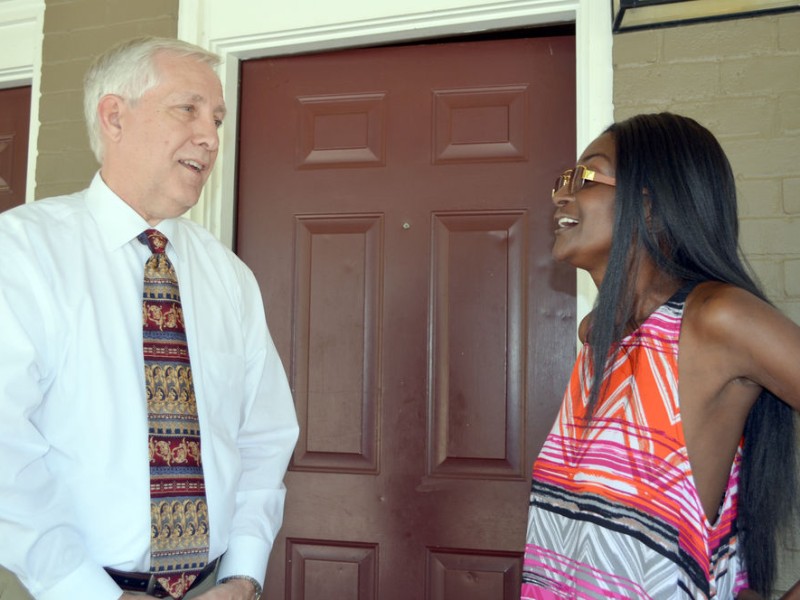
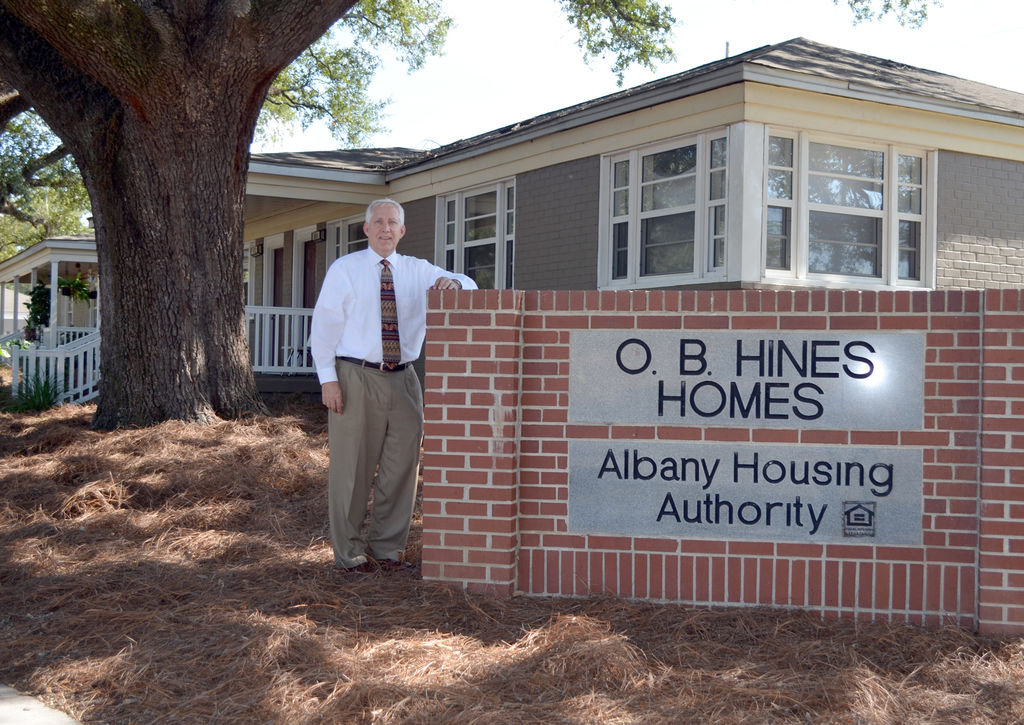
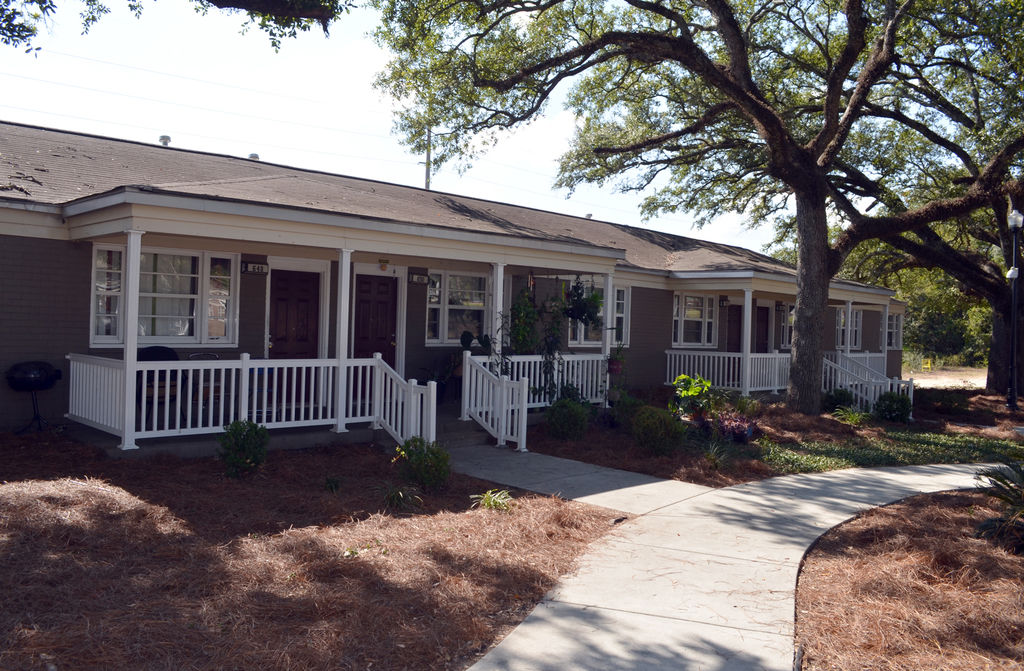
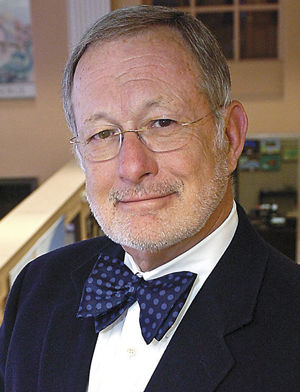
ALBANY — For many in the greater Albany community, the mention of the Albany Housing Authority brings a few things to mind. One is a vision of Albany’s impressive roster of public housing units, many of which defy the common vision of what a “project home” should look like. And the other is the name Dan McCarthy—the man who has spent the last three decades helping to turn Albany’s public housing into a symbol of pride for the community.
When news of his pending retirement was made public — after 33 years with the organization (including 27 as its executive director) — it was met with shock and surprise, followed by reflection about a true community hero.
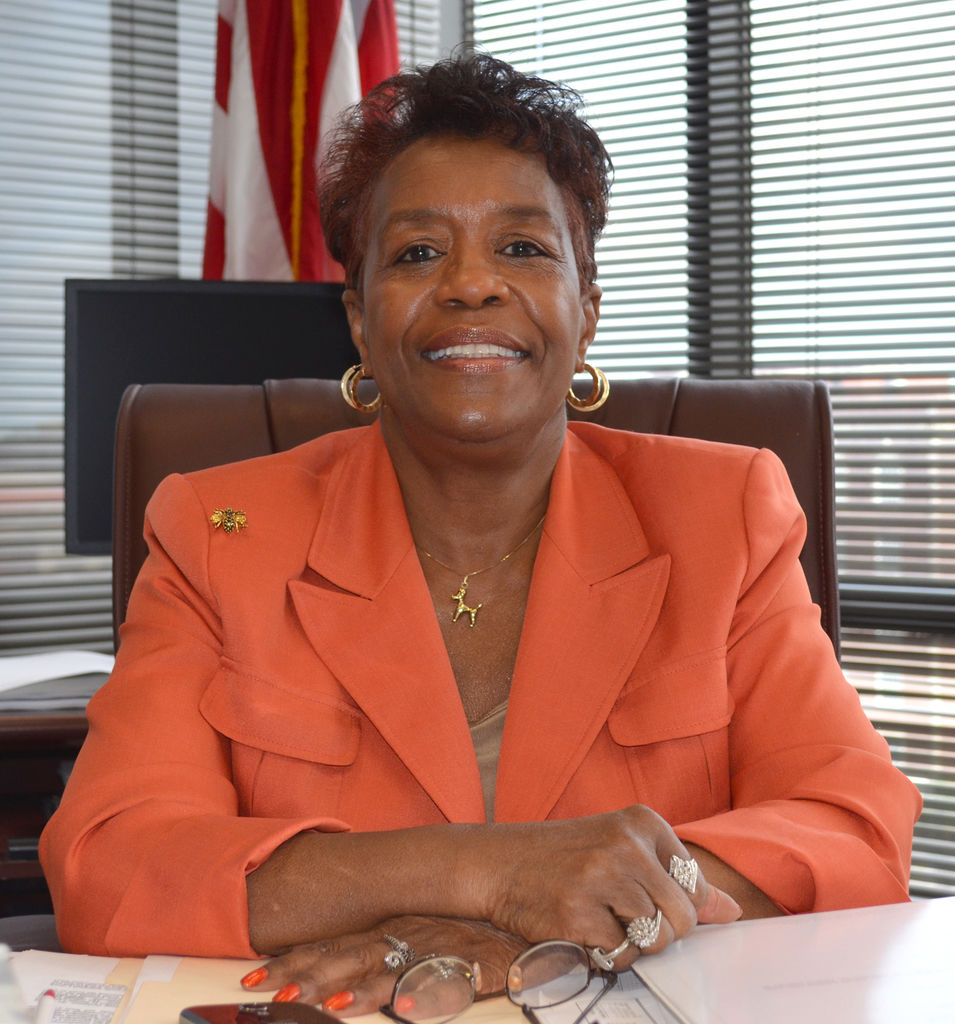
“When I heard Dan was retiring I was shocked,” Albany Mayor Dorothy Hubbard said. “He came by the office with the chairman of his board to tell me that he was leaving and I said, ‘No. Why on earth are you leaving? You can’t be leaving.’
“But I understand you have that feeling and you know when it’s time to go. He will be really missed by this community. Over the years, we’ve developed a really good relationship. The only thing I can say is that he really is an asset and I really do hate to see him go.”
McCarthy’s stated reason for calling it a career is a pretty simple one, and not one that has anything at all to do with whether or not he still has passion for his job. It was all about time — time to focus more on his family, including his mother, his brothers and sisters and their families, and his own children and grandchildren; time to pursue other adventures.
“I have decided to move on to another stage of my life,” McCarthy said. “It wasn’t easy. A lot of different feelings go into deciding when it’s time to retire. I want to do things with my family and certainly more with my church.”
McCarthy, who will stay on with the authority until the end of March, also said he plans to get involved with mission work, likely through Avalon United Methodist, which has been his home church since he and his wife, Debbi, arrived in Albany. To those who know him, it makes perfect sense.
“I read that he plans on doing mission work when he retires,” said Bobby McKinney, former head of the Albany-Dougherty Economic Development Authority. “I think his whole life has been a mission. I think he’s just expanding on what he’s been doing the whole time.
“There are very few people where their occupation is almost like a mission or a calling, and very few people get to be able to follow a passion in their lives and Dan is one of those people.”
That passion, McKinney said, is evident to all who know McCarthy and it’s one of the things that has helped him become one of the community’s most influential leaders, even if not everyone realizes his impact.
“Dan McCarthy has been one of those foundational people in Albany that has made Albany a better place,” McKinney said. “His talent, and passion for what he does, his hard work and dedication have been significant factors in who Albany is and what it’s become. It think he’s one of those unsung heroes that sometimes gets overlooked.
“The impact that his agency has had, under his leadership, is vitally important to the community. He’s done a fine job and he’s done it in a way that brings dignity to the role. I know he’s not leaving us, but we will miss him as a community.”
That sentiment is shared by leaders and citizens throughout Albany who believe the devotion he has brought the housing authority since first coming to Albany in the early 1980s is one of the main reasons Albany has such a strong housing authority.
One such individual is W. Frank Wilson, the head of the Albany Civil Rights Institute, who has served on the AHA board for the past 10 years. He’s seen McCarthy’s talent up close.
“I have found working with Dan an absolute delight,” said Wilson, AHA board chairman. “He’s a visionary leader when it comes to improving housing and making housing more available to those in Albany.
“I think at the very core Dan is very caring. He recognizes opportunities to improve the housing experience for Albany’s citizens. If you look at the public housing in Albany compared to housing in other cities, our public housing has slowly but surely moved away from that project mentality to a place where people are proud of their homes and where they live.”
The point Wilson makes about moving Albany housing forward goes to the heart of why McCarthy will leave such a rich legacy. Ever humble, McCarthy will defer credit for the housing authority’s success to Roy Lane, who preceded him as director of the housing authority. McCarthy, however, has been instrumental in ushering in an era of growth and prosperity for Albany’s public housing since becoming director in 1989.
Under McCarthy’s guidance, the housing authority has grown to manage 1,117 public housing properties and multi-family housing units in Albany spread over 20 different locations throughout the city.
Not only were many of those units built during McCarthy’s tenure, the majority of the others were renovated and updated to ensure that the city’s public housing residents lived in homes that were safe, homes that both residents and the community could be proud of.
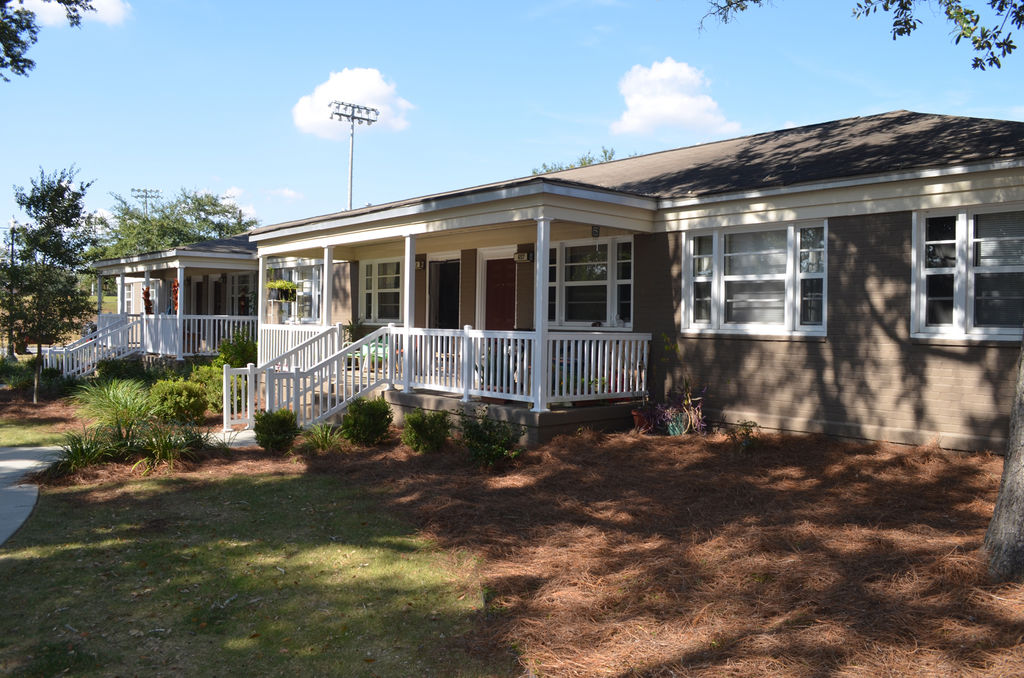
“Roy Lane started the approach of doing more residential-looking properties,” McCarthy explained. “We began going to duplex and or even, in some cases, single-family developments, to give it a different look and feel. One of the quotes I’ve heard is ‘an un-project-like feel.’”
“I’ve kind of followed a view that says that we build the inside of the units for the residents, to make it a good place to live, where it’s comfortable — warm when it needs to be warm and cool when it needs to be cool, the plumbing works and all that. And the outside of the buildings and the property is really for the community, to give it some aesthetic appeal, that it’s not an eyesore, that it’s a very positive addition to the rest of the housing product that’s available in the community.
“The driver behind that (philosophy) was to improve the perspective or the perception of public housing, that it’s not just a warehouse for low-income families, but it is, in fact, quality housing where families can raise their children and be successful.”
Wilson also touched on that view of Albany’s housing, pointing out that visitors to Albany are amazed when they see the kind of public housing the city has to offer.
“If you look at the public housing in Albany compared to housing in other cities, our public housing has slowly but surely moved away from that project mentality to a place where people are proud of their homes and where they live,” Wilson said. “Most people who ride through Albany and see our public housing are astonished by what they see. It looks like, many times, private development.
“Without a doubt Dan has a lot to do with that. As I said, he’s a visionary leader.”
While McCarthy has been able to make that vision a reality through his expertise and his connections with the federal Department of Housing and Urban Development, and other entities that support housing authority efforts, many think McCarthy’s impact comes from his kind and caring nature, which is almost constantly on display.
“He was always the kind of person that you knew cared about the residents,” Hubbard said. “He cared about the work he was doing and he cared about the community.”
Hubbard explained that, as a commissioner and now as mayor, she has worked closely with McCarthy through the years on a number of different initiatives and is constantly impressed by the connection he has to the residents who live in the public housing neighborhoods.
Hubbard shared that she’s been on several tours of Albany’s public housing units and has taken part in programs in the various public housing developments, and time and again she has witnessed McCarthy’s true nature.
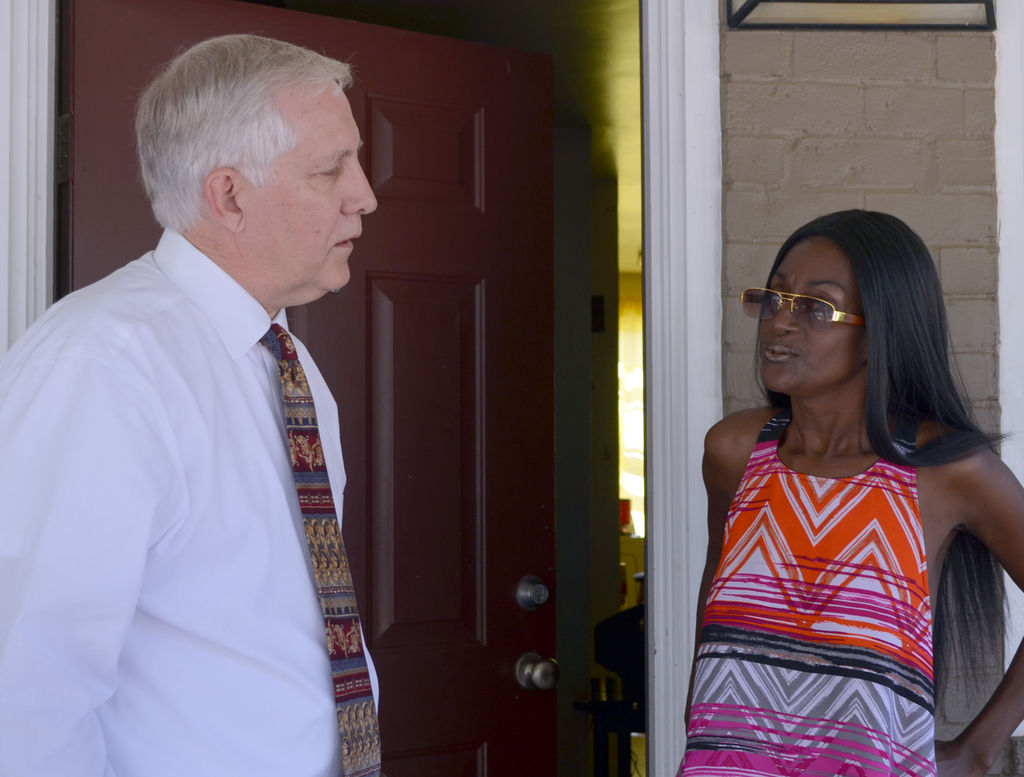
“Many times when you have people working with people who are living with those kinds of incomes, the people don’t feel close to them; they don’t feel like they care about them,” said Hubbard. “But I can tell you that when we’d go to those different neighborhoods they were out there and they knew Dan and he would stop and talk to them and they felt comfortable with him.
“He made them feel comfortable. And for me, I think that is really, really key for the residents to feel like they are important. Even though their income might not be as high as the rest of us, they know that someone cares about them. He never treated them as anything other than people that he loved. I saw that over and over again as I went to the projects and to the events that he hosted. I think Dan is a caring person and I think he is really concerned about this community.”
That kind of commitment to helping people is also evident outside of McCarthy’s work with the housing authority as he is active in a number of community initiatives and has partnered with numerous charitable entities to help effect change in areas that impact the lives of the people he serves in public housing.
In addition to being an alumnus of Leadership Albany, McCarthy also works with Albany Area Chamber of Commerce-initiated Strive 2 Thrive, which serves to help families out of poverty. He works with Phoebe Putney’s Network of Trust, and the list goes on. If an organization is trying to affect positive change for Albany’s residents, there’s a good chance McCarthy is involved in some fashion.
In fact, Hubbard first met McCarthy 25 years ago, before her career in government, when she served with him on the board of Girls Inc.
“He was always there, always concerned about the people, the children that lived in the housing authority property,” recalled the Mayor. “He was always trying to make sure there was some program there for them. So that was a good partnership for Girls Inc.
“He has always been supportive. We had to get money and set budgets and get programs going in a way that fit with the people he served. He was always concerned. It was always a challenge, but he was always able to find some way for us to get it done.”
McCarthy’s impact can also be felt by residents across the Southwest Georgia and in places as far away as Atlanta and Louisiana. Several of his former employees have gone on to have successful careers running other housing authorities.
There are former employees like Bill Barnettson, who is now the head of East Point’s housing authority, and Richard Murray, of the Baton Rouge housing authority. Closer to home are Shaundra Clark, director of the Tifton housing authority, and Candice Drake, director of the housing authority in Dawson, who credits McCarthy with seeing talent in her and giving her an opportunity in Albany. That led to her finding her true calling in housing.
“He knew what I was capable of,” said Drake, who met McCarthy when she applied for a job as a property manager with the housing authority. “I had finished my master’s, but it was 2007 and there were no jobs in Michigan, so I moved back to Albany. I applied for a job as a property manager. In the interview he told me, ‘On the one hand you’re overqualified and on the other hand you’re under-qualified.’ He offered me a position as an assistant property manager. He knew I could learn what I needed to learn. He saw the potential.”
McCarthy also saw potential in former employee Michael Wayne Allen, who is now the executive director of the Sylvester Housing Authority. Allen started his career in housing with the AHA in 1993 as a grounds crew leader, before working his way from the maintenance department to the housing department as an assistant property manager as well.
Allen eventually became a property manager in 2009 before ultimately moving to Sylvester and continuing a career in public housing.
“I would like to thank Dan McCarthy for all of his support, guidance and leadership during my 22 years of working with the Albany Housing Authority,” said Allen. “Dan has always possessed extensive professional skills with relations to the community and his peers; he has done great things for the public housing communities in Albany, Georgia and the Georgia Association of Housing and Redevelopment Authority.
“Albany Housing Authority not only gave me the opportunity to learn the public housing business, but also how to become a better leader within the organization.”
When talking to former employees as well as members of the community, it seems McCarthy is simply “universally liked,” as McKinney said. It’s not hard to imagine that feeling comes from the fact that the housing authority director is plain spoken about what motivates him to go to work every day to try to improve the circumstances of the residents he serves.
“You want to help people who are in need,” McCarthy said. “That is part of what public housing is for. To help families that otherwise could not afford quality housing and we do that. I always felt that I just wanted to make a difference.”
It’s easy to see that he has.
Related Articles

‘Sounds Like a Mutiny.’ Secret Recording Exposes Claims of Toxic Leadership After a Marine’s Suicide
This week’s War Horse story follows the systemic failures before and after the death of Cpl. Drew Mobley who was the third in two years at Marine Corps Base Quantico to die by suicide.

Southwest Georgia artists recognized at packed opening of exhibition
The annual juried exhibition, one of the region’s largest showcases of visual art, features approximately 46 artists and nearly 90 works spanning painting, sculpture, ceramics, photography and mixed media.
Powerful performances drive Theatre Albany’s ‘The Color Purple’
From the street, strands of purple ribbon wind around the white columns of the historic theater, hinting at the story waiting beyond its doors. Inside the foyer, a carefully curated slideshow flickers across a large screen, cycling through the faces of the cast. Some are seasoned performers. Others are stepping onto a stage for the very first time. Teachers stand alongside former students. Parents perform beside their children. People who worship in different churches, work different jobs and come from different corners of Southwest Georgia gather beneath the same lights to tell the same story.
