
DAVID HEWETT: Honest Abe … picking the best for Presidents’ Day
PRESIDENTIAL PERSPECTIVE: Abraham Lincoln is considered by many to be the nation’s greatest president
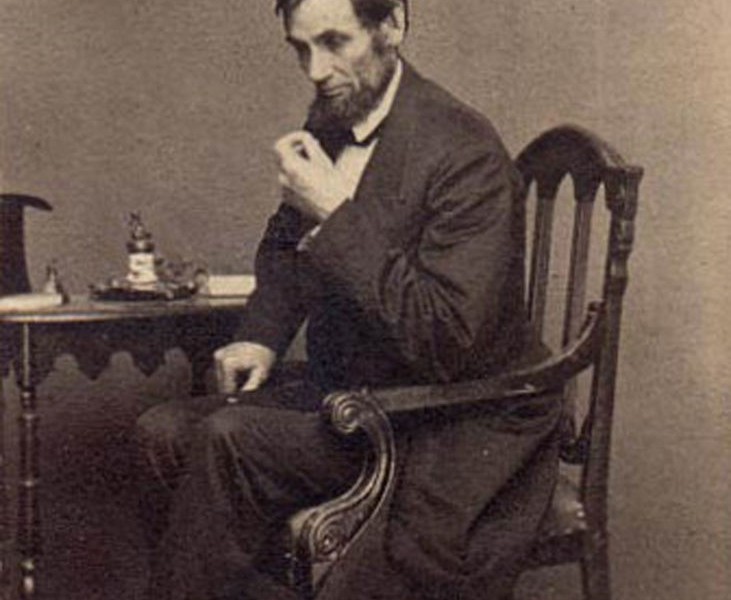
By David Hewett
Forty-five men have been elected to the office of president of the United States. As we approach Presidents’ Day, one might ask who were the greats, who were the near greats, who was the greatest? Historians have spilled gallons of ink discussing this issue, especially selecting the greatest.
Over the years, scores of American historians have chosen Abraham Lincoln as the greatest of our presidents. Historians aside, this writer offers Lincoln as the greatest.
Born of plain frontier parents, Abraham Lincoln never had the benefits of formal education. This must not be understood as Lincoln was uneducated. By the light of the fireplace, he learned to read. With little money, no books could be bought. Borrowed books became a vital part of Lincoln’s education. The family Bible was his daily companion, and from the King James version he experienced the beauty of 17th century English. In later years, he read the works of great writers, including the dramas of William Shakespeare.
Under the direction of lawyers, Abraham Lincoln began the “reading of law.” This would lead one to the practice of law. Lincoln began his practice in Springfield, Ill.
During Lincoln’s years of law practice, he took an interest in politics. In 1846, he was elected to the House of Representatives as a representative from Illinois. Serving only one term, he returned to Springfield in 1849. His interest in politics continued, however.
With the Louisiana Purchase (1803) and the ending of the War of 1812, the United States gained millions of acres of land beyond the Mississippi River. By 1820, the boiling question throughout the nation was whether there would be slavery in the newly added western states. The issue was temporarily solved with the Missouri Compromise.
During the 1840s and into the 1850s, the issue of slavery in the western states erupted again and again. In 1850, Abraham Lincoln ran for a Senate seat in the U.S. Congress. It was during that campaign that the Lincoln-Douglas debates were held. Mr. Lincoln lost the election; however, he gained much favorable notoriety. By this time, his statement, “A nation divided against itself cannot stand” were household words.
The 1860 presidential election witnessed an array of candidates. Included in the ring was Abraham Lincoln from Illinois. He won the election and in March 1861 became the nation’s 16th president.
Before leaving Springfield, Abraham Lincoln delivered his farewell address. That address was delivered to a fractured nation. Seven of the Deep South states had seceded from the Union. Fully realizing the seriousness of the secessionist movement, Lincoln said, “I leave now not knowing when or whether I shall ever return, with a greater burden resting upon my shoulders than rested upon George Washington.”
For the new president, the paramount issue — the only issue — was whether the United States would continue as one nation or whether there would be two. President Lincoln was firmly convinced there would be one nation.
After serving four years in the White House, President Lincoln was re-elected. In his inaugural address, we hear the president at his best; “With malice toward none, with charity to all, let us continue to bind up the nation’s wounds.” After four years of bloodshed and thousands upon thousands of deaths, President Lincoln pleaded for no malice toward anyone, and charity (love) for all!
Roughly a year before Mr. Lincoln’s re-election, the president attended a dedication ceremony for a cemetery in Gettysburg, Pa. The short speech made in November 1863 (the Gettysburg Address) lives today and will most certainly live forever. It bears reading and rereading by each new generation:
“Four score and seven years ago, our fathers brought forth on this continent a new nation, conceived in liberty and dedicated to the proposition that all men are created equal.
“Now we are engaged in a great civil war, testing whether that nation, or any nation so conceived and so dedicated, can long endure. We are met on a great battlefield of that war. We have come to dedicate a portion of that field as a final resting place for those who here gave their lives that that nation might live. It is altogether fitting and proper that we should do this.
“But, in a larger sense, we cannot dedicate — we cannot consecrate — we cannot hallow — this ground. The brave men, living and dead, who struggled here have consecrated it far above our poor power to add or detract. The world will little note, nor long remember, what we say here, but it can never forget what they did here. It is for us, the living, rather, to be dedicated here to the unfinished work which they who fought here have thus far so nobly advanced. It is rather for us to be here dedicated to the great task remaining before us — that from these honored dead we take increased devotion to that cause for which they gave the last full measure of devotion — that we here highly resolve that these dead shall not have died in vain — that this nation, under God, shall have a new birth of freedom — and that government of the people, by the people, for the people shall not perish from the Earth.”
On an April night in 1865, John Wilkes Booth fired a bullet into the head of President Lincoln. The next morning, he died. Moments after his death, one of his aides said, “He now belongs to the ages.”
And so he has. Lincoln still lives among us. We shall always remember his leadership, his words, his work of preserving the Union. Above all, we understand his position of self-government, a position clearly stated in Thomas Jefferson’s Declaration of Independence: “When in the Course of human events it becomes necessary for one people to dissolve the political bands which have connected them to another …”
David Hewett holds a Ph.D. in history from Florida State University and was a professor/administration at Darton State College for nearly three decades. Chair of the college’s Social Sciences Division before his retirement in 1997, he is a specialist in Southern history.
Related Articles
‘Sounds Like a Mutiny.’ Secret Recording Exposes Claims of Toxic Leadership After a Marine’s Suicide
This week’s War Horse story follows the systemic failures before and after the death of Cpl. Drew Mobley who was the third in two years at Marine Corps Base Quantico to die by suicide.

Southwest Georgia artists recognized at packed opening of exhibition
The annual juried exhibition, one of the region’s largest showcases of visual art, features approximately 46 artists and nearly 90 works spanning painting, sculpture, ceramics, photography and mixed media.
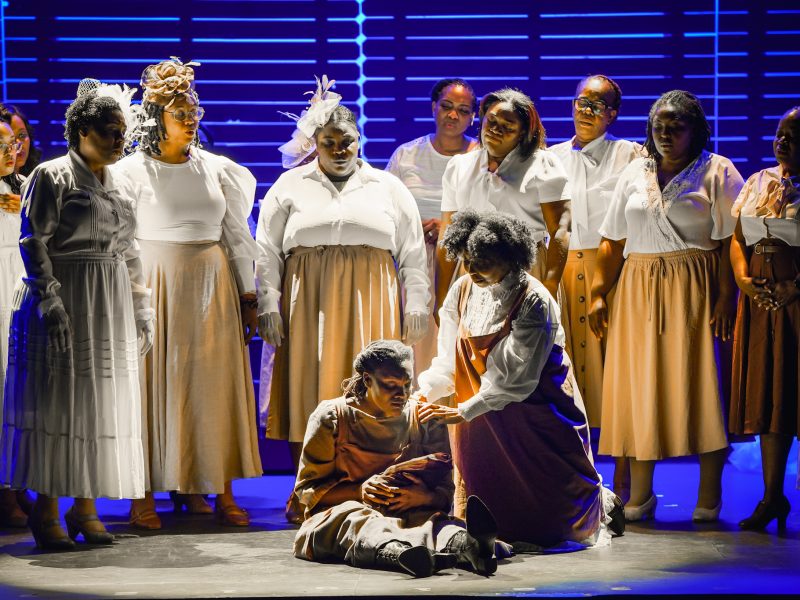
Powerful performances drive Theatre Albany’s ‘The Color Purple’
From the street, strands of purple ribbon wind around the white columns of the historic theater, hinting at the story waiting beyond its doors. Inside the foyer, a carefully curated slideshow flickers across a large screen, cycling through the faces of the cast. Some are seasoned performers. Others are stepping onto a stage for the very first time. Teachers stand alongside former students. Parents perform beside their children. People who worship in different churches, work different jobs and come from different corners of Southwest Georgia gather beneath the same lights to tell the same story.
