
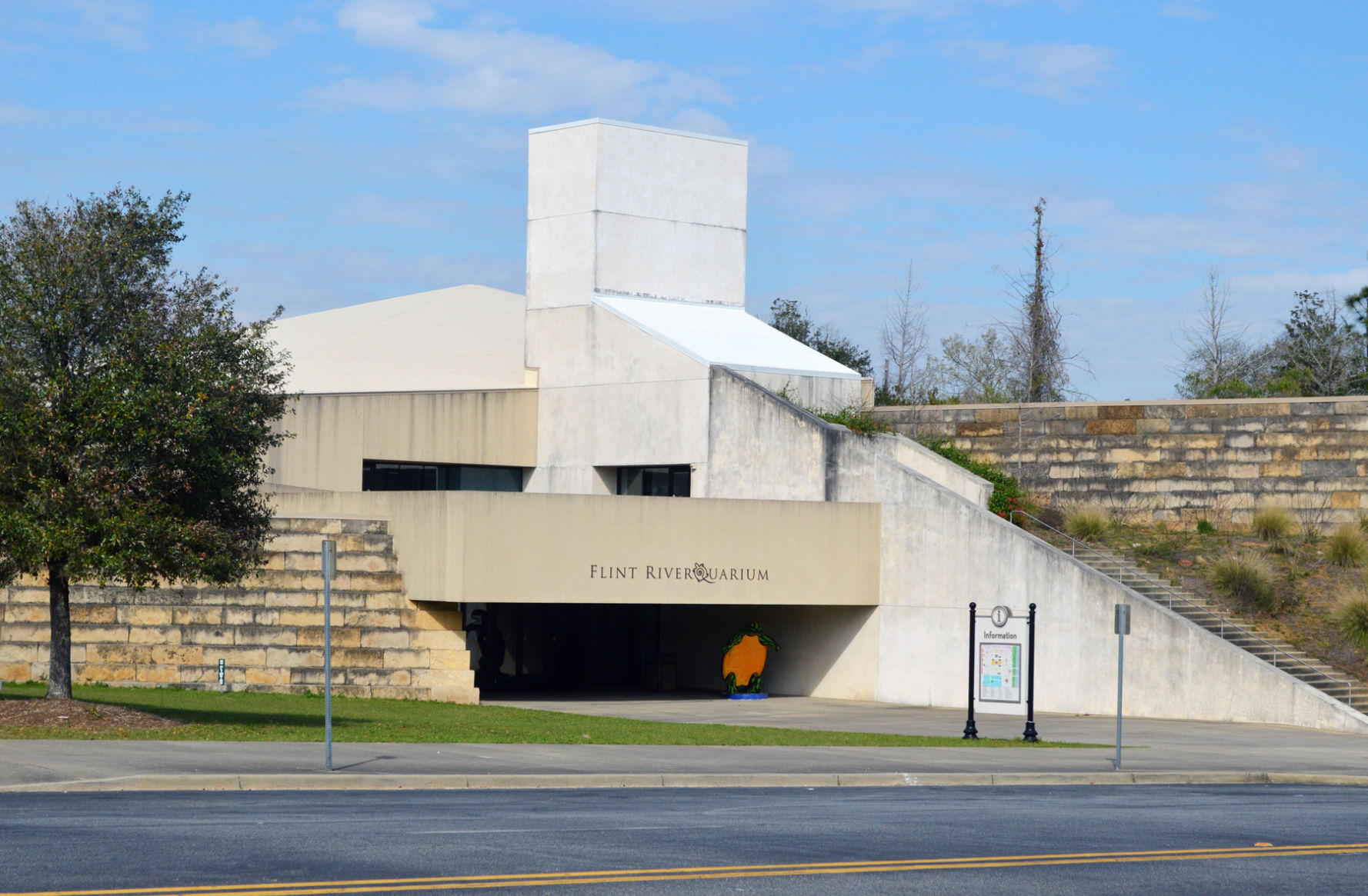
Flint RiverQuarium offers environmental education opportunities
Aquarium attraction opened in downtown Albany in 2004, and is a frequent school group destination
File Photo
By Jennifer Parks
Editor’s Note: Fifth installment in a series highlighting attractions in the Albany area
ALBANY — The Flint RiverQuarium opened its doors in 2004 with a goal of helping visitors learn more about the Flint River environment. Today, the attraction’s staff strives to embrace that mission, and be more than just an aquarium.
Executive Director Tommy Gregors said that following floods in 1994 and 1998, community leaders started looking at turning a disaster involving the Flint River into a positive by providing a venue that would help people learn more about the ecology of the river. Now the aquarium serves as a draw to downtown Albany, with 700,000 visitors coming through the doors since its opening.
In 2009, a study committee was formed and decided that the RiverQuarium should partner with nearby Thronateeska Heritage Center to offer joint programming — allowing school groups to make only one phone call to visit both facilities.
“Many of our audiences were similar in terms of school groups,” Gregors, who also serves as the executive director for Thronateeska, said.
The two attractions share education and maintenance staff, a structure that Gregors said also allows for stronger sense of efficiency. The entities have programs that compliment each other but do not duplicate.
Both are adjacent to Riverfront Park, making a visit a good day trip for children spending time downtown.
“We look at it as a campus,” Gregors said. “So far, we have done really well.”
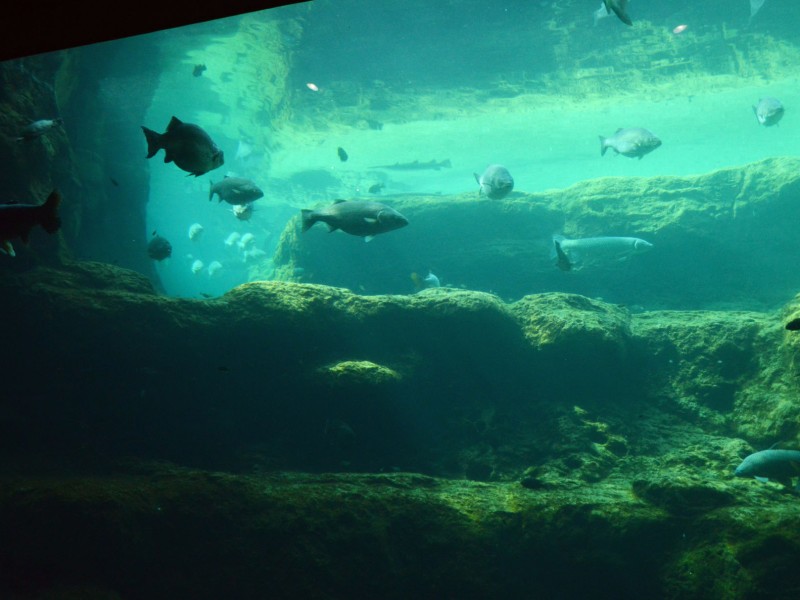
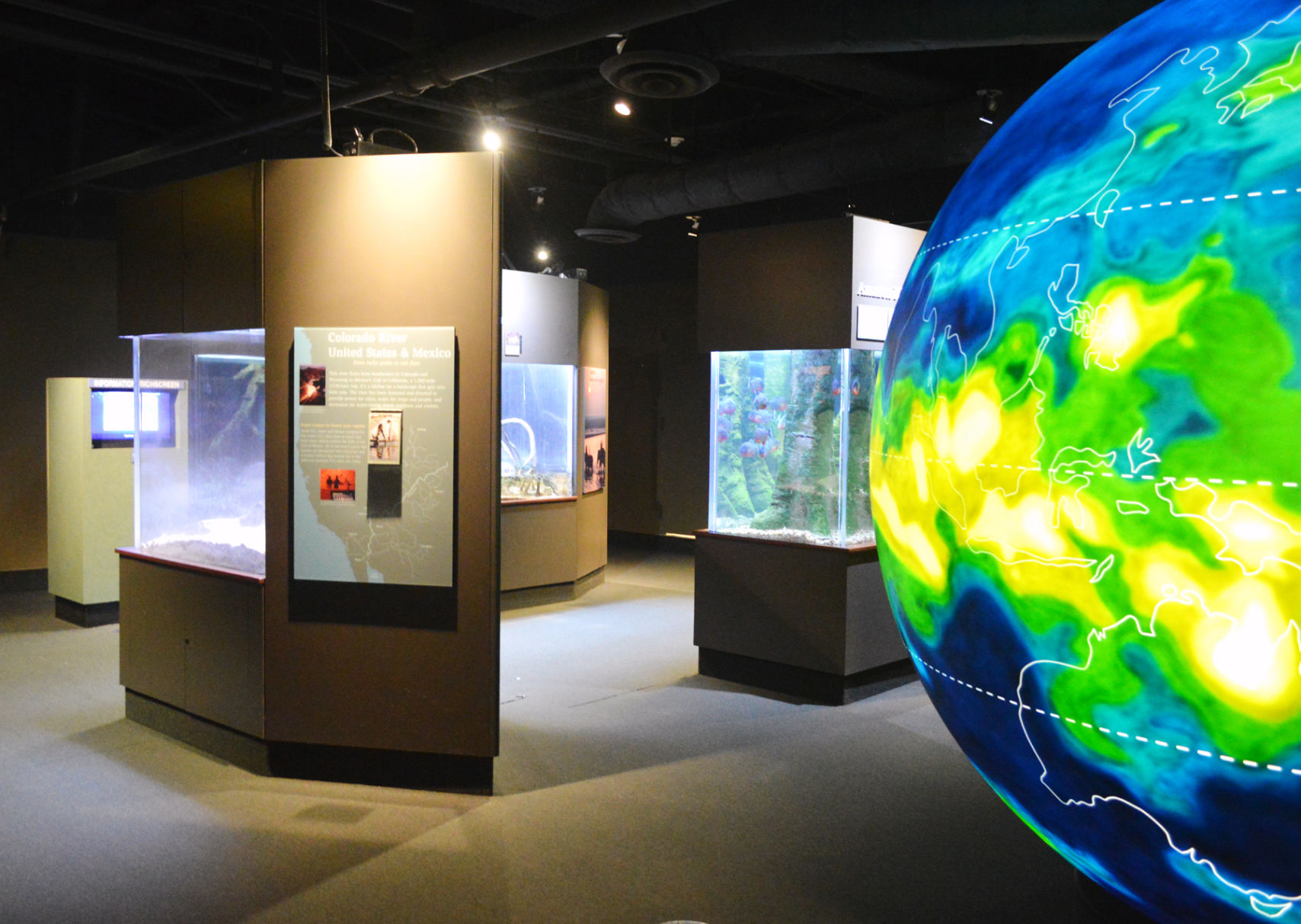
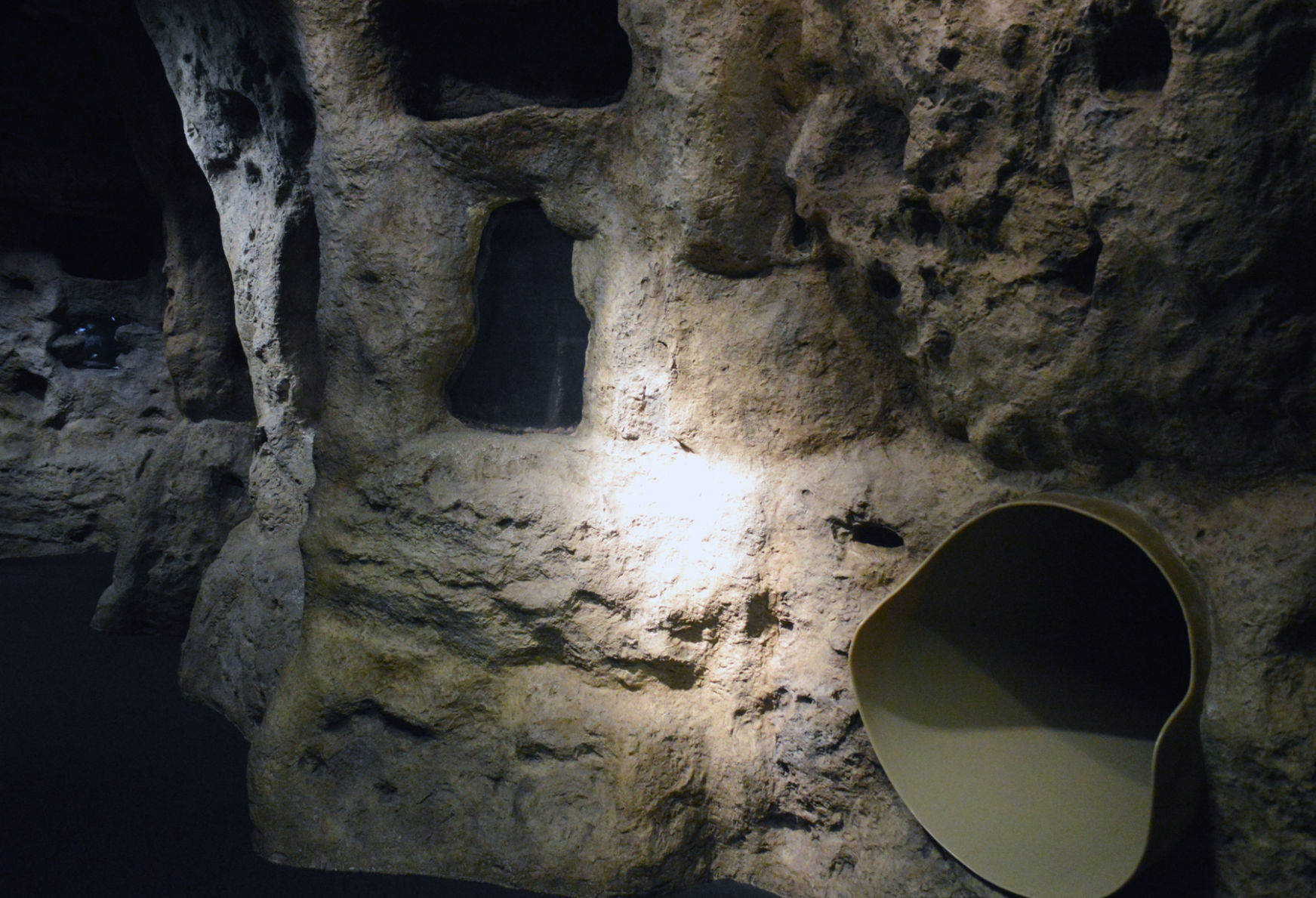
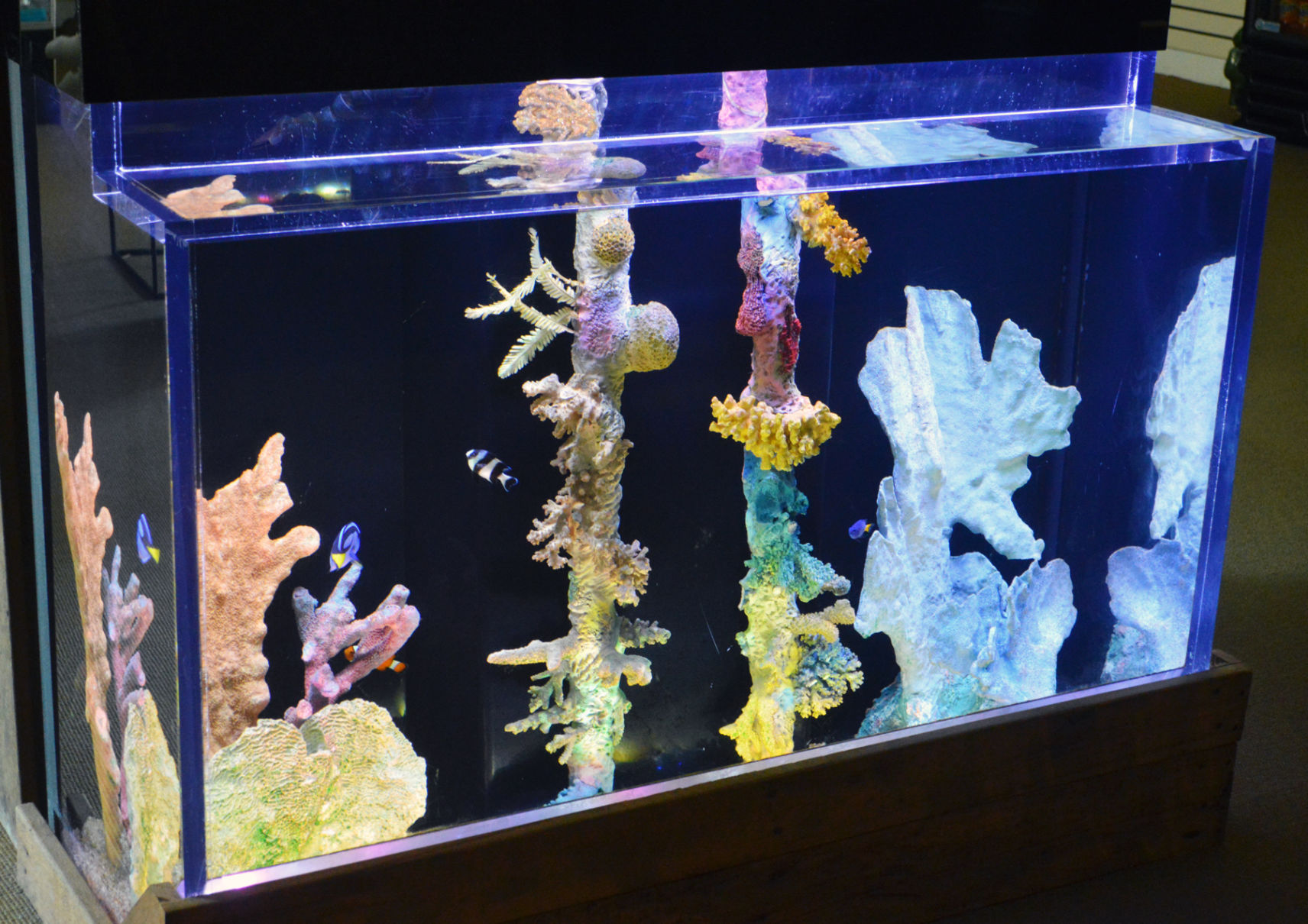
RiverQuarium exhibits include life unique to the Flint, as well as an up-close look at animals from throughout the world people may not get a chance to see. The 20-foot replica of the Blue Hole Springs, the site of feedings that are open to the public, is a big draw.
The Flint flows from East Point near Atlanta to the Apalachicola River near the Florida state line. The Apalachicola, in turn, feeds into the Gulf of Mexico — so there is an educational focus on the Gulf as well.
Gregors said zoos and aquariums do not merely exist to display wildlife. Educational opportunities and wildlife exposure benefit visitors as well as staff, since putting certain creatures in captivity helps those working in the field to see them in a different environment.
“We share information with other institutions,” he said. “We may find something nobody has seen before.”
Hurricane Irma, which transitioned into a tropical storm as it moved into the Peach State in September, put coastal areas of Georgia in danger — in turn threatening facilities in that region similar to the RiverQuarium. The Albany aquarium was able to provide temporary shelter to some of the animals from that area until it was safe for them to return home.
The focus at the RiverQuarium is on aquatic wildlife living in salt and fresh water, and an aviary that allows a close look at certain birds. A play area within the building gives children young enough to crawl through it a unique look at the Blue Hole, and activity areas — including one focusing on erosion — offer insight on the human impact on nature.
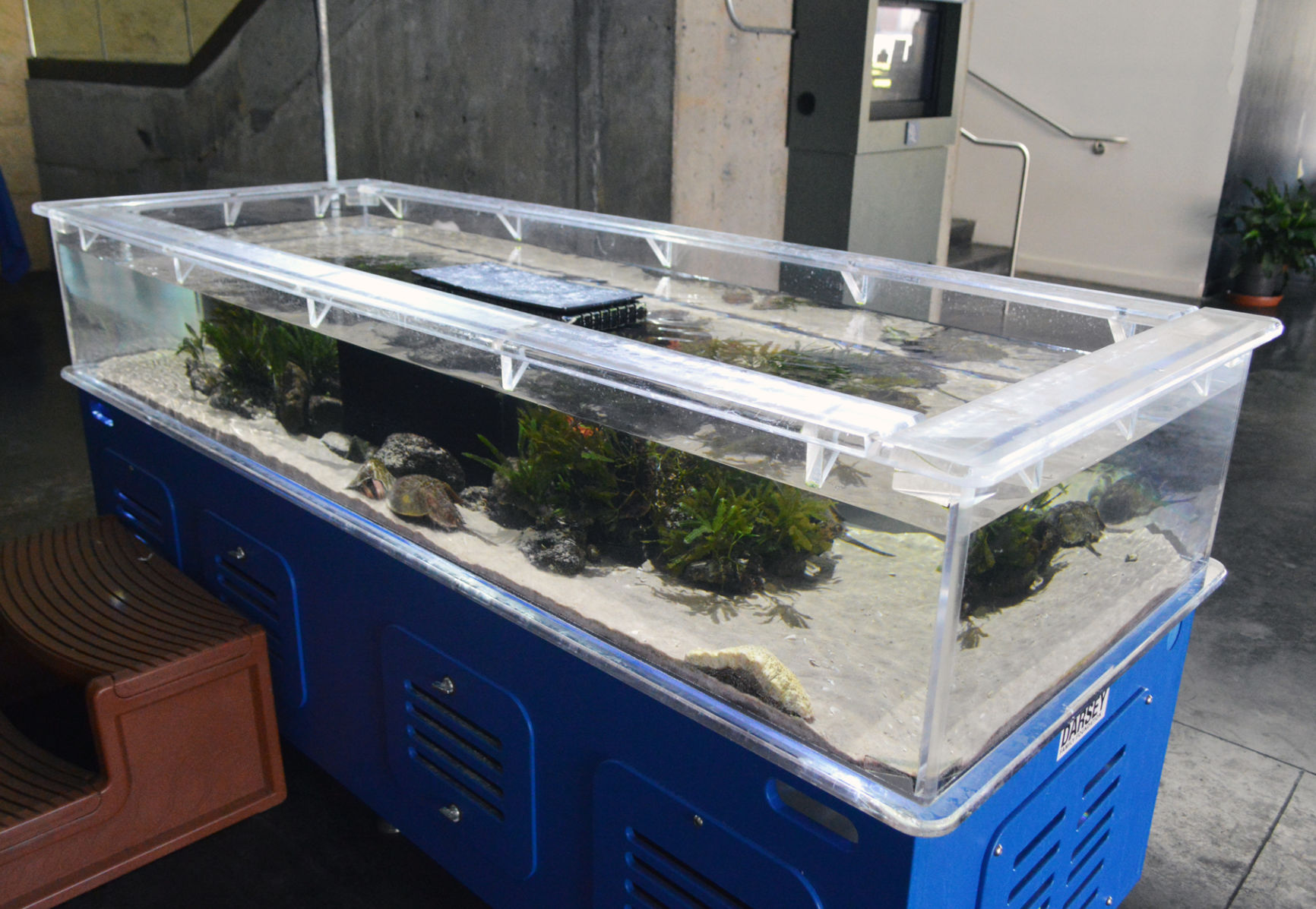
Some exhibits do rotate periodically, such as the touch tank in the RiverQuarium’s lobby. Gregors said rotating the facility’s larger exhibits is more complicated, but that sponsorships are being looked into to help facilitate such activities.
Many of the animals at the RiverQuarium are reproducing, which means repeat visitors may have something new to look forward to when they visit again.
“When you come here each time, you may find something new,” Gregors said.
Exhibits often serve as backdrops to lessons, including scavenger hunts and predator labs. Camps, Tadpole Time and Discovery Days are included in the regular programming that offers a variety of activities to interest young minds and provide meaningful hands-on interactions so they can learn.
“We want more than just a biology class and science class,” Gregors said. “There is something for every discipline.”
Some programs show how to become more environmentally friendly at home, including those teaching young visitors how to build feeders for their backyard.
“There are a lot of opportunities for all ages to have an informative, fun experience here,” Gregors said.
The Water, Wings and Wildlife Festival, which includes a butterfly feeding and release, is one of the RiverQuarium’s signature programs. Butterflies are likely to become a regular site at the RiverQuarium, as staff builds toward becoming a permanent demonstration site for butterflies.
Gregors said some visitors come to the attraction thinking they want to do something to help the environment around them, while others come just to sit by the Blue Hole. He added that the RiverQuarium’s staff is working to get out of the facility more, working with professionals in similar fields and seeking more chances to promote up-close interactions with nature.
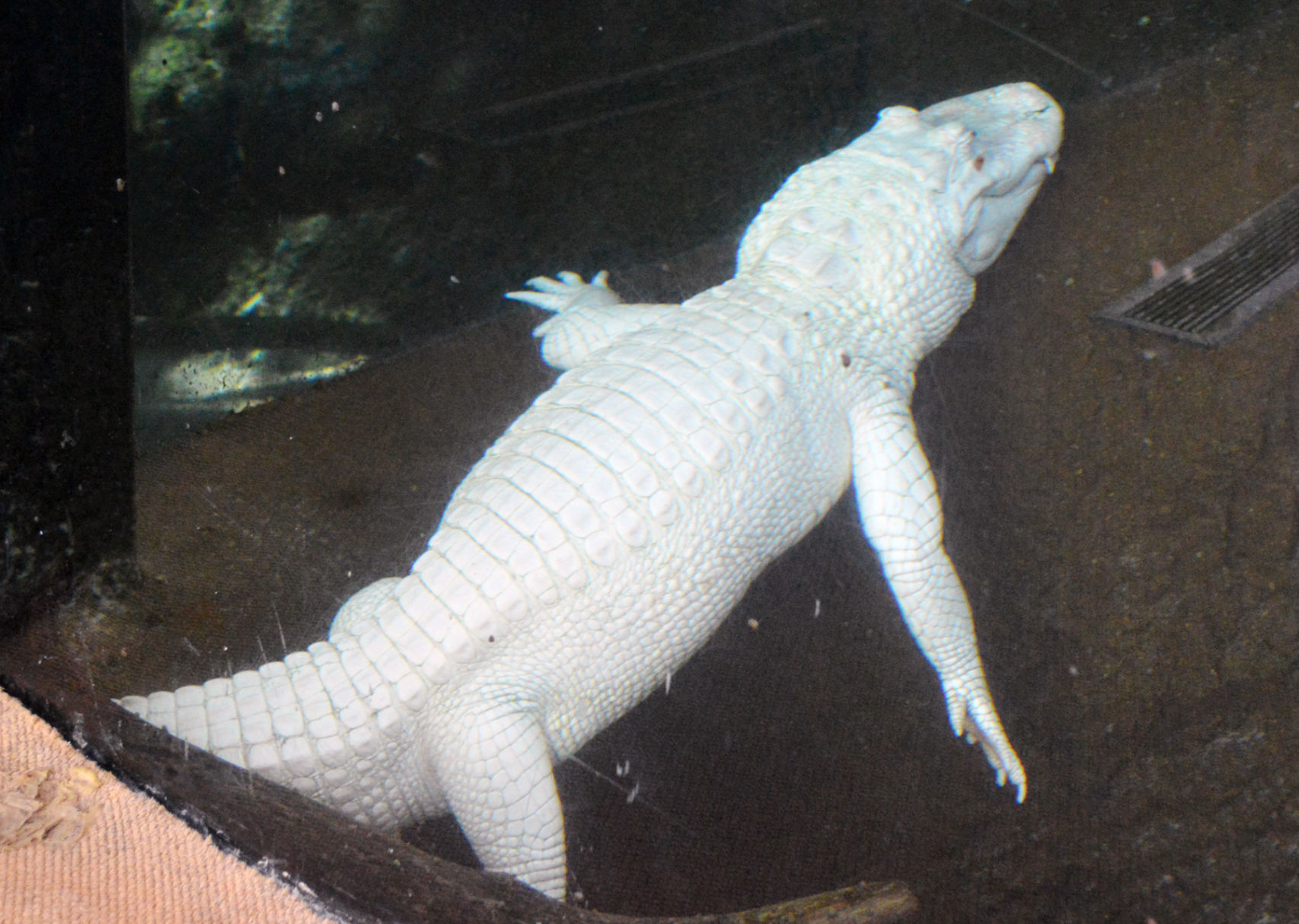
One of the biggest draws at the downtown attraction is its albino alligator, Moonshine, who would have been unlikely to survive in the wild.
“Usually Moonshine souvenirs in the gift shop are very popular,” Gregors said.
In their outside interactions, staff members from the RiverQuarium go to festivals and events, and participate in professional development activities. The aquarium partners with Chehaw on some events and takes part in special occasions such as World Ocean Day and Earth Day.
“We are always looking for opportunities to get the word out and (teach people) about the environment,” Gregors said.
The RiverQuarium is working to elevate its environmental education center to enhance its educational component, solidifying its place as something beyond an aquarium. The staff is also looking forward to new opportunities to rebuild downtown Albany.
“We think, with other activities downtown, we are certainly positioned to take advantage of that growth,” Gregors said. “We can help each other out.”
When the attraction faced financial instability several years ago, Gregors said businesses and individuals stepped up to help while SPLOST dollars also went toward maintaining the facility — including the 24/7 life support systems for the animals living there.
“This is an expensive place to maintain,” he said.
Some systems at the RiverQuarium are close to 15 years old, making grant applications necessary to seek upgrades. Gregors said talks are underway now with Albany State University to expand educational opportunities. Renovations are currently ongoing at the Imagination Theater as part of an effort to transform it into an enhanced visual and audio center.
Gregors said improvements are being sought to the labs and study areas for research projects to accommodate in-depth studies of animals along the Flint corridor.
“This is a unique facility that can be a very valuable laboratory for study,” he said. “We have to get outside Albany and Dougherty County. We depend on local visitation tremendously, but we have to expand.
“What they do in Atlanta impacts here, and what we do here impacts the Gulf.”
The Flint RiverQuarium was funded through a bond referendum, but the building is owned by the Georgia Department of Natural Resources.
“It is important to make sure (the RiverQuarium) is vital and is relevant when it comes to environmental education,” Gregors said. “We would like to see us become a recognized research and education facility that contributes to making the environment (and its species) better.
“Who knows the impact of losing any species in the future?”
In its school programs, Gregors said the RiverQuarium strives to adhere to the Georgia Standards of Excellence and that the staff can adapt programs to the individual needs of the teacher. Thanks to a trail connection to Chehaw, schoolchildren can effectively take advantage of a classroom that is 3 miles long.
The RiverQuarium is located at 101 Pine Ave. It is closed Monday and open from 10 a.m.-5 p.m. Tuesday through Saturday and 1-5 p.m. on Sunday. Admission prices are:
— Adult: $9
— Adults ages 62 and older: $8
— Ages 4-12: $6.50
— College student with valid ID: $5.50
— Children up to age 3: No charge, except for groups
— Military with valid ID: $1 off per ticket in family
There is a 15 percent discount for non-school groups of 15 or more. The facility is closed Thanksgiving Day, Christmas Eve, Christmas Day and New Year’s Day.
For more information on the attraction, visit www.flintriverquarium.com.
Related Articles
Southwest Georgia artists recognized at packed opening of exhibition
The annual juried exhibition, one of the region’s largest showcases of visual art, features approximately 46 artists and nearly 90 works spanning painting, sculpture, ceramics, photography and mixed media.
Powerful performances drive Theatre Albany’s ‘The Color Purple’
From the street, strands of purple ribbon wind around the white columns of the historic theater, hinting at the story waiting beyond its doors. Inside the foyer, a carefully curated slideshow flickers across a large screen, cycling through the faces of the cast. Some are seasoned performers. Others are stepping onto a stage for the very first time. Teachers stand alongside former students. Parents perform beside their children. People who worship in different churches, work different jobs and come from different corners of Southwest Georgia gather beneath the same lights to tell the same story.

The Worst Job in the Marines: Telling Parents Their Child Was Dead. It Was Also an Honor
Telling a family their child died in combat is something no one wants to do, but someone has to. Christopher Murphy described his service as a Casualty Assistance Calls Office as miserable but vital.

