
LORAN SMITH: A land without winter
LIFESTYLES COLUMNIST: The Southeast and the Southwest have something in common this year
By Loran Smith
PHOENIX — The Southeast and the Southwest have something in common this year in that temperatures have been much milder than normal, which means that the former has had no winter — except for the fallout from Stella’s back-of-the-hand heavy handedness — and the latter featuring a sun that burns, raw and rampant, as soon as it comes up over the mountains.
Spring baseball here is actually summer baseball, but this is a place where people have been known to come for a visit and decided to stay. Snowbirds like it here, just like Florida, which means traffic is something not to behold if you can manage such.
Raucous laughter erupted from a Phoenician at dinner recently when it was suggested that Phoenix’s 5 o’clock rush hour starts at 2:30 p.m. The sun is so overpowering that you best drive east in the afternoon and west in the morning.
I’m not one who considers the absence of cold weather to be so appealing. A change of seasons, a fire in winter and an occasional snow are conditions I prefer. The heat that we get back home from June through Labor Day is enough. A lifelong Southerner who knows about 100-degree days, I, nonetheless, prefer the cooler months — the mountains over the beach, the extra layer rather than sunburn.
Then there is the reminder of the Southerner whose job took him North, and caused him to say on a June day when it was in the 60s in Boston: “Ever hear of anybody retiring and moving up north?”
Different landscapes are appealing, however. Pre-dawn has great appeal in the land of cactus, or is it cacti or cactuses? Since there is no red line on the computer screen, both must be acceptable. You know when you see a cactus that you are in the company of an arid climate. Arizona’s annual rainfall is 7.1 inches. Dry and hot, I like the desert scene, if not Ol’ Sol’s intensity. Early morning, you swoon to the artificial lights, which dominate the valley, giving the world a peaceful glow. You look to the rugged mountains and wonder how the early settlers managed.
Suddenly the sun rises and you feel warm and congenial. Take a walk and you may huff and puff, but you don’t sweat. A coyote lopes across the freeway, which is a reminder that there was a time when a few years back, you never saw a deer, coyote or armadillo in the Peach State. Now there are more varmints than there are people.
Arizona, on Valentine’s day 1912, was the last state to be admitted into the union. It is a multi-cultured state with the Spanish and Native American influence giving it a unique flavor. The Hispanic population seems to be increasing, as you likely have heard. Native Americans account for a little over five per cent of Arizona’s residents and the Navajos make up a little more than the population of Clarke County (about 120,000).
The reference to Navajo results from a long time appreciation for the contribution this tribe made to World War II. With every trip here, there is an urge to find my way to the Navajo’s reservation out of respect for their contributions which helped us win the war.
According to the Internet, a man named Philip Johnston came up with the idea of using the Navajo language as a military code, knowing the complexities of the language. You probably know this story which you can find on the Internet: “The U.S. government recruited several hundred Native Americans who spoke Navajo and English to translate English words to avoid enemy interception. Until declassification in 1968, the code that the Navajos developed remains the only oral military code to never have been broken by an enemy.”
Examples: Britain was referred to as “between waters,” (toh-ta), a dive bomber was a “chicken hawk,” (gini), a grenade was a potato (ni-ma-si) and Germany the “iron hat” (besh-be-cha-he). Roughly 25,000 Native Americans fought in World War II and contributed significantly to the outcome. Descendants of people we banished to reservations.
This brings about recall of a high school scene at an Indian School in Oklahoma. Before a big game Coach Faye O’Dell asked his star player to offer a prayer before taking the field. The Indian kid said: “Oh Lord, please help us tonight to do unto them what their forefathers did to our forefathers.”
A resounding victory ensued.
Related Articles
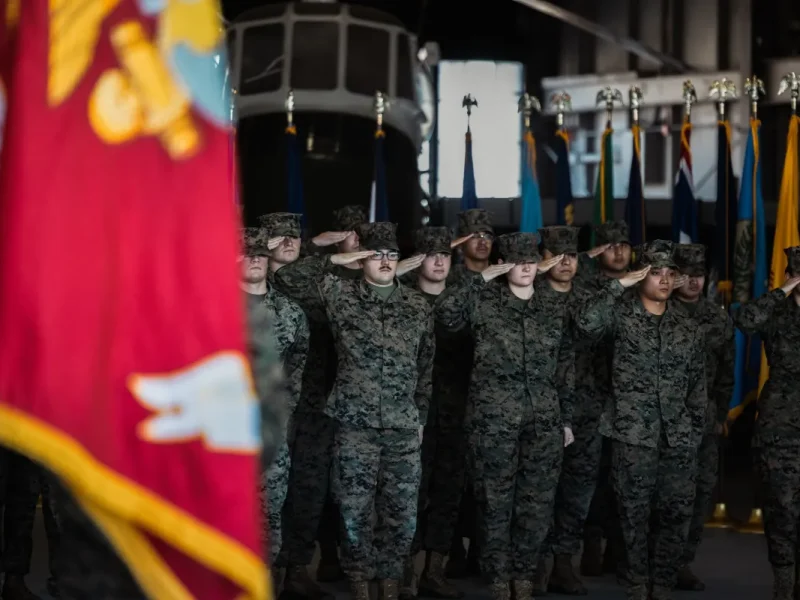
‘Sounds Like a Mutiny.’ Secret Recording Exposes Claims of Toxic Leadership After a Marine’s Suicide
This week’s War Horse story follows the systemic failures before and after the death of Cpl. Drew Mobley who was the third in two years at Marine Corps Base Quantico to die by suicide.

Southwest Georgia artists recognized at packed opening of exhibition
The annual juried exhibition, one of the region’s largest showcases of visual art, features approximately 46 artists and nearly 90 works spanning painting, sculpture, ceramics, photography and mixed media.
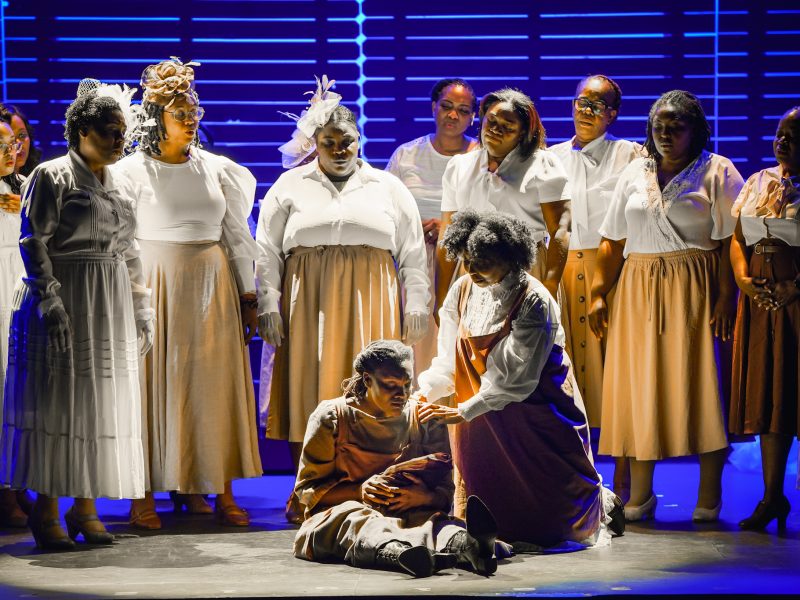
Powerful performances drive Theatre Albany’s ‘The Color Purple’
From the street, strands of purple ribbon wind around the white columns of the historic theater, hinting at the story waiting beyond its doors. Inside the foyer, a carefully curated slideshow flickers across a large screen, cycling through the faces of the cast. Some are seasoned performers. Others are stepping onto a stage for the very first time. Teachers stand alongside former students. Parents perform beside their children. People who worship in different churches, work different jobs and come from different corners of Southwest Georgia gather beneath the same lights to tell the same story.
