
METRO GUIDE 2017: Lee County focuses on past while preparing for its future
Historic Lee structures to get improvements; community prepares for new hospital
By Brad McEwen
LEESBURG — Lee County has come a long way since 1825 when its then 5,850 square miles were acquired through a treaty with Creek Indians and were inhabited primarily by a largely agrarian population. While what is commonly known as one of Georgia’s fastest-growing counties is a lot smaller in the present day, it continues to expand and evolve while residents and leaders look to preserve its past.
Today Lee County encompasses 362 square miles and, according to a 2014 estimate, has a population of slightly fewer than 30,000 people. It also continues to be one of the fastest-growing areas of the state, a trend only continued in the past year.
According to Lee County Development Authority/Lee County Chamber of Commerce Executive Director Winston Oxford, the county welcomed several new businesses and expansions in the last several months, including the relocation of Flint Equipment Co. and the opening of a new Kia dealership on Ledo Road.
In all, Oxford said the Chamber hosted 16 ribbon-cuttings, and the development authority continues to field requests about commercial properties throughout the county.
“We’ve had a lot of good things happening in Lee County,” he said.
A lot of the interest in the county has centered around efforts county leaders have put into road improvements, which included the resurfacing of several important county thoroughfares, such as Kinchafoonee Creek Drive and Oakland Road.
Additionally, the county has nearly completed one of three major new road projects, the Marlow Lane Extension, which will give the Story Acres, North Doublegate and Calloway Lakes neighborhoods another artery to U.S. Highway 82.
Other major road projects, which Oxford and others in the county say they believe will continue to improve the community, include the Westover Boulevard Extension, which will connect Lee and Dougherty counties, and the Forrester Parkway Extension, which will serve as a connector between eastern and western parts of the county.
Perhaps the biggest news out of Lee County in recent months, however, was the announcement of a new, state-of-the-art, 50-bed hospital expected to locate on the site of the Grand Island Golf Club.
According to Oxford, the proposed hospital will have a tremendous financial impact on the community as it represents a $50 million investment from involved parties. That type of investment, Oxford said, will generate more than a half-million dollars in property tax revenue alone.
“The grand thing about the hospital is that it will increase our tax base,” Oxford said. “When I say increase the tax base, I mean if the investment is $50 million, that’ll bring in $640,000 a year in property tax. Not to mention the competition it will bring. Not to mention it will also be a catalyst for the area.”
Oxford envisions medical practices and other medical-related businesses locating in the general vicinity, as well as restaurants and other companies looking to capture business from hospital traffic.
Currently, the hospital investment group is ironing out certain details, but a memorandum of understanding has been executed between the parties and the Lee County Commission.
The final, and most important, step toward making the hospital a reality is the acquisition of a Certificate of Need from the Georgia Department of Health. Oxford said the investment group should apply for that in the near future, and once that application is made the project will accelerate.
“It’s moving,” he said. “It’s just complicated. And we only get one chance to do it right.”
In the past 20 years, while Lee County and its seat have become a sought-after residential area, the community has also become home to a great many retail establishments and restaurants.
Access to medical care has also become more prevalent in the county with numerous doctor’s offices and dental practices open throughout the community. Even so, the county has retained its focus on agricultural.
Throughout its history, agriculture has played a huge role in the growth and success of Lee County, and today there are thousands of acres of farmland producing crops such as peanuts, cotton, corn, sorghum, soybeans, berries, apples, pecans, livestock and more.
The community’s rich history also remains a source of pride. Multiple projects aimed at restoring and protecting the past have begun in the past year.
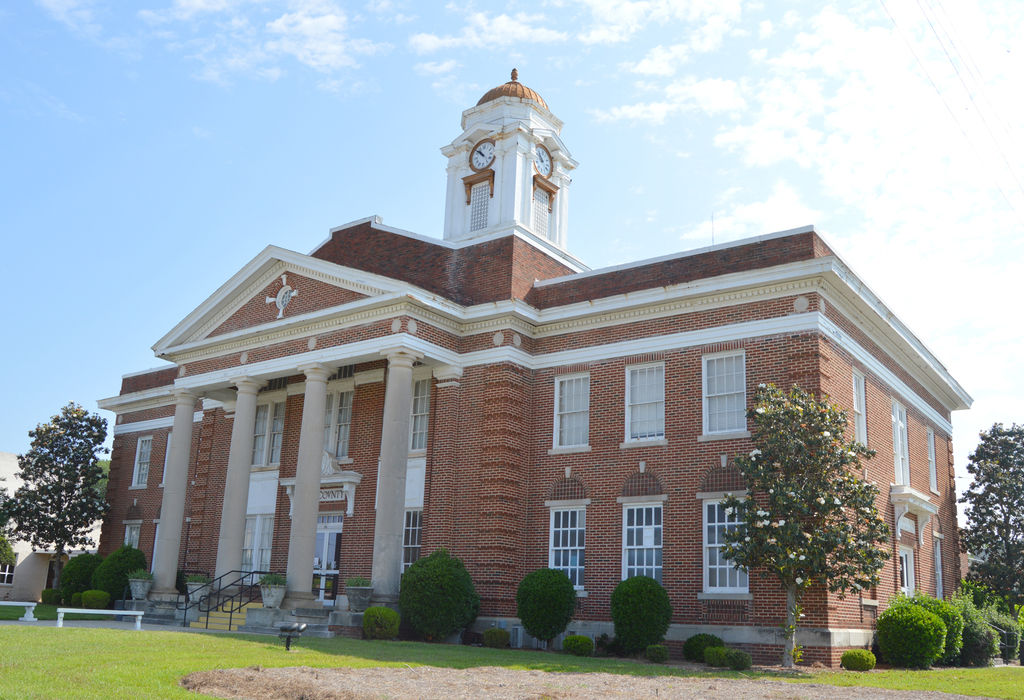
Earlier this year, county commissioners approved the use of $400,000 in SPLOST IV funding to begin renovations on the top half of the historic county courthouse in downtown Leesburg. That work is currently under way.
County Co-manager Mike Sistrunk said the work, which is being done by Masonry Restoration Services, will address the top half of the building and should be completed by next summer, in time for the structure’s 100th anniversary.
“Hopefully, in the next SPLOST we can come back and start doing some work to the bottom half of it,” Sistrunk said. “But the big thing is to try to get this work done to the top, the most critical part that needs to be done.
“We’d love to have a good 100-year celebration, and we’re hoping that this is going to really change the appearance of the courthouse and make it a lot more durable, at least for another 100 years.”
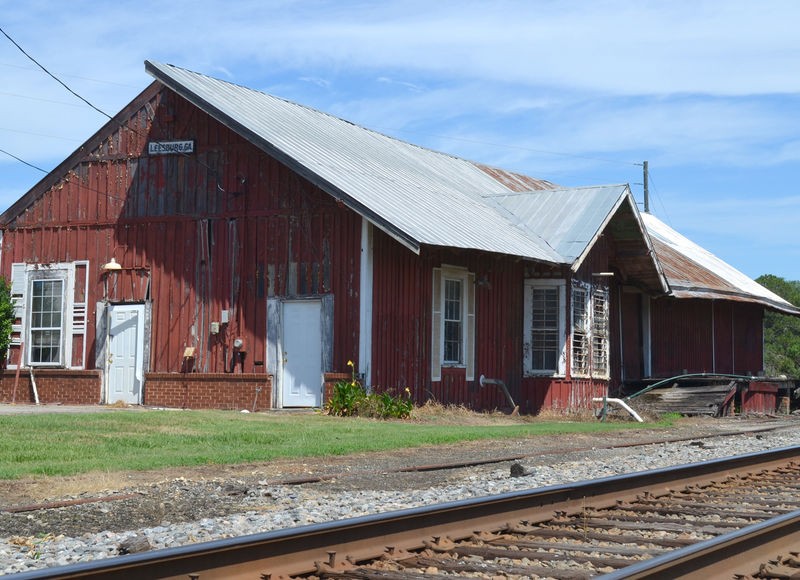
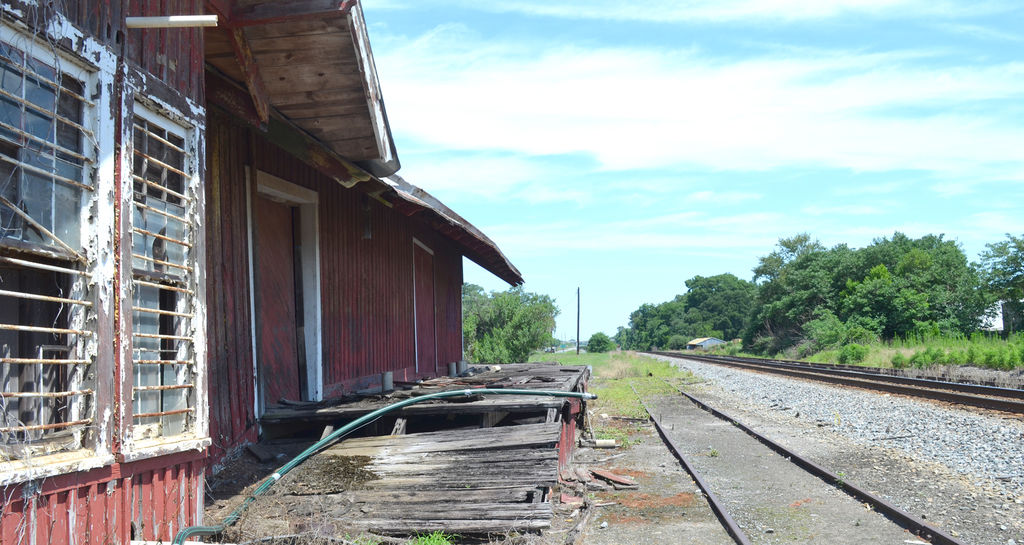
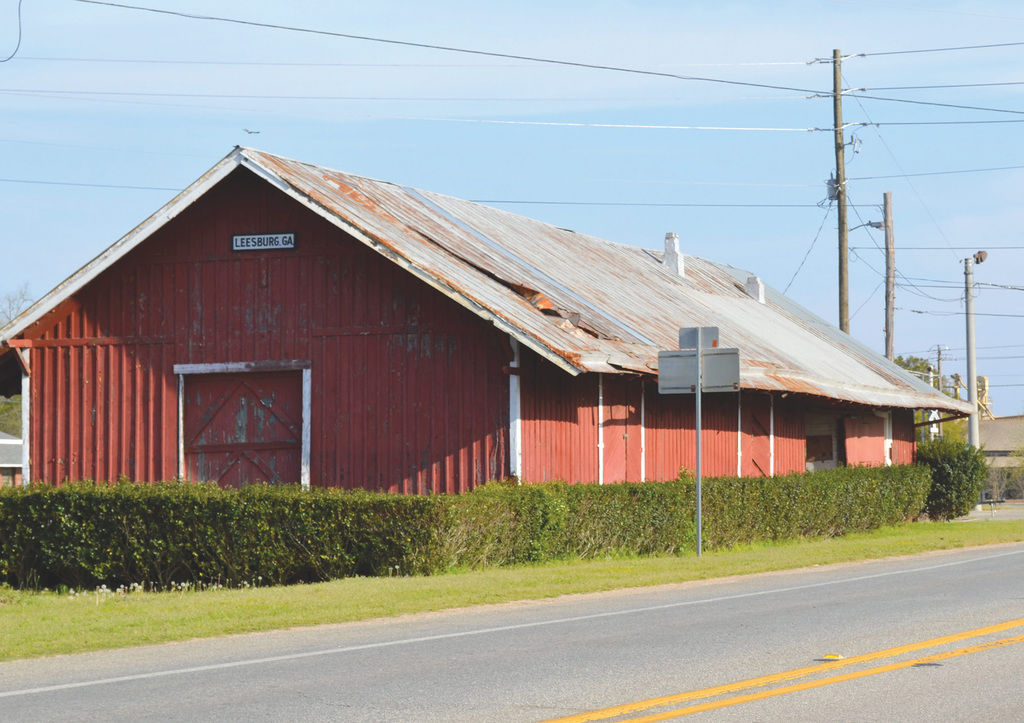
Just across the center of town from the old courthouse, another historic structure is also getting a face-lift as work has begun to completely restore the old Leesburg Train Depot that played an important role in the community’s history.
“A lot of people don’t know it, but there wouldn’t be a Leesburg without that depot,” said longtime resident and depot champion Opal Cannon. “Everything built up around it. A lot of things have taken place gradually, and sometimes they mushroom. If you look at the history of Lee County, you’d see in the 1940s and ’50s it was going well, and then it would drop back down. All of that was because transportation is so important.”
Named for Richard Henry Lee (1732-1794), a Virginia congressman, Lee County originally included land that is now Quitman, Randolph, Stewart, Sumter, Terrell and Webster counties and parts of Schley, Chattahoochee, Macon, Clay and Marion counties.
For the first several years, the seat of the county was a community located one-half mile west of the Muckalee Creek known as Starksville, except for two years when Webster served as the seat.
Transportation became a key driver in shaping the history of the area in the 1850s when a rail line was completed connecting Americus and Albany. That line ran past a stagecoach stopover called Sneed’s Store, which had already become somewhat of a hub of activity.
That area developed so quickly that in 1873, the county courthouse was moved to Wooten Station on the Southwestern Railroad and was subsequently renamed Leesburg in 1874 when it became the county seat.
By 1920, the population of the county was 1,920, and Leesburg, with a population of 413, was abounding in the cotton trade and had a gin company that handled 2,000 to 3,000 bales of cotton annually.
In 1922, Leesburg High School was completed, and the county had a total enrollment of 2,988 in grades 1-11. Total school enrollment increased almost 100 students per year for approximately 15 years.
Today, the school system has an enrollment of roughly 6,300 students in grades K-12, and has a faculty of 330.
Data also show that Lee County has 10,698 housing units with a home ownership rate of 76.2 percent. The median value of owner-occupied housing units is $159,000.
Lee has a median household income of $60,104. People living below the poverty level are 11.2 percent, compared with the statewide average of 18.2 percent.
Related Articles

‘Sounds Like a Mutiny.’ Secret Recording Exposes Claims of Toxic Leadership After a Marine’s Suicide
This week’s War Horse story follows the systemic failures before and after the death of Cpl. Drew Mobley who was the third in two years at Marine Corps Base Quantico to die by suicide.

Southwest Georgia artists recognized at packed opening of exhibition
The annual juried exhibition, one of the region’s largest showcases of visual art, features approximately 46 artists and nearly 90 works spanning painting, sculpture, ceramics, photography and mixed media.
Powerful performances drive Theatre Albany’s ‘The Color Purple’
From the street, strands of purple ribbon wind around the white columns of the historic theater, hinting at the story waiting beyond its doors. Inside the foyer, a carefully curated slideshow flickers across a large screen, cycling through the faces of the cast. Some are seasoned performers. Others are stepping onto a stage for the very first time. Teachers stand alongside former students. Parents perform beside their children. People who worship in different churches, work different jobs and come from different corners of Southwest Georgia gather beneath the same lights to tell the same story.
