
SPLOST wish list points way to Chehaw independence
Chehaw officials present SPLOST wish list
By Brad McEwen
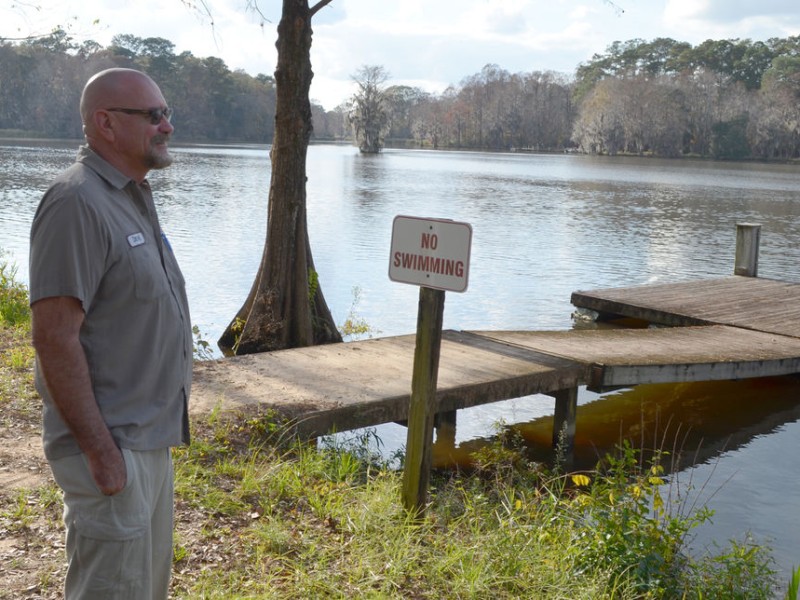
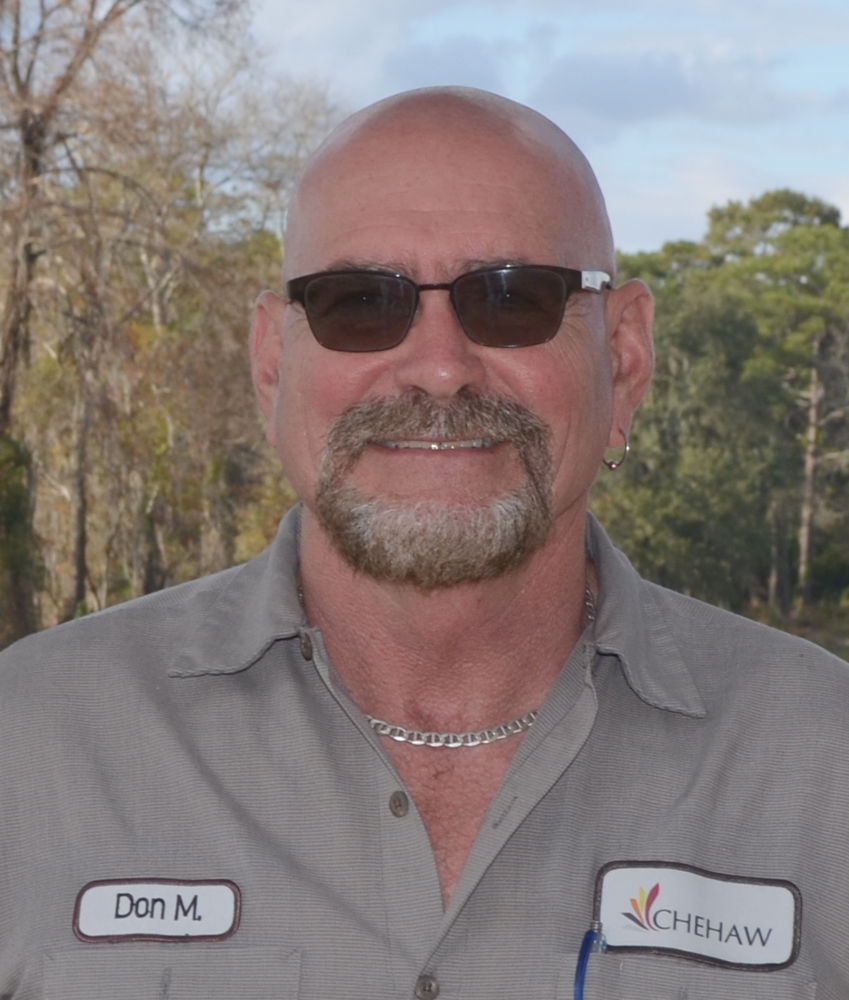
ALBANY — As Albany city commissioners mull over what projects will be included in the upcoming SPLOST referendum that will go before voters this November, Chehaw Executive Director Don Meeks is hoping city leaders will consider allocating enough funding to help the park move toward its goal of financial independence.
Since taking over as the park’s executive director in January, Meeks has been vocal about his desire to see the animal park and nature preserve get to a point where it can stand on its own and no longer require the city’s help to operate, a desire that he said is also held by many past and present city officials.
“We have to find creative ways, not only to make more money, but to operate the park more efficiently,” Meeks said. “The goal is to create an entity here that has the ability to generate profit.”
Chehaw’s leadership team has been plotting ways to make that happen and see SPLOST funding as a key need. They have a $5.5 million wish list to address infrastructure improvements and revenue generators that they think will lead to self-sustainability.
The largest portion of that list focuses on infrastructure improvements and repairs, which Meeks said he feels is the most critical need.
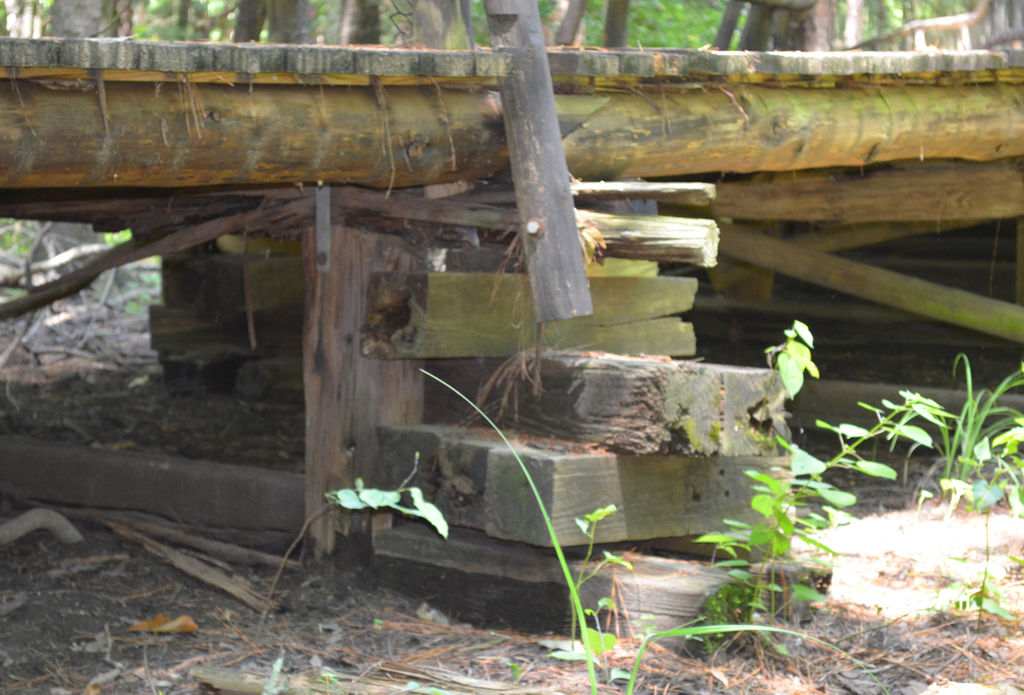
“What’s becoming a major problem for us in terms of our operations is that everything is worn out, past its useful life,” said Meeks. “We have bathrooms here that were built when this was a state park before the city even owned it. All of that stuff needs to be updated and renovated. The work that was done in the ’70s to build the zoo and move it out here was all made out of wood. I don’t care how good of a job you do, wood structures are not built to last 40 years. It’s just like the deck on the back of your house. If you have a 40-year-old deck on the back of your house, it would be new the next year, if you had the money.
“That’s what SPLOST is for. If we can get rid of the tremendous financial burden that the old infrastructure is placing on us, that money then gets freed up for the growth of the park. Trying to maintain outdated infrastructure comes down to cost-benefit ratio. At some point in time, it’s more effective to replace it than it is to maintain it.”
Fixing up the aging infrastructure would also address one of the biggest complaints voiced by park visitors.
“The thing that the public is frustrated with, and that generates our complaints, is that the zoo looks, ‘shabby,’” Meeks said. “To try to put it in layman’s terms, if you have a house that’s 50 years old and you haven’t replaced the roof, at some point in time you have to do something or the roof will fall in and your house will be uninhabitable. We didn’t do that roof replacement along these years.”
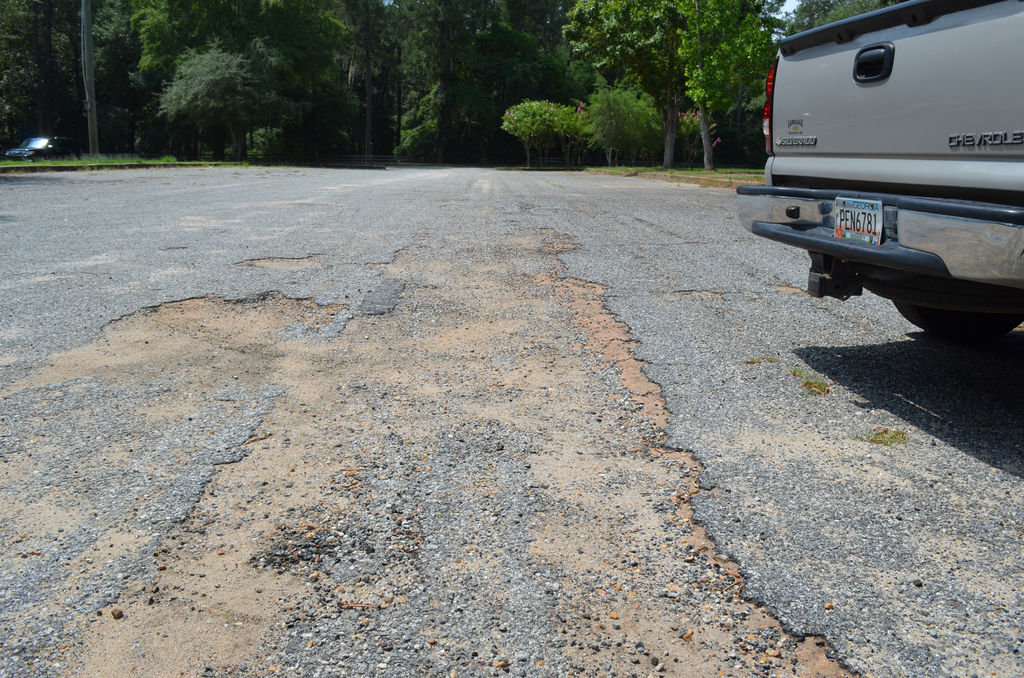
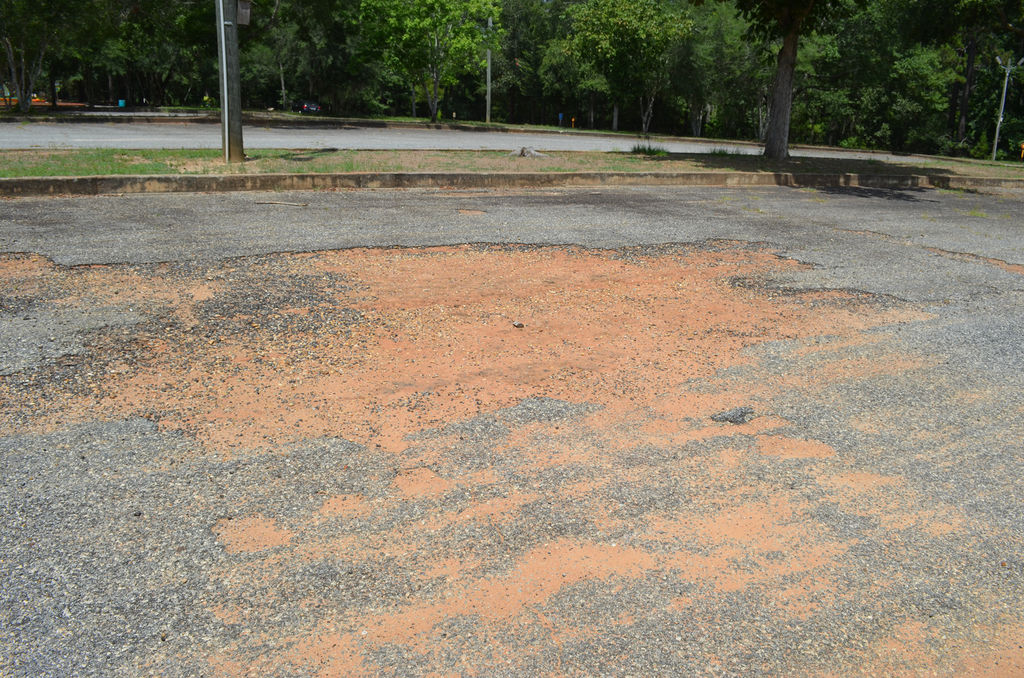
That is why the park’s SPLOST wish list includes $750,000 for the repair all of the park’s roads and parking lots (the zoo parking lot which is riddled with potholes) and nearly $250,000 to renovate the park’s bathrooms and rental pavilions.
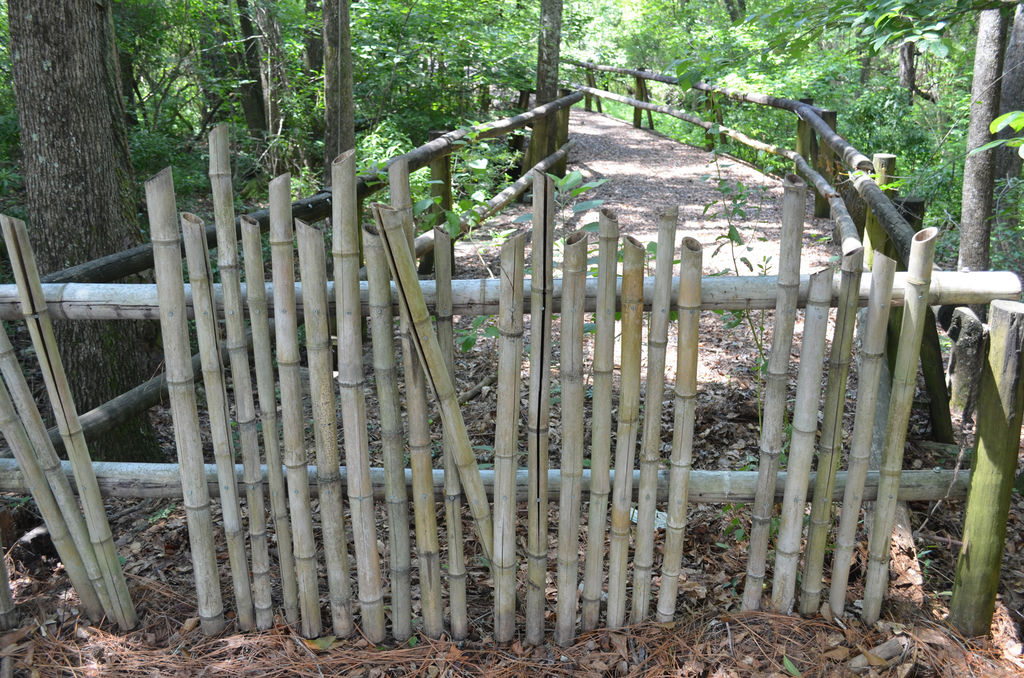
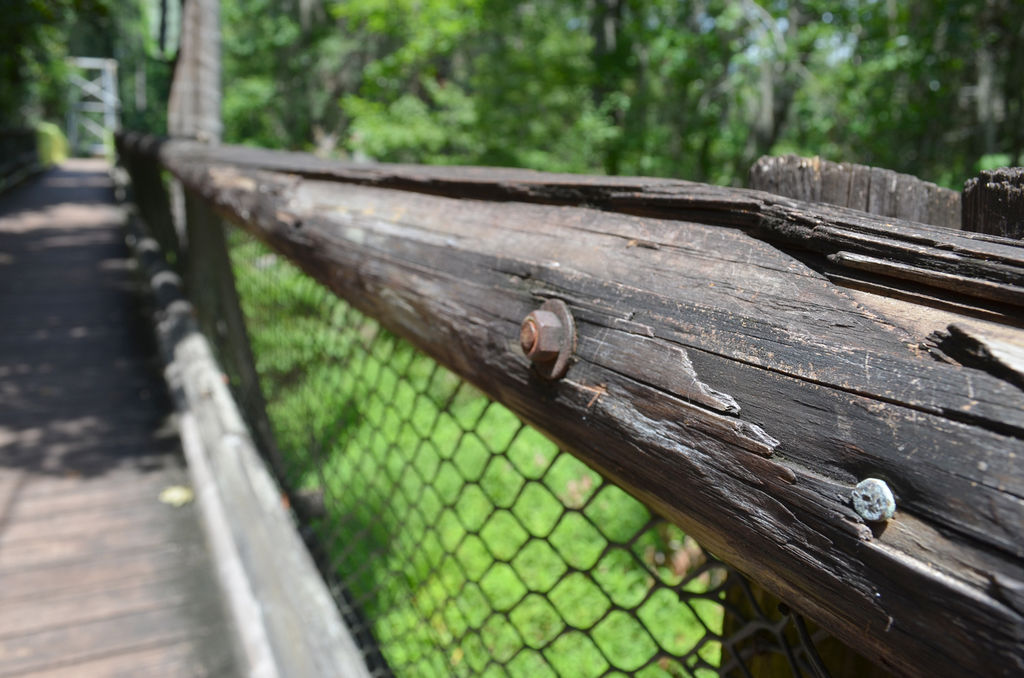
The list includes $1.2 million for various other updates and improvements, such as repairing the park’s underground water and electrical systems; replacing the park’s three 20-years-old-plus maintenance pickups; replacing a 15-year-old van used by the educational department; repairing the zoo’s walkways, trails and safety railings, and renovations for the Creekside center.
The SPLOST also asks for funding for projects that can increase revenue, such as boat ramp renovations, construction of additional rental structures, completion of phase two of the park’s new campground, and the additions of solar panels, new lights, new buildings, a splash park, website expansion, and a zip line.
Finally the wish list also includes $900,000 to fund new zoo exhibits to be added to the park periodically to help draw more first-time and repeat visitors to what Meeks considers the park’s most “unique” feature.
“The entire list is directly targeted at raising more money, saving more money, setting up the park to be successful long-term, independently,” Meeks said.
Meeks understands that the list is ambitious, but he points out that the park’s SPLOST request was higher more than a decade ago and still included funding for the needed infrastructure improvements.
“I was just sitting here going through the last three SPLOSTs (and) in 2004 the request for the park was going to be $6 million,” said Meeks. “So somebody thought there was $6 million worth of need in 2004.
“That number was reduced to $2 million, which is still a big number. The size of that number alone frustrates a lot of taxpayers. My thought process on it, though, is that we had a $6 million backlog in 2004, and we didn’t take care of it. It just transferred to the 2009 SPLOST. I came here in 2009 and so, being brand new at it, I put together a SPLOST request of almost $4.5 million. That request was cut to zero.”
Meeks understands people will balk at that statement since the 2009 SPLOST did include funding for a Chehaw project, but he points out that those funds went toward the development of a new campground and the building of a new sewer system, and not to park renovations.
“As I understand it, the discussion at the commissioner level (in 2004) was they decided to put back the sewer project for the campground development and for economic development for the community because the sewer project is actually designed to be able to pick up all the residential areas like River Pointe, and ongoing residential out in Lee County,” Meeks said. “The size and scope of the project is that big.
“If it was just a Chehaw project for the campground, it would have been tiny. But designing for future growth is a good idea. My one concern over it was it was billed to the voters as a Chehaw project. We didn’t get any money to work on this backlog. That was a new project with no money for this backlog. So, we essentially went five more years without fixing the roof.”
Meeks also has developed a less extensive request to address the park’s most pressing needs, one that is more in line with the number being communicated to him by contacts with the city.
“What got back to me somewhat indirectly, because I can’t get a line of communication to the city manager, was that they were willing to support $500,000 and that they had pulled out of the list several things that they thought we needed,” Meeks explained. “They would not give me that list. To this day I do not know what they were proposing.
“Another communication came to me that they would consider $1 million if I could adequately justify it. Basically the question was, if we gave you a million, what are your priorities for the park? So, that priority for $1 million included finishing the campground, paving the zoo parking lot, because that thing is just a mess of potholes, and that basically was it. So, they did get a list that was $1 million worth.”
Although he has heard indirectly that the city was considering $1 million in the referendum, Meeks says he has not been told directly whether the park will get any funding.
“I have not gotten confirmation that they support that, so, right now, as of this very moment, I do not know what the city is supporting for us,” said Meeks Wednesday.
Additionally Meeks said he has not been given any indication from city officials about what will happen in 2018 when the Chehaw’s contract with the city expires. It’s that uncertainty which has driven the park’s leadership to focus so heavily on moves that could help Chehaw become independent as quickly as possible.
As it stands the city is supporting the park roughly $1 million annually, but that amount is being reduced by 3 percent each year. In 2018, Chehaw will be getting less than it was when the contract was signed in 2009.
“Right now at the end of this management contract we will be down about $120,000; we’ll be down 12 percent,” said Meeks. “At the end of this management contract, what happens next? In business terms not knowing what you face three years from now is an impossible situation. You have to plan now to put those things in place to accomplish the goal then. You don’t just wait until then and say, ‘Oh my gosh, I didn’t know this was coming.’”
Meeks also said he didn’t want to give the impression that the park was in dire straits or that the city was not trying to help the park reach independence.
“The story turns into the park is in dire straits, and the park is not in dire straits. The park is growing,” Meeks said. “We have good things going on. But we can’t do enough to overcome the eventuality of, if the city financing were to go to zero, we would be done. But I don’t think anybody has said that however.
“I (also) certainly don’t want the impression in the community that the city is sabotaging us, they’re not. They have a much bigger picture. But it’s not my job to be concerned about their bigger picture. My job is here. My job is to do what I can do to accomplish this goal (of independence).”
Park officials already have created different ways to generate additional revenue. In recent years, Chehaw added well-maintained mountain bike trails, new zoo exhibits, built a concert stage for hosting live music, built and continued to promote the Creekside Center and its catering arm, and added a disc golf course.
Except for the direct fees paid for the center rental, Meeks said the only indication that the other projects are generating more revenue comes from gate receipts. “And the revenue at the gate is up significantly,” he said. “Not only are we having more people, the busy period seems to be extending further into the hot time. And for me that’s tangible proof that we’re growing. But it’s not something I can put a number on.”
Meeks said Chehaw has also done other things to help move the park toward self-sustainability.
“We tried fundraising,” he said, “We’ve tried finding investment partners. We tried grant writing. None of which was successful at the scale required to accomplish becoming independent.”
Although discussions about potential SPLOST funding brings to light some serious issues for the park, Meeks is quick to point out that the park has gotten a lot of positive news recently, chief of which is the county’s decision to include funding for park improvements through its portion of the SPLOST.
Thanks to support of Dougherty County Commissioner Ewell Lyle, Meeks said he has been told that the county intends to provide funding for a new LED sign at the park’s entrance and for the construction of a zip line that the park believes will be an important attraction.
Perhaps the thing that most excites Meeks, however, is the sense among park employees that the community as a whole is starting to embrace Chehaw as an important part of the city and region. That sense of pride, Meeks said, is paramount for the park to one day being independent.
“What we’re working on intensively now is to change the perception in the community,” said Meeks. “We want the perception in the community to be that we are available to everyone. Just judging from the success that we’ve had the last six months, the community was ready for that. People are jumping on board everywhere to partner with us.
“I think we have finally struck a chord in the community that highlights our value to the community. We aren’t just the play park. We aren’t just the zoo. We aren’t just the conference center . We aren’t just the campground. We’re all of these things put together in a package for the community. The ultimate win is that the community gets this asset. I think our community forgets that this is their asset. It’s not mine, it’s not the city manager’s, it’s the community’s asset. It’s their house.”
Related Articles

‘Sounds Like a Mutiny.’ Secret Recording Exposes Claims of Toxic Leadership After a Marine’s Suicide
This week’s War Horse story follows the systemic failures before and after the death of Cpl. Drew Mobley who was the third in two years at Marine Corps Base Quantico to die by suicide.

Southwest Georgia artists recognized at packed opening of exhibition
The annual juried exhibition, one of the region’s largest showcases of visual art, features approximately 46 artists and nearly 90 works spanning painting, sculpture, ceramics, photography and mixed media.
Powerful performances drive Theatre Albany’s ‘The Color Purple’
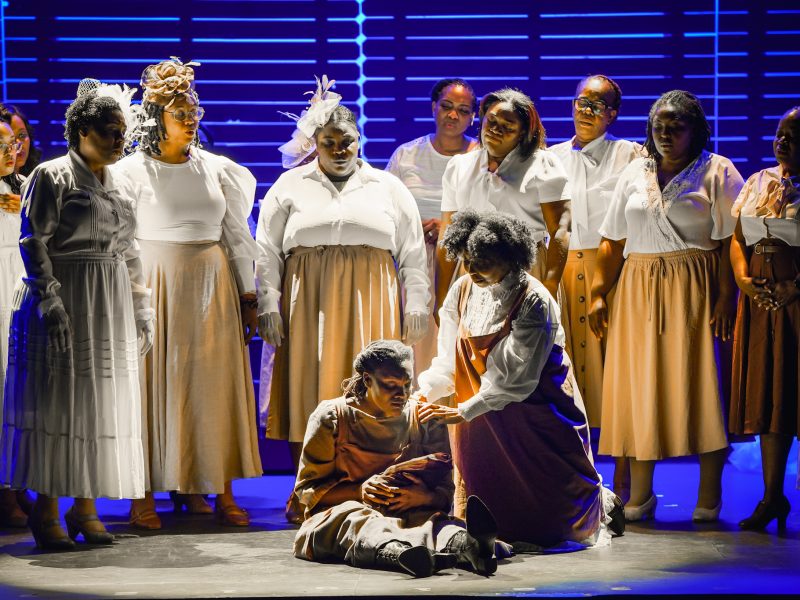
From the street, strands of purple ribbon wind around the white columns of the historic theater, hinting at the story waiting beyond its doors. Inside the foyer, a carefully curated slideshow flickers across a large screen, cycling through the faces of the cast. Some are seasoned performers. Others are stepping onto a stage for the very first time. Teachers stand alongside former students. Parents perform beside their children. People who worship in different churches, work different jobs and come from different corners of Southwest Georgia gather beneath the same lights to tell the same story.
