
United Way holds mothers-to-be workshop
Organizers say disparities abound in prenatal, newborn care
By Cindi Cox
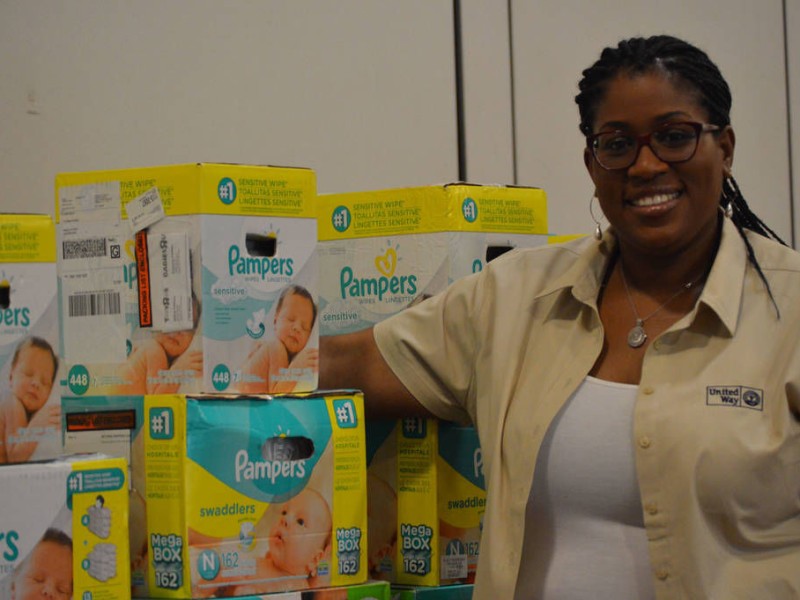
ALBANY — Facilitators from the health care community presented sessions on a variety of topics, including proper nutrition for mothers and babies, breast feeding, depression, postnatal contraception and other topics of interest to new mothers during the United Way of Southwest Georgia’s second annual Mother-to-be Education and Empowerment Workshop at Albany State University’s West Campus on Friday.
Sixty mothers-to-be were selected and invited to attend by their health care providers. All who attended were over the age of 18 and living at or below the poverty level.
Each year the Federal Department of Health and Human Services releases a federal poverty report with a designated income level based on Census Bureau statistics and median incomes around the country. Families whose income falls within the 100 to 400 percent range of the poverty index may be eligible for government assistance, tax breaks and other benefits.
Federal poverty guidelines for 2017, which took effect on Jan. 31, indicate $12,060 in income is the cutoff for a family of just one person, and for two (such as a single mother and child) the level is $16,240. The federal poverty level for a family of three in 2017 was set at $20,420. All of these figures show a slight increase from 2016, at which time the poverty level for two people was set at $15,930.
LaKisha Bryant Bruce, president and CEO of the United Way of Southwest Georgia, said women at or below the poverty level need extra support and resources to ensure a healthy pregnancy and to succeed as new moms.
According to the Albany/Dougherty County Comprehensive Plan published in 2016, 32.4 percent of the people living in Dougherty County and 35.6 percent of those living in Albany fall below the poverty line.
A new report released this year from the Annie E. Casey Foundation, called the 2017 Kids Count Data Book, shows the number of children living in poverty in the United States to be 15,000,000. The number in Georgia is 603,000. According to that same report, the number of children living in high poverty areas in Georgia increased from 14 percent in 2010 to 17 percent in 2015.
“There are significant racial and ethnic disparities in prenatal care in the United States, especially for mothers living at or below the poverty level,” said Bruce. “Even if a child is born healthy, the high cost of items that a newborn needs means that one in every three mothers struggles to provide for their babies. Our goal is to educate these moms and to provide them with tools and resources so their pregnancy will go smooth and the child will have what it needs to thrive. We offer follow-up services and track the success of those who attend this session.”
Some of the women invited to attend the event were direct victims of Albany’s January storms.
“These families lost everything in the storms, and they may not have the funds or the resources to go out and buy a new crib,” Bruce said. “Some are still in transition, in motels, or living with family or friends. They might not even have the space to set up a nursery for the new baby. It is important for us to assist them because they may have an added level of stress and anxiety.
“About 85 percent of the women we invited are first-time moms, and they may have many questions about available resources or what to expect.”
Toni Jones is a first-time mom who said she has lots of questions and some fears that she hopes to put to rest.
“I don’t really talk about this to family and friends, but I am nervous about labor and delivery,” she said. “I want more information on how to prepare for and care for my child. I came here because it is a good learning experience. I plan to read up and get more information after today.”
Jones, who currently works as a waitress, said she also is concerned about having a limited income.
Jocelyn Cooper, an operations manager for Albany Area Primary Health Care, spoke to the women about contraception and spacing out pregnancies for the health and well-being of both the new babies and the new moms.
“You don’t really want to have one just in diapers and another on the way before you’ve even started potty training,” she said.
Bruce said the experts at the workshop provided vital information.
“We brought in speakers to address a wide range of topics and to help debunk some of the myths these women may be getting from well-meaning family and friends,” she said. “When you are pregnant, it seems like everybody you come in contact with claims to be an expert on motherhood, and a lot of false information is out there. Last year, the women who participated came in believing a lot of old wives tales that had been passed down through the family from 30, 40 or 50 years ago. And they just were not true.”
Cooper addressed the issue of breastfeeding during her conversation with the moms-to-be.
“When it comes to breastfeeding, many new moms won’t even look into it because mama or grandma didn’t do it and they’ve been discouraged, even though research and medical practitioners say it gives the child a healthier start,” Cooper said.
Keynote speakers during lunch included Dr. Anesha Maxwell, who serves as an Albany-area OB-GYN, and Shirley Harpe, RN and vaccine specialist at Albany Area Primary Health Care. They addressed proper nutrition for moms and newborns and the importance of getting health checks early in the pregnancy and for the new babies.
“Good nutrition really needs to start before the pregnancy,” Maxwell said. “By the time a woman starts seeing doctors, many of the bad nutrition habits are already established and they are hard to break.”
High carbs, too much sugar and fried foods are the worst culprits during pregnancy, Maxwell said.
“We see too many struggle with unhealthy weight gain and poor health during pregnancy, all because of poor eating habits. They need to eat well-balanced meals from the five food groups,” she said.
Besides stressing the value of good nutrition, Maxwell said she wanted to debunk a myth about prenatal vitamins.
“You should start taking prenatal vitamins as soon as you consider having a baby. Don’t wait until you are pregnant,” she said.
The event was sponsored by an anonymous donor who wanted to help local families living with certain stressful economic conditions, Bruce said. Several area stores and businesses donated diapers, baby clothes, gift cards and other supplies, which were distributed as door prizes and gifts. Medela LLC was the largest donor, giving $18,000 worth of Medela breast pumps so that each participant could have an electric breast pump to encourage and support breast feeding after the birth of their babies.
Other sponsors included Target, Albany Area Primary Health Care, Peach State Health Plan and the Georgia Department of Public Health.
Related Articles
My Grandpa Was Killed in World War II. I Met Him Through His Letters Home
Gina Wolf’s grandfather died before she was born. His letters sent to her grandmother from Europe during World War II made it possible to know what kind of man he was.

‘Sounds Like a Mutiny.’ Secret Recording Exposes Claims of Toxic Leadership After a Marine’s Suicide
This week’s War Horse story follows the systemic failures before and after the death of Cpl. Drew Mobley who was the third in two years at Marine Corps Base Quantico to die by suicide.

Southwest Georgia artists recognized at packed opening of exhibition
The annual juried exhibition, one of the region’s largest showcases of visual art, features approximately 46 artists and nearly 90 works spanning painting, sculpture, ceramics, photography and mixed media.
