
Keep in mind state and federal regulations when hunting dove
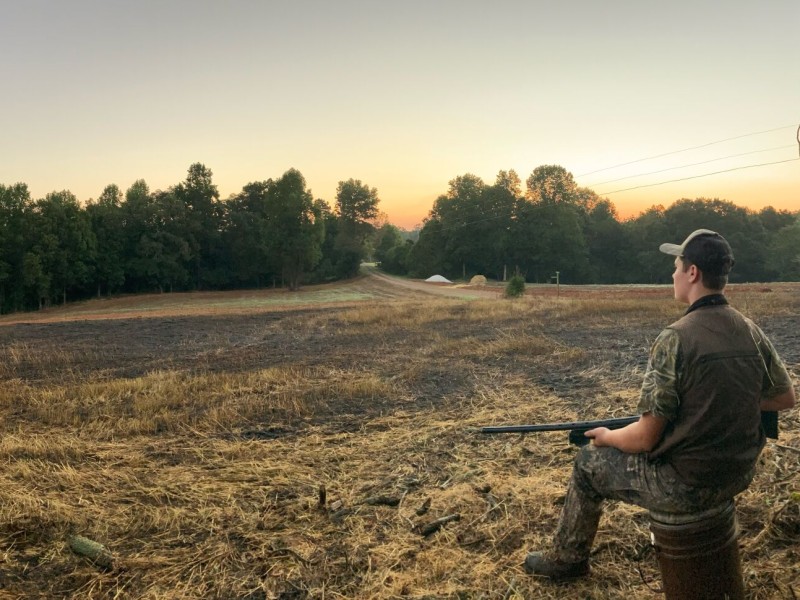
Special Photo: Georgia DNR
By Tom Seegmueller
[email protected]
“In all the ballistic computations of mankind, ain’t nobody ever figured a way to lead a dove too far if he’s going past you in a high wind.” ‒Robert Ruark
ALBANY ‒ For the past seven months, die-hard wing shooters have looked longingly at the fields they drive past imagining the sky above filled with darting dove. With the Georgia dove season opening Sept. 7, those shooters that have not already secured a spot on a field are looking to do so by any means possible.
There are a number of options available for those who are not fortunate enough to be invited to a private shoot. Pay shoots have become more common across Georgia and advertisements for them can be found in outdoor magazines, online searches, and fliers posted at various locations around the state. In general, prices tend to range from around $100 to $250 a gun, depending on amenities, which can include drinks, restroom facilities, lunch and raffles.
If pay shoots don’t appeal, numerous opportunities are available for shooters on almost 50 Wildlife Management Areas and other public land managed by the Georgia Department of Natural Resources. Information related to this hunts can be found in the Georgia Hunting & Fishing Regulation and Season Publication or online at georgiawildlife.com/hunting/hunter-resources. A variety of regulations applies to these hunts. Some are quota hunts, specialty hunts, and mobility-impaired hunts with their own rules and requirements. Hunters should also familiarize themselves with the list of activities that are categorized as unlawful on WMAs.
Dove are considered a migratory bird and, as such, are also regulated by the U.S. Fish and Wildlife Service, which establish the framework for states to set their three-phase seasons: opening and closing dates, season lengths, and bag limits. In Georgia, any hunter 16 years of age and older must have a Georgia Waterfowl & Migratory Bird License as well as a Georgia Hunting License. Legal shooting hours for all migratory birds begin a half-hour before sunrise and end at sunset. A word of caution to the novice: These times refer to official sunrise and sunset, which may be found online and changes daily. The daily bag limit for dove is currently 15 birds with possession limits being 45, or three times the daily bag limit.
During the halcyon days of dove shooting, limits and baiting regulations were frequently ignored with minimal consequence to violators. However, take my word for it that this is no longer the case in Georgia. Instead of appearing before the judge in the county courthouse, most if not all violations on the dove field are now filed as federal charges and you will be instructed to appear in Federal Court. Not a good place to be.
When shooting dove, it’s important to remember it’s illegal to: hunt with a shotgun not limited to a capacity of more than three shells; discharge a firearm within 50 yards of a public road; hunt or shoot across a public road; hunt without written permission of the landowner. These regulations include power lines, gas lines, railroad and other rights-of-ways. Additional rules and regulations apply when hunting on WMAs. Damaging powerlines can lead to serious charges for both the hunters or landowner.
Opening day shoots offer a variety of challenges beyond securing a seat on a field or hitting a darting grey target with the flight pattern of a fighter jet in a dogfight. Heat is a major factor in early season shoots, with temperatures and the heat index approaching or reaching triple digits.
Camouflage is important, but be sure that it is made from a lightweight breathable fabric in lighter colors. If drinks are not provided on the shoot or there is any question as to their availability, the shooter should be sure and take a sufficient supply of water. In this regard, a cooler that doubles as a stool is a great option. Some are available with dry storage for shells and other gear. If you choose to take a retriever, be sure and take sufficient water for their needs as well. Chances are that on early-season hunts, both the hunter and K-9 companion may be slightly out of shape, enhancing the impact of the heat and humidity.
There are a variety of ways to shoot dove other than on the field. Both require scouting to determine not only where dove are feeding but also determining where they go for water after they feed. A waterhole can prove to be a productive site for several shooters. Dove generally water twice a day. The first watering takes place after feeding in the morning. The second watering will occur during the last hour before dark when they’re ready to roost.
Dove prefer to water where there is a clear bank going back several feet from the waterline. They often will pick up grit here to aid in the digestion of the food in their crop. I have had several successful shoots on sandbars in the Flint River as well as those found on local creeks. In these instances, a well-behaved retriever is very beneficial. Otherwise, you will be wading or paddling after birds that fall in the current.
Another productive site to set up a stand is near the area where dove roost following their time at the waterhole. They generally like to sleep in groups and prefer a thick stand of pines or hardwood. Shooting a roost can be fast and furious for the last 30 minutes before sundown. Here again, be sure of your time, as official sunset changes daily.
In an effort to enhance their stand, hunters may use natural materials in or around the field to create a blind to better hide from their aerial prey. However, when the shooting is over, it is the shooter’s responsibility to return the field around the stand to the same condition as it was prior to the shoot and pick up all fired shells. Some shooters may carry a half-dozen dove decoys with them to further entice the birds. Today decoys are available with motorized wings simulating a dove landing to feed. However, the real trick is still being able to hit them as they fly past.
Author

Related Articles
Lee County homeowners have until Aug. 1 to claim property tax exemptions
Lee County homeowners have until Aug. 1 to apply for homestead and other property tax exemptions for the 2026 tax year, a deadline members of the Lee County Board of Tax Assessors highlighted Monday as they encouraged eligible residents to take advantage of available tax relief.

Dawson police arrest wanted suspect after Flock Safety camera alert
According to police, May drove into the yard of a nearby residence instead of complying with officers’ commands. He then exited the vehicle and ran into the home on foot.

Lee County stands alone without E-SPLOST. Here’s what that means for schools, taxpayers and the county’s future
Following the defeat of its referendum, Lee County became just the second of Georgia’s 159 counties without voter approval for an active ESPLOST, leaving the school system without the state’s primary local funding source for major construction, renovations, school buses and other capital improvements.
