
‘Beetle Bill’s’ secrets to catching panfish
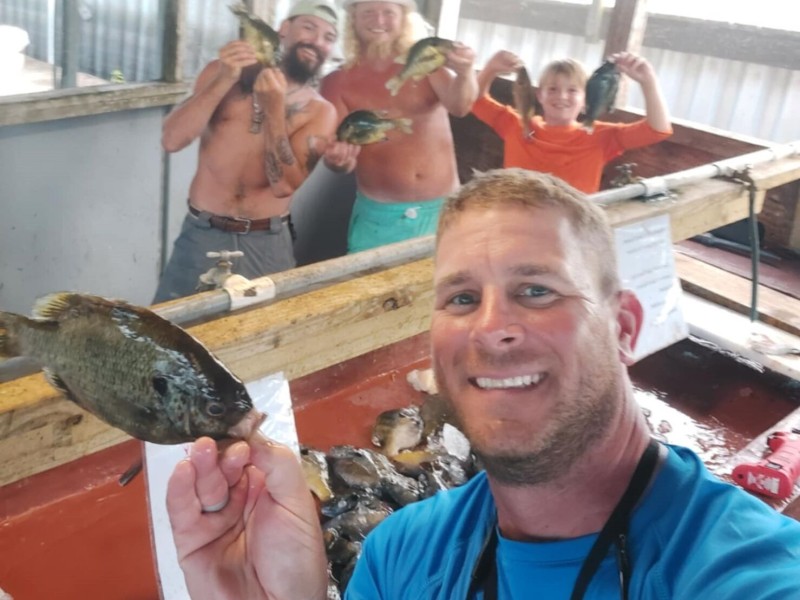
Special Photo: Tom Seegmueller
By Tom Seegmueller
[email protected]
ALBANY ‒ I’ve known Billy Shores for more than a decade. What I didn’t know until interviewing him for this article is that on Lake Okeechobee he’s better known as “Beetle Bill.”
“I’ve been going down there off and on for the last 20 years,” Shores said. “I really got committed to it over the last seven years.”
“Beetle Bill” said he was lucky to get his education on how to catch panfish on the 734-square-mile lake from those who have fished the south end of the lake for more than a half-century.
Okeechobee is the largest freshwater lake in the Southeast. However, it is exceptionally shallow for its size with an average depth of only 9 feet, making it a great body of water for bass, panfish and the anglers that go after them.
The lake acts as a natural filter for the waters flowing south into the Everglades. Before the blue-green algae growth accelerated over the years due to high levels of agricultural phosphorus and nitrogen contamination, Shores recalls seeing the lake’s massive beds of spawning fish with his own eyes.
“I’ve seen beds the size of football fields and parking lots,” he said.
Today such viewing is still possible in shallower water. However, in deeper water, Shores relies on electronic assistance.
“Electronics have been a game changer,” he noted. “With side scan and down scan sonar, you can locate bream beds you can’t physically see now due to the algae. You can scan out 120 feet from the boat and see bowl after bowl touching each other. You can mark the bed on your navigational screen and return to it whenever you want.
“Without that ability you’re just out there fishing. We’re out there catching.”
For those of us who have enjoyed fishing for bream and other panfish in southwest Georgia waters, the descriptions of Okeechobee panfish beds where Shores is “catching” are incomprehensible. Shores described finding a bed this year that was more than 100 feet wide and 4- to 500 feet long.
It turns out the “Beetle Bill” alias is related to Shores’ go-to lure, the Beetle Spin, a hairpin style spinner bait that combines a rubber skirted lead head jig with a Colorado blade spinner.
“I go to Walmart and buy every tri-color curly-tail grub they’ve got,” he said. “I take the factory spinner off and replace it with a slightly smaller 1/16th blade. We generally throw this using spinning reels spooled with 10-pound straight braid line with a 2-pound diameter. I like a 6-foot medium-action rod that has some backbone, but it needs to give at the tip. It can’t be too heavy.
“Throw that Beetle Spin into the beds and start reeling. Keep reeling like you’re saltwater fishing, and those first aggressive ones will hit it hard and set the hook themselves. It’s not cork-watching. You’re going to catch 15 to 20 and then it stops. When it stops, that’s it; you’re not going to catch anymore on the Beetle Spin. That’s when we start throwing the corks out there, fishing live crickets, and the bite picks back up. If anybody picks up a shellcracker with a cricket, I promise you worms are going on immediately. We fish the worms on a tight line like a miniature Carolina Rig for the shellcrackers”.
Shores said he believes the early aggressive hits on the Beetle Spins are protective strikes in which the fish is trying to guard the bed from predators.
“They hit that beetle and never stop, they just keep going.”
When he switches to live bait, he ties on a short monofilament leader with a blood knot so the fish don’t see the line attached to the bait and it is presented in a more natural manner. Shores said he believes those fish hitting the live bait are feeding. The switch to worms is a logical strategic change, as a shellcracker’s favorite food source is freshwater mussels. To get to the mussel, the panfish have to crack their shells, giving them their colloquial name.
“You can find their beds when you see a lot of cracked shells on the bottom,” Shores said. “Before sonar, the old-timers would take a piece of PVC pipe and poke it along the bottom of deeper water listening for the sound of crunching shells coming through the pipe. You can also feel the shells with your feet if you are wading.”
Shores said he enjoys looking for panfish bedding sites as much as he enjoys catching the bedding fish and has found some great local sites.
“You don’t have to make a trip to Okeechobee to enjoy catching panfish,” he said. “There’s some great fishing here on Lake Chehaw, the creeks and the river. Those bream are going to be bedding coming into the full moon. Some stay on the bed during the full moon, and some will bed on the new moon. They really turn it on in May and June, the hotter and more miserable it gets for us out there, the more they like it.
“But I love it. There’s nothing like a big ole bluegill pulling on that line.”
Special Photo: Tom SeegmuellerStaff Photo: Tom Seegmueller
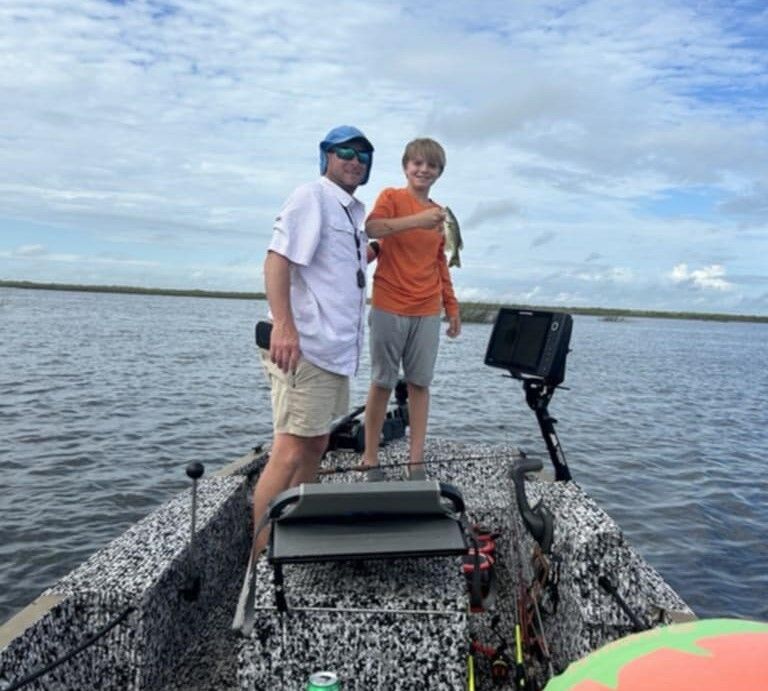
Staff Photo: Tom Seegmueller
Author

Related Articles

Albany police make arrests in murder, robbery cases
Officials with the Albany Police Department have announced a number of arrests in cases that involved a homicide and a pair of thefts.

Dougherty Jail graduates first class of female GED recipients
“It was an escape. I can say this has been challenging. I want to express my gratitude for being able to attend this program.”

From cotton to cloud: In the data center debate, is rural Georgia once again being asked to carry the cost?
Across much of rural Georgia, the abandoned cotton warehouses and shrinking tax bases remain — enduring reminders that industries built to serve distant markets do not necessarily stay rooted in the communities that first sustained them.
