
Health officials look to boost vaccination numbers

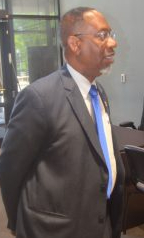
Dr. Charles Ruis
File PhotoBy Alan Mauldin
[email protected]
ALBANY — More than a third of the state’s residents have had at least one dose of a COVID-19 vaccine, but in southwest Georgia, the number of residents who have been vaccinated is lagging that percentage in a number of counties.
Health officials and a relief group will be rolling out mobile vaccine sites in coming weeks, seeking to make shots available in rural areas where transportation is an issue for some. Outreach efforts also are planned for younger people who are not exactly lining up to get vaccinated.
Statewide, 35 percent of Georgians, about 3.6 million, had received at least one dose as of Friday and about 2.64 million, or 25 percent, had received both, according to the Georgia Department of Public Health.
The state’s numbers include those who received shots at health departments and from hospitals and other health care providers.
Locally, that number was as low as 24 percent in Colquitt County and 25 percent in Grady County for those who had received at least the first of the two shots for the Pfizer and Moderna vaccines.
Miller County was tops in the 14-county Southwest Public Health District 8-2 based in Albany, with 34 percent of residents having received at least one shot and 30 percent being fully protected with both doses.
Lee County, where 32 percent had received a first dose, also exceeded the state in the percentage of residents who had both doses at 26 percent. In Early County 27 percent had both doses, as did 28 percent in Terrell County.
In Dougherty County, 29 percent of residents had at least one dose and 24 percent had received both.
One of the most concerning statistics to emerge since the vaccines have been available for all residents 16 and older is that young people are not taking advantage, said Dr. Charles Ruis, health director at the health district.
“One of the issues here is that people under 50 don’t have a good rate of vaccination,” he said.
Reluctance of younger people, especially those 18 to 35, to receive the shots, is a national issue, not just affecting Georgia.
The U.S. Centers for Disease Control and Prevention recently sent a team to study vaccine reluctance in the area, and its findings were that the region is pretty much like the rest of the country in that regard.
“They suggested that we really focus on getting the message out to them in a way that is more effective,” Ruis said.
Some of the measures being considered are having people who are well-known in the community promote vaccination and having those who have had the shots call friends to offer encouragement.
The CDC and local health officials also have reached out to area churches, which are a trusted source of information and guidance for many. The low number of vaccinations in Colquitt County was a concern, and part of the explanation is that there are a large number of Hispanic residents there who need to be reached.
“In Colquitt County, one of the things it could be is there is a language barrier,” Ruis said. “So we need to communicate in Spanish and English.”
A farmworkers health clinic located in Ellenton began administering vaccines a few weeks ago as part of an outreach to that group.
Vaccines are available to anyone who can provide proof of age, and farmers who employ farmworkers are participating in the effort, Ruis said.
“We don’t care where a person is from,” he said. “As long as they’re old enough, we’ll give them the vaccine.
“They (Ellenton clinic) have translators, and they have had the vaccine for about three weeks.”
The Community Organized Relief Group (CORE) will become involved in the southwest Georgia region in coming weeks, taking the vaccine to rural areas where transportation may be an issue.
“They will be bringing mobile teams into our health district next week,” Ruis said.
The group is working with local officials to identify locations.
The first clinics are scheduled from 2-7 p.m. Tuesday at the Margaret Jones Public Library in Sylvester and from 1-5 p.m. Friday at the Warwick Police Department. CORE also was trying to finalize arrangements for a clinic on Thursday at an apartment complex in Moultrie.
“That’s going to be the next thing,” Ruis said of the mobile vaccine clinics. “We realize that transportation is an issue and it’s more of an issue in our outlying counties. A lot of places are 10 or 15 miles from the nearest vaccine site.”
The number of people who have been vaccinated is bolstered by those who have had COVID-19 and may still have immunity to the disease, the health director said.
While the medical community is not sure what percentage of the population needs to be protected, either through immunization or immunity from having had the disease, to achieve the point of “herd immunity” where the spread will be checked, that achievement is coming closer every day.
“If we could get 50 percent fully immunized, I have to think that would get us a lot closer to herd immunity,” Ruis said. “We wouldn’t want to stop there. We’d still want to get these folks vaccinated.”
The bad news in recent days is that Dougherty and Grady counties have both seen a recent spike in new cases, showing that the virus is still active and dangerous, Ruis said.
“In most cases, where we’re seeing the numbers going up, it’s younger people who usually don’t get as sick,” he said.
Author

Related Articles
Albany police investigate suspicious Sunday death
A 21-year-old Turner Job Corps student who was found unresponsive on Sunday evening was later pronounced dead at Phoebe Putney Memorial Hospital. The death is under investigation.
Unexplained checks, missing records, benefit errors surface in Terrell schools audit
A payroll performance review commissioned by the Terrell County School System found widespread documentation deficiencies, unexplained payroll discrepancies, inconsistent employee benefit deductions and weaknesses in internal controls, while also crediting district leadership for taking steps to improve oversight after significant staff turnover.

Terrell schools project $1.36 million revenue decline in proposed FY ’27 budget
The Terrell County Board of Education is scheduled to receive Superintendent Dr. Shereca R. Harvey’s monthly report and review budget information during its regular meeting at 7 p.m. tonight, Monday, June 22, with agenda materials outlining the district’s current financial position, fiscal year 2027 projections, a new grant award, state policy updates and enrollment trends.
