
Lee County to update wastewater plant to keep up with growing population
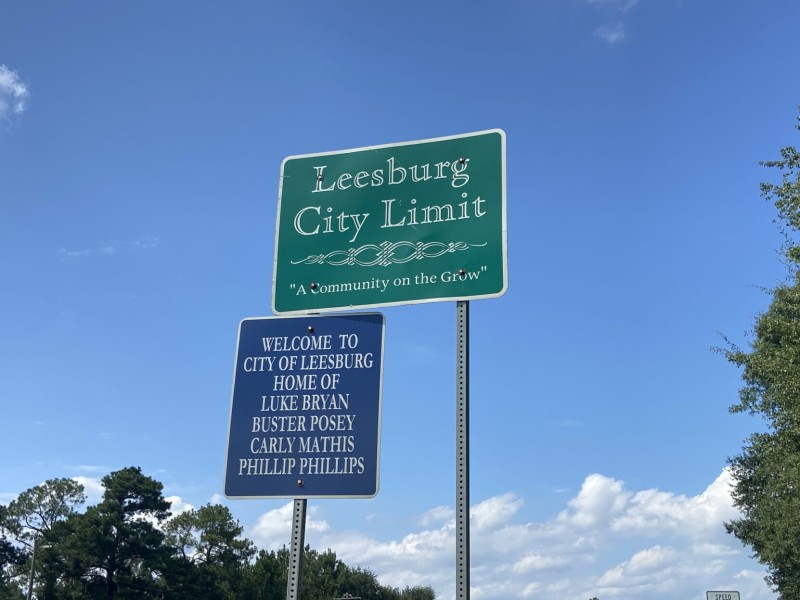
File Photo: Lucille Lannigan
By Lucille Lannigan
[email protected]
LEESBURG — While Lee County’s population consistently grows each year, so does its wastewater.
The county saw its population grow by about 52% from 1990 to 2010. The small farming community’s residents shot up from 16,250 residents to 24,757. The growth continued for the next 20 years. Between 2010 and 2020, the county saw about a 16% increase in population from 28,898 people to 33,163.
With this growth, Lee County stands out from its neighbors, like Dougherty County, which has struggled with a decreasing population. However, leading in growth comes with its challenges as the county races to keep up with infrastructure needs of its newest residents.
The Kinchafoonee Wastewater Plant in Leesburg faces the most pressing need for expansion. The plant, which began operating in 2002, can treat up to 1 million gallons of wastewater per day. Currently, the plant averages 600,000 gallons a day, prompting the county utilities authority to look toward expansion.
Once the plant reaches the Environmental Protection Agency’s permitted 750,000-a-day average, the water has to be cleaned up or treated to a higher standard before it is then discharged into the Kinchafoonee Creek in a safe manner, Chris Boswell, the county Utilities Authority’s general manager, said.
At an Aug. 22 special called meeting, the Utilities Authority heard from project bidder, Parrish Construction Group. The board was quick to approve the construction company, which recently brought on Jason Taylor from Reeves Young Construction to begin handling water projects — a venture Parrish has recently wandered into.
The Perry- and Atlanta-based company is known for expansive school and hospital construction projects. In fact, it’s the state’s largest school builder. In 2016, Parrish managed the construction of Americus’ new Sumter High School. The company was recognized for a general contractor first place project by the Associated General Contractors of Georgia and has completed a wide range of projects both in and out of the state.
The company will take on the task of upgrading the Kinchafoonee plant’s technology, much of which is about 30 years old, Boswell said.
“In order to meet that higher standard of treatment, some modifications in the plant have to be done,” he said.
Upgrading the ultraviolet light system, which disinfects the water, adding new traveling filters that bring the water to the UV system and repainting the steel plant are the three major components of the project.
The UV system has an intense tray of lights, which, Boswell said, kills all harmful bacteria. New traveling filters will allow the water to be more precisely disinfected before reaching the UV light system.
Repainting the plant will be the most costly upgrade.
“Anytime you try to paint something that’s got water in it, you have to have an expert to do that because the condensation on the steel will not allow the paint to adhere to the steel,” Boswell said.
Once these upgrades are complete, the plant will reach the EPA standard, he said. Currently, the plant can handle the amount of wastewater that needs to be treated in the county. In August 2023, the utility authority passed a residential restriction, on approving new residential growth that could tie into the wastewater plant, Boswell said.
However, a lot of subdivisions were still approved, he said, and nobody knows how many houses there are. And you can’t take that approval back.
“I did the math,” Boswell said. “If you take the approved subdivision sections that were approved for sewer, if they were built out … the plant would reach that 750,000-gallon-a-day average
Long equipment shipment times, the need for new sewer treatment in new residential areas and concern over the possibility of severe weather events like 2018’s Hurricane Michael causing more water to flow through the plant mean the board wants construction to begin as soon as possible.
The county wants a quality job and a job done on time, Lee County Commissioner and chairman of the Utilities Board George Walls said.
“Time’s what’s killing us,” he said. “Right now, we’re losing money because we’re not putting any new sewer in for residential customers because we can’t.”
Parrish CEO Charlie Griffi said the company can do exactly that.
“You’ve got every resource that we’ve ever dreamed of having available to Lee County to do a great job,” he said.
As of Wednesday, Hofstadter and Associates, a Macon-based engineering firm, is preparing the construction documents, which validate the equipment and components needed for Parrish to begin working.
R.J. Gipaya, the Flint Riverkeeper’s watershed specialist, said Lee County does an exceptional job in keeping its waterways clean — especially the Kinchafoonee Creek. Gipaya has toured the treatment system and sampled outfalls several times. He’s seen no major issues.
“Lee County is a good municipality, and it takes care of that creek,” he said.
The last issue with the Kinchafoonee plant was more than a decade ago, Gipaya said, and once the county fixed the plant, there hasn’t been an issue since.
“In the five years I’ve been here, I haven’t been out there on a spur-of-the-moment call for major spills or anything like that,” he said.
Higher e coli levels, a bacteria found in human intestines, are reported from time to time toward Lake Chehaw, but they’re not off the charts, Gipaya said.
“We do assume that there are some old septic tanks failing along the creek,” he said. “That’s just gonna happen with a large population along the creek.”
Some of the houses along the Kinchafoonee date back to the ’60s, he said.
“Unfortunately, septic systems need to be maintained, but nobody maintains them,” the watershed specialist said. “It’s just a fact of the world. Everybody assumes it’s working until it’s not.”
Overall, Gipaya said he applauds Lee County for staying ahead of the game. The county understands that the Kinchafoonee Creek is a major tourist draw, he said, and it’s keeping up with the times and increasing the plant’s capacity before it becomes an issue.
Ensuring the new construction doesn’t impact the quality of the creek’s water is a priority, Boswell brought up during the Aug. 22 meeting.
“We pride ourselves in releasing quality treated water back into the creek,” he said to Parrish representatives. “We want to keep our reputation and keep that water clean.”
While the expansion of the plant and other water needs in Lee are necessary, they come at a steep cost. The Kinchafoonee plant project will cost the county $4,665,000.
State funding is not always easy to come by for large infrastructure projects like the wastewater plant expansion, Lee County Commission Chairman Billy Mathis said Georgia’s municipality funding operates on a tier scale, and fast-growing counties with a stable economy like Lee’s don’t make the list of counties in need of funding, he said.
This creates a dilemma for the county, the chairman said.
“The counties that can get the grants don’t really need a lot of that infrastructure,” Mathis said. “Whereas the fast-growing counties, who may be more prosperous, can’t get the grants to help build that expensive infrastructure.”
The county pretty much does it on its own, he said.
“We try to only grow our government and our infrastructure as our tax base grows, not with tax increases, but with natural growth,” Mathis said.
This has worked well in Lee County, which has seen tax surpluses in the last few years and will see another this year, he said.
“We’re very, very proud of our budget, and the fact that we can build all of these expensive things that we need in the county and still live within our means and not put the burden on the taxpayers,” Mathis said.
However, the need for expansion is never-ending, he said, adding the state is starting to see the flaws in its tier system.
Author

Related Articles

Crime in Albany is flat. Residents’ fear of it isn’t
Albany police recorded 1,200 crimes against persons from January through July. In the same seven months of 2025, they recorded 1,202 — a difference of two incidents.
Albany recycling center enacts material separation rule
Mixed items will no longer be accepted at the Albany recycling center at its 2521 Meredyth Drive facility. Individuals will now be required to separate items befor they will be accepted.

Wild Game Dinner marks 34 years as South Georgia Scouting reaches for next generation
More than a century after organized Scouting first took root in Southwest Georgia, local leaders say the program is working to preserve its traditional mission while adapting to a new generation of young people.
