
ADA seminar aims to make southwest Georgia more accessible
Gathering helps clarify design elements of the Americans with Disabilities Act
By Rachel Lord
Herald Correspondence
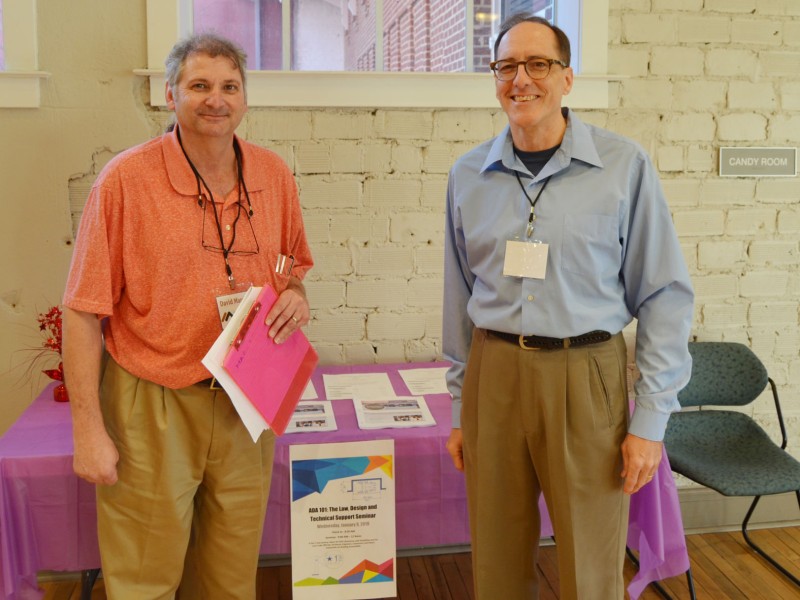
ALBANY — Architect David Maschke hosted a seminar Wednesday focusing on and attempting to clarify the Americans with Disabilities Act for code officials, architects and engineers from around southwest Georgia.
The free seminar featured a presentation by Georgia’s senior ADA architect, Steven R. Jones, who reviewed some of the more technical aspects of the ADA code that are often difficult to understand. Jones led discussions in the responsibilities of design professionals and code officials to enforce and comply with the code as well as discussions on how to incorporate the ADA code into new buildings and existing structures that go through renovations.
Forty-two people attended the seminar with participants coming from as far north as Atlanta, as far south as Valdosta and various communities throughout southwest Georgia.
And while there were officials from the Albany area, Maschke said he thinks that the seminar can have an impact on all areas of southwest Georgia.
“I think it will have a positive impact, not just for Albany, but for all the surrounding counties,” Maschke said.
Maschke met Jones at a similar seminar two years ago.
“He introduced himself,” Maschke said. “… We got to know each other, and I’ve consulted with him on a couple of my projects. So I found out that he had the expertise, he was accessible, very reachable, easy to work with, and very helpful. So he was a natural choice, being that he’s the state ADA architect and works for the state office of ADA compliance.”
Jones said he has dealt with accessibility issues since becoming an architect. He has done architectural work in Colorado, Wisconsin and Georgia. While working at the Kimberly Clark Corporation in Roswell, Jones said he dealt with accessibility issues even more, especially in terms of training, because the ADA had just been enacted during his time there.
From there, he went on to a job with the Georgia Department of Corrections, where he dealt with accessibility issues even more.
“At that point,” Jones said, “there were beginnings of litigation and things like that that challenged the agency and challenged issues that put me at the center point because I was managing a team of project managers that dealt with accessibility, that dealt with all the issues within correction. As a part of that growth and responsibility, I was the only one who really understood it fully and was able to carry that ball. I couldn’t delegate it; I had to take it on myself. And then as that continued to grow and go to court, the issues of accessibility became mine.”
Afterward, Jones moved on to his position as the ADA architect for the state of Georgia.
“It’s certainly an opportunity that I’ve been blessed with,” he said, “to be able to share the knowledge I learned through the challenges I had, and to be able to share that with the code officials and design professionals in the state of Georgia.”
Maschke said Jones’ knowledge of the code and his experience as an architect himself help Jones to better understand the issues and explain them to design professionals and code officials.
“He is an expert on the code, and he’s also a registered architect,” Maschke said. “He is able to marry the code to real life architectural situations and provide expertise and guidance to the attendees, which consists of architects, civil engineers, and building code officials, to help them when they do designs and when they review plans to ensure code compliance and to improve accessibility for people with disabilities and senior citizens.”
Officials from the city of Alma and the city of Tifton said they hoped that the seminar would help them make their communities more accessible.
“As a building inspector, we don’t review the ADA requirements, but we do oversee the construction of sidewalks, ramps, et cetera, so it’s always good to be aware of any changes and what those requirements are,” said Dickie Snow, a building inspector with the city of Tifton.
Heidi Minnick, director of facilities management for Dougherty County, and Darlene Hollis, the procurement specialist for Dougherty County, also attended the seminar.
“We have a total of 65 structures that we are entrusted to take care of,” Minnick said. “And ADA compliance rules are always changing and always updating. As our buildings get older we’ve got to make sure that as we do our renovations, we stay in compliance and that we’re able to take care of the community, those that are not disabled as well as those that are disabled.”
Maschke said he was motivated to host the seminar because he saw the difficulties in accessibility for residents of southwest Georgia.
“It was a frustration to me to see these things occurring,” Maschke said, “especially since probably 80 or 90 percent of the accessibility code is simple to apply and incorporate into design projects. But you have to know about them and understand them as part of the design process.
“In Albany, and in general in some areas of southwest Georgia, unlike more metropolitan areas of Georgia, the accessibility code has not been understood or consistently applied. But citizens of southwest Georgia deserve accessibility just like anywhere else in the state.”
Related Articles
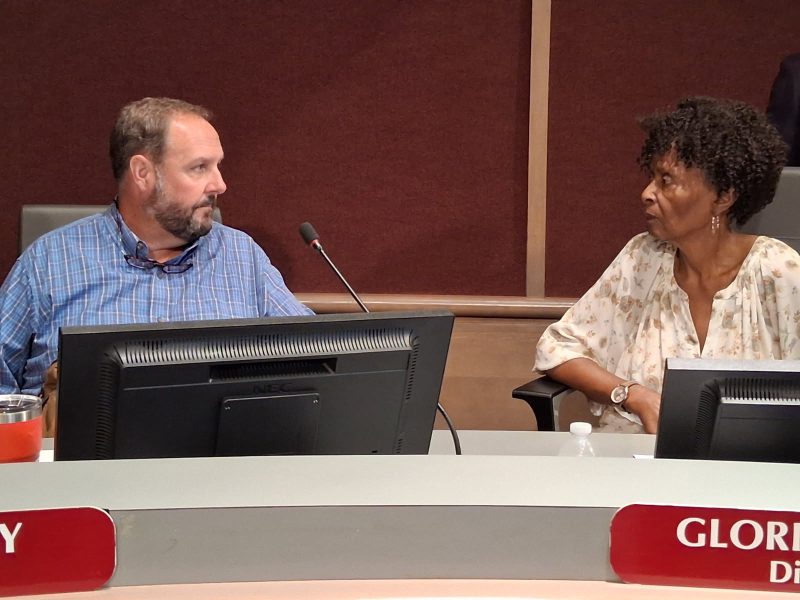
Dougherty Commission considers $104 million budget for 2026-2027 budget year
“The other side of the coin is you could have higher revenues than projected. We’re very conservative in budgeting revenues. That also reduces the need to use fund balance”
Albany police investigate suspicious Sunday death
A 21-year-old Turner Job Corps student who was found unresponsive on Sunday evening was later pronounced dead at Phoebe Putney Memorial Hospital. The death is under investigation.
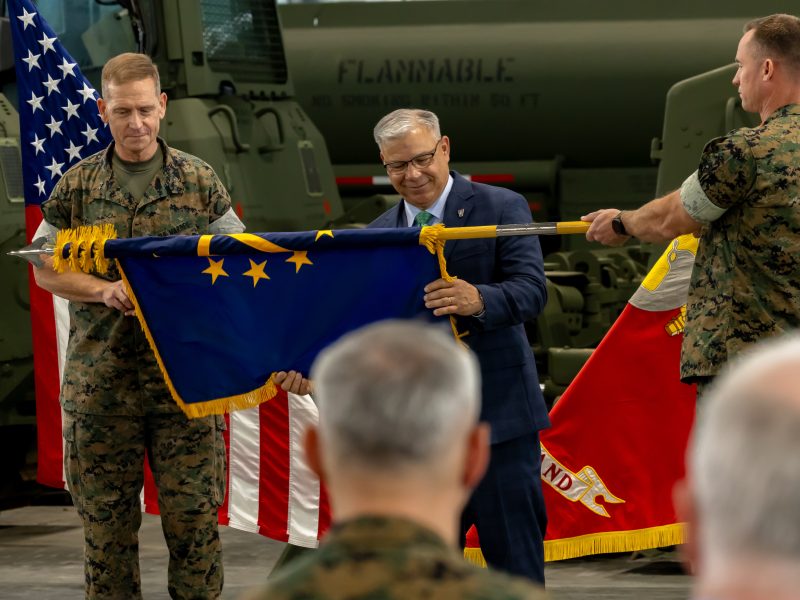
James Rubino installed in new role at Marine Corps Logistics Command in Albany
James L. Rubino recently assumed the role as executive deputy of Marine Corps Logistics Command in Albany. In his new role he will oversee integrated logistics support.
