
Albany Confederate statue has long history
Albany statue was erected as reminder of tremendous loss of life during Civil War
By Jon Gosa
ALBANY — As Civil War monuments and memorials across the country continue to be vandalized, defaced or damaged by people/protesters moved by strong personal convictions, racial motivations, political agendas or simply by an ability to be provocatively offended by social conventions and societal norms that existed, in all their ugliness, more than 152 years ago, The Albany Herald looked into the history of a Confederate monument that once was located in downtown Albany.
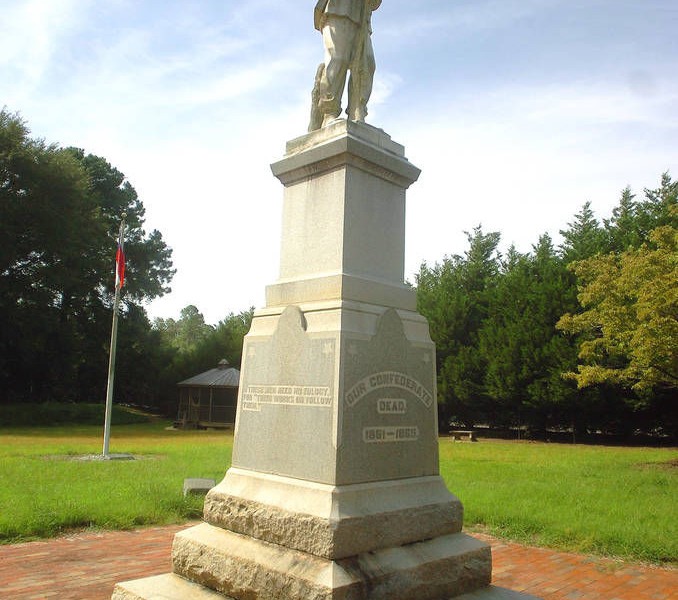
Long moved from downtown, today the monument sits as the centerpiece of Confederate Memorial Park on Philema Road.
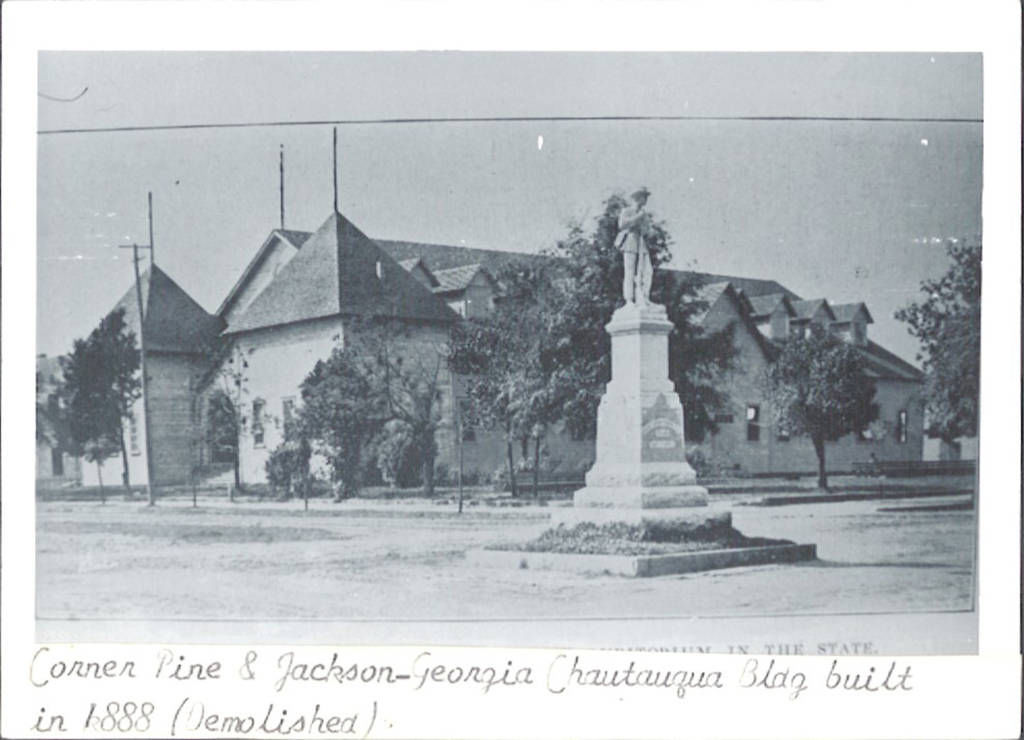
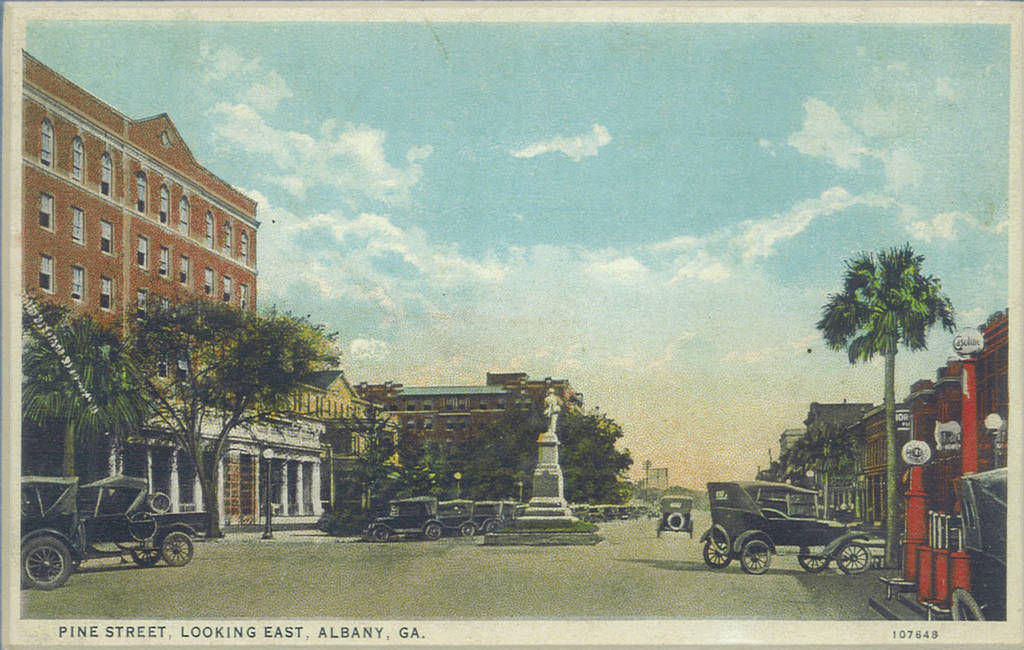
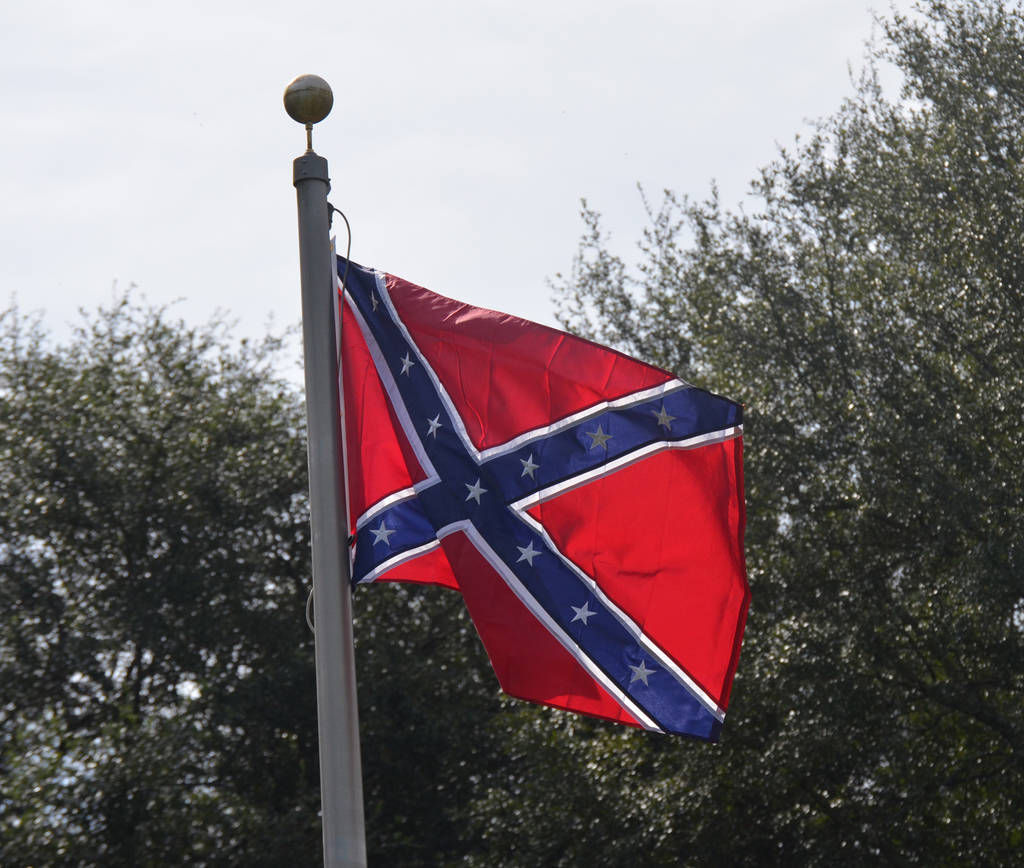
It was originally erected and unveiled at the intersection of Pine Avenue and Jackson Street downtown in November 1901, but after several re-locations, the statue ended up at the park owned and maintained by the Sons of Confederate Veterans, a private honorary organization whose members say they seek to commemorate and remember the sacrifices made by soldiers of the Confederate Army who fought and died for their homes and families against northern tyranny and oppression.
The park is small — humble even by many memorial standards — and consists of a square meadow-like courtyard with the monument located at its center.
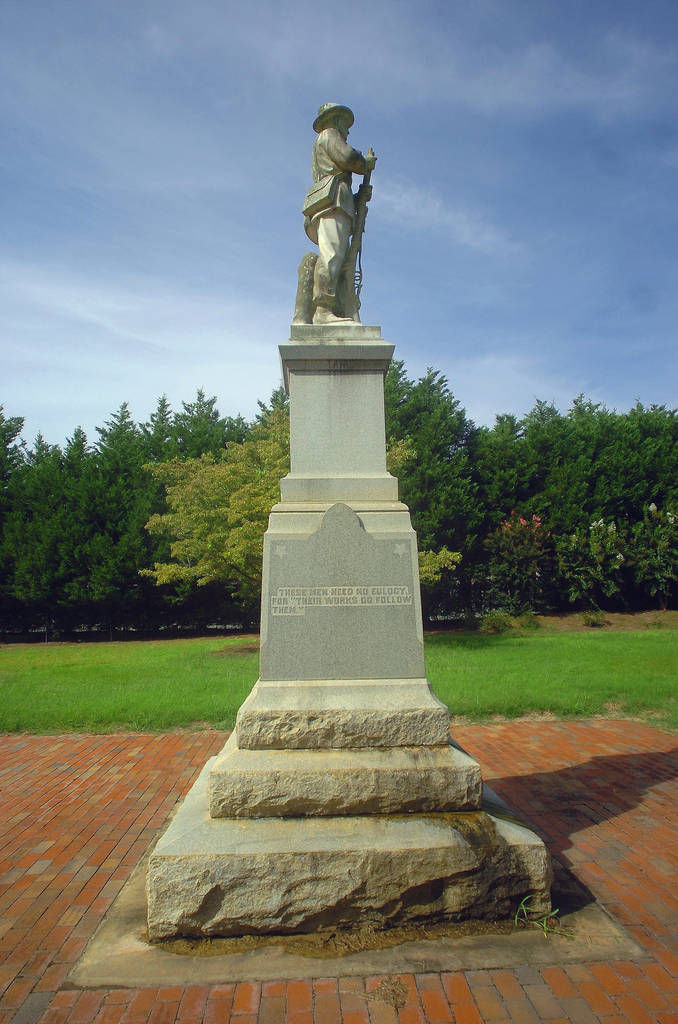
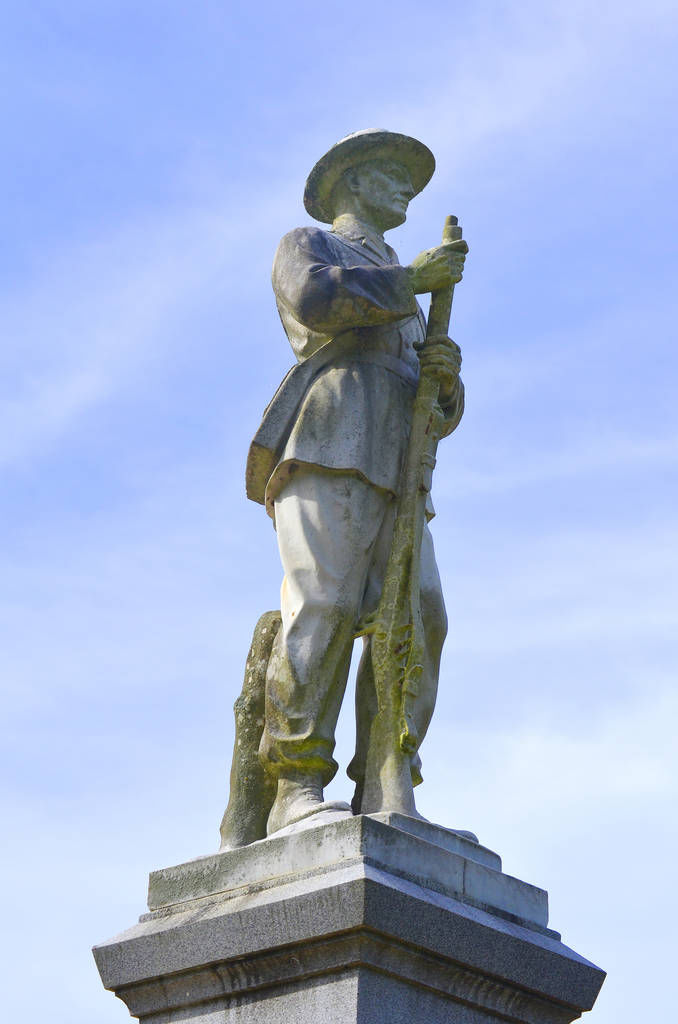
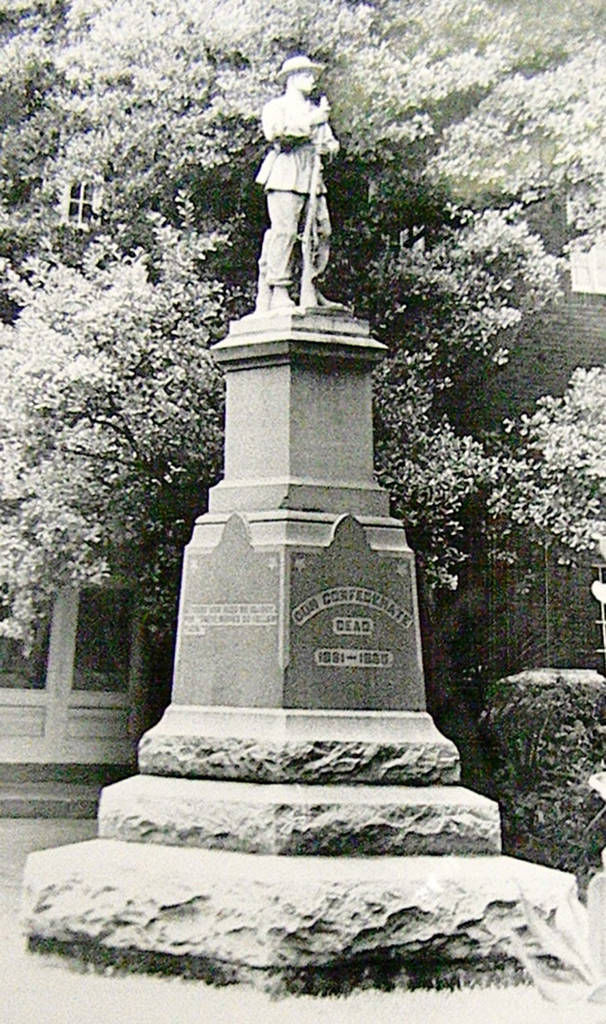
The monument consists of a three-tiered rough-hewn marble pedestal, an inscribed central shaft commemorating “Our Confederate Dead – 1861-1865,” and is topped with a life-sized hand-carved Italian marble statue of a typical soldier of the Confederacy, armed with a musket and bayonet.
The statue, which sat for years nearly forgotten at three other locations around Albany, finally made its way to the Confederate Memorial Park in 2000 and was officially rededicated on Jan. 22 that year.
The statue’s journey, from its original location downtown has taken 116 years and began directly after the Civil War during Reconstruction, long before the sculptor, in Italy, ever chiseled a single blow.
When examined historically, that journey explains a great deal about why the monument was commissioned and what the memorial stands for.
In 1860, Albany and Dougherty County was a thriving community, records indicate. The value of taxable property in the county was around $8 million.
The Albany Patriot boasted that Dougherty was “the wealthiest county in the United States having an average capital of $22,747 for each voter,” but the tide of war was swift and many such prosperous communities, in the path of that war, were completely swept away, or, as in the case of Albany, were severely impacted.
From Albany and Dougherty County, at least 101, “officers, privates and recruits of the ‘Dougherty Hussars,’ left Albany on July 2nd, 1861,” according to reports by the Albany Patriot, “Being the first cavalry company that left the state of Georgia, (the Dougherty Hussars) afterwards attached to Cobb’s Georgia Legion at Richmond, Va., and served through the war with General J.E.B. Stewart and General Wade Hampton.”
Many of those soldiers never returned home and were recorded as killed in action, according to local muster rolls.
“Although no actual armed conflict touched Dougherty County during the war, the struggle was brought close enough to greatly affect the life of the people,” according to the Works Progress Administration’s Historical Background of Dougherty County Georgia 1830-1940. “Hospitals were crowded with sick and wounded.”
CivilWar.org gives the accounting that approximately 620,000 soldiers died from combat, accident, starvation, and disease during the Civil War. However, this number comes from an 1889 study of the war performed by William F. Fox and Thomas Leonard Livermore. Both men fought for the Union and records show that their estimate was derived from an “exhaustive study of the combat and casualty records generated by the armies over five years of fighting.”
Other studies estimate the number of dead as high as 850,000. To put that in perspective, an estimated 407,300 American soldiers died during World War II.
The enormity and horror of the war between the states — a country torn apart, hundreds of thousands of men dead, lives ruined, bodies shattered, homes and farms abandoned or burned, poverty, hunger and countless other atrocities — touched all parts of the nation, and Albany was no exception.
“In the early fall of 1864, more than two thousand Confederate soldiers were sent to Albany to be hospitalized,” author Mary Ellen Bacon wrote in the book “Albany on the Flint – 1836-1936.” “There were no quarters in the town for the sick soldiers, and many were placed in empty churches, vacant houses and railroad boxcars.”
Medical attention was sparse and inadequate, and after several months the Confederate wounded were moved to Mississippi, leaving only Dougherty County wounded in Albany, according to Bacon.
“When Federal General William T. Sherman began his march to the sea, he covered some of Georgia’s richest lands from the ruined city of Atlanta to Savannah,” wrote Bacon. “Though Albany was spared the burning and looting of the invading army, she shared in the resulting poverty of the state. The wreckage left by Sherman and the losses of the war crippled Georgia. Not only was the South’s economy ruined, so were her lands and her plantation system.
“Though they had lost their wealth, Georgians kept their spirit. They kept their belief in God and in their way of doing things. They kept their belief in honor and duty and home. These beliefs held the Southerner to the soil and gave him hope for the future.”
In Albany, as the country attempted to pull itself together, the immense loss suffered by the country could not be denied and many were inspired as to raise funds, during a time of economic uncertainty, to commission a statue that would honor that terrible loss.
“The women of Dougherty County, who did so much for the confederate soldiers during the war, did not cease their activities afterwards,” according to the Historical Background of Dougherty County 1836-1940 and “a movement for a Confederate monument was begun in 1869.”
Bacon also wrote about the origins of Albany’s Confederate statue.
“After the war was over the women of the Dougherty County created a Monument Association Fund,” Bacon wrote. “The monument they chose was a life-sized figure of a Confederate soldier, carved from marble. It still stands today as a reminder of the great courage and the great sacrifice that war demands. It is also a reminder of that tragedy that results from war.”
In an effort to find firsthand accounts of the original unveiling and dedication of Albany’s Confederate statue, Albany Herald librarian Mary Braswell examined the newspaper’s archives, a consistent day-to-day accounting of life in Albany and Dougherty County for more than 172 years.
“Most of this material is now on microfilm, which dates back to 1845 and is available also at the Dougherty County Library,” Braswell said. “We share our resources with them, but here within The Herald’s archives we have actual bound copies of the original papers dating back to at least 1892.”
Stacks of enormous, bound, hard-cover books, pages yellow and brittle from the passage of years, line the walls in a former Herald production building. The dust on some of the books was so thick that the dates could not be read without wiping it away.
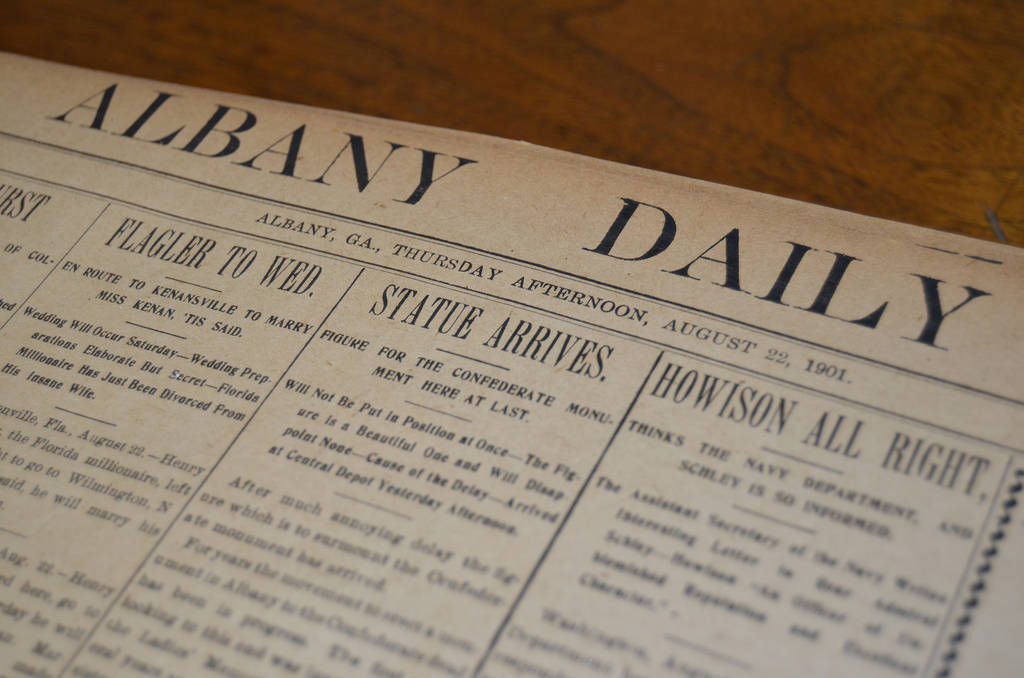
An Aug. 22, 1901 edition of the Albany Daily Herald announced, “Figure for Confederate Monument here at last.”
“For years the movement to erect a monument in Albany to the Confederate dead has been in progress,” the Albany Daily Herald reports. “The statue had to be made in Italy. It was hoped that the figure would arrive in time to hold the unveiling exercises of the monument on the last Memorial Day, the 25th of April.
“The figure was shipped from Italy in ample time to have arrived here and been placed in the position by that date, but when the statue reached New York it was found to have been broken on the ship and could not be used. Another statue was ordered and it arrived at the Central Depot yesterday afternoon.”
According to a November 16, 1901 edition of the Albany Daily Herald, the city’s Confederate monument was unveiled to a crowd of thousands.
“Albany’s monument to her Confederate dead was unveiled yesterday afternoon with ceremonies impressive and appropriate,” the Albany Daily Herald reported. “The exercises were witnessed by a large concourse, there being probably two thousand persons present, and all evidenced a deep interest in everything that occurred as part of the afternoon’s programme.
“The address of Hon. Joseph E. Pottle of Milledgeville, was a splendid effort. Nature has endowed him with pleasing voice and graceful presence, and he impresses one as a typical Southern orator. He paid beautiful tribute to the Confederate private soldier, ‘whose equal we have seen nowhere in history and whose counterpart the future will not see.’”
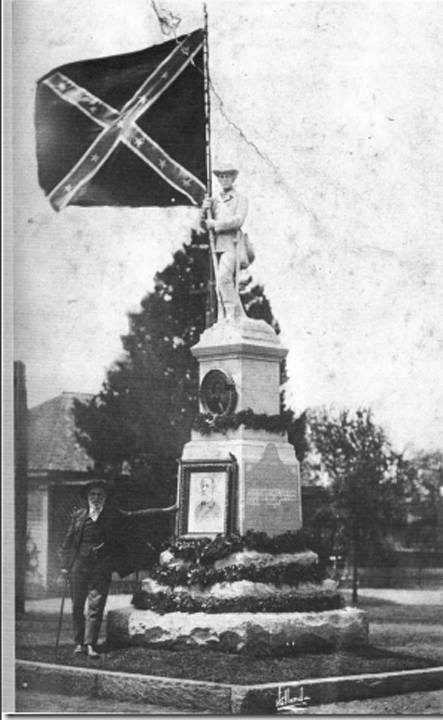
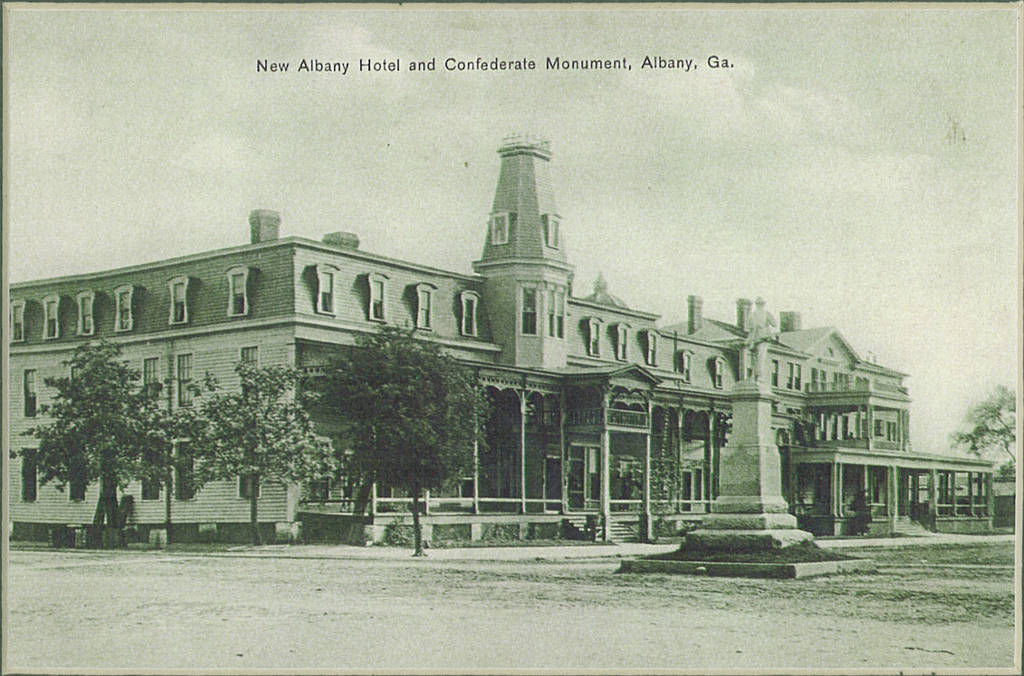
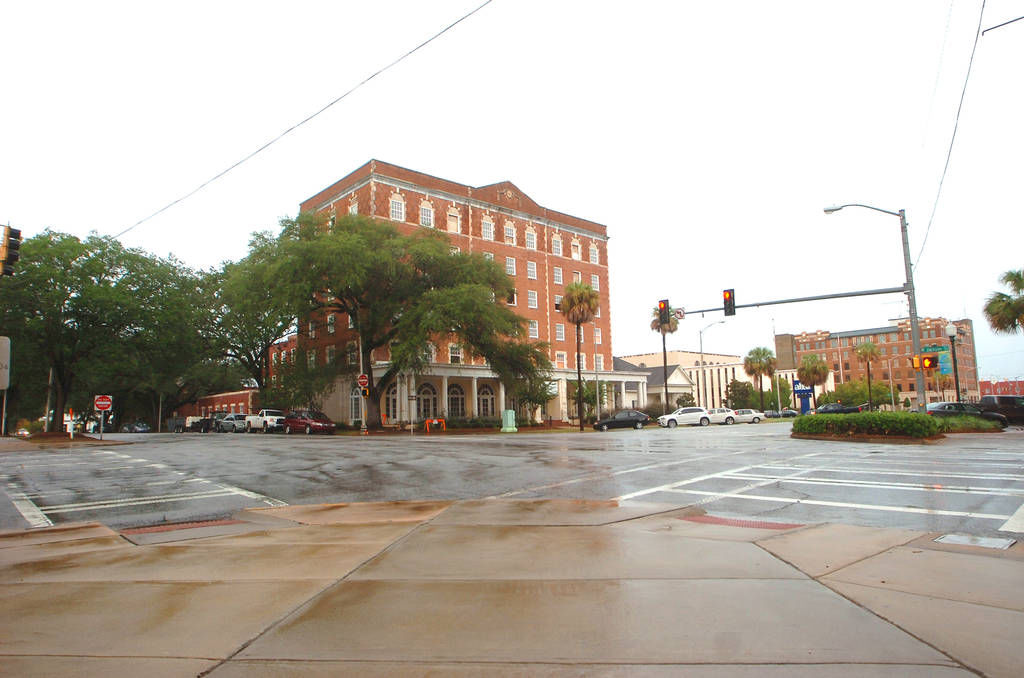
The statue was erected and unveiled in the middle of the intersection of Pine Avenue and Jackson Street facing east, toward the Flint River. It stood there until 1955, according to Thronateeska Heritage Center Executive Director Tommy Gregors.
“They took it out of the street in ‘55, because it was hit by a car,” Gregors said. “It was moved to the lawn of the Albany Municipal Auditorium.”
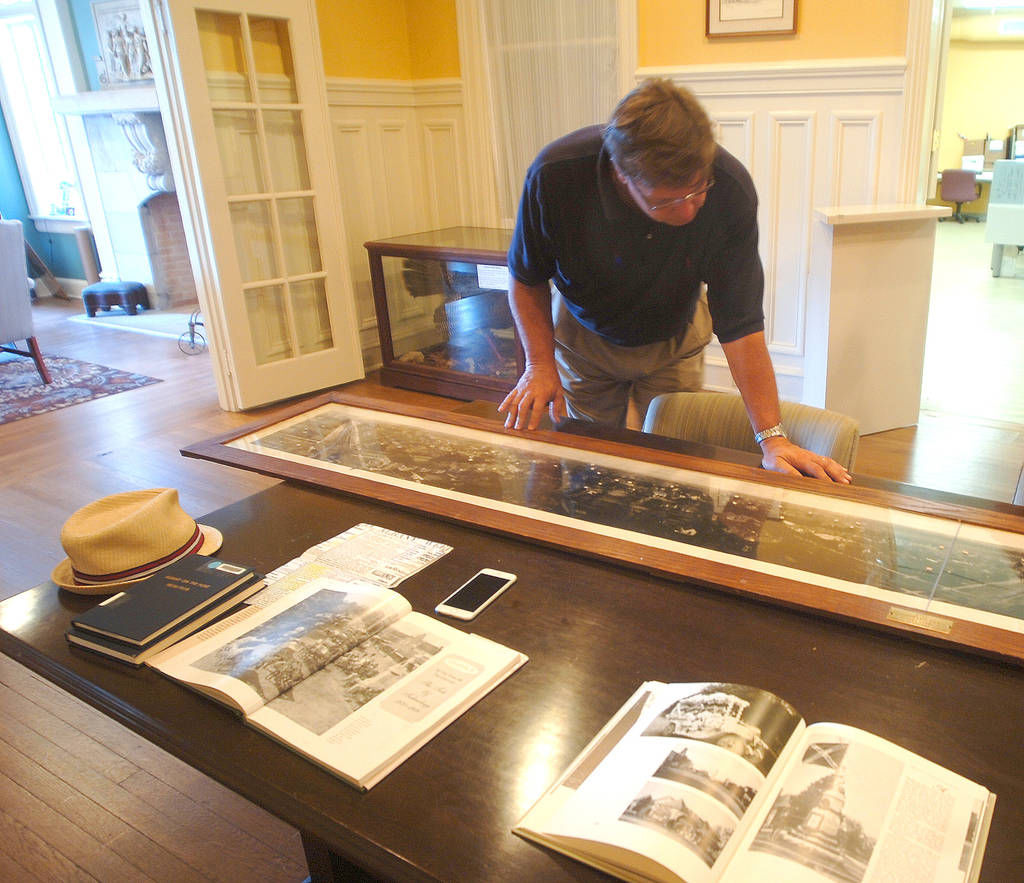
A small mystery presented itself during the research into Albany’s Confederate statue which pertained to the Albany’s Thronateeska Heritage Center when a pre-turn-of-the-century photo was discovered in a book titled “Generations — The Story of Albany.” It shows a different Confederate statue in the middle of a dirt downtown street. In the photo, wagons stacked beyond capacity line the thoroughfare waiting to sell their crops.
As it turns out, the picture, labeled “Thronateeska Heritage Collection,” which enjoyed prominent position on the back cover and a two-page spread inside the publication which was about Albany, was actually taken in Newnan near Atlanta, but that is another story.
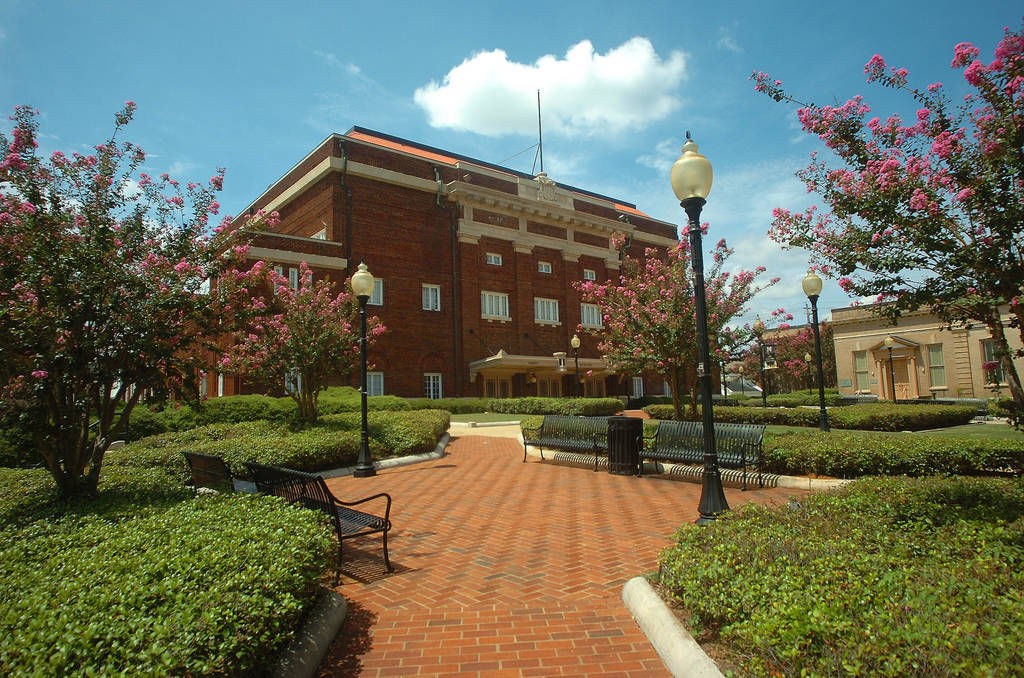
When Albany’s Confederate statue was first erected, the Albany Municipal Auditorium, where the statue would come to rest in 1955, was not yet built. It was constructed in 1915 to replace an old wooden auditorium (the Chautauqua building) located on the northwest Corner of Pine and Jackson used for Chautauqua programs, an adult education/entertainment fad that was very popular in the late 19th and early 20th century.
The auditorium also hosted many talents from the music world, the stage and television, including an Irving Berlin musical road show in the 1920s.
During the 1950s and 1960s, telethons were held in the auditorium. These telethons attracted Hollywood stars to Albany, including most of the cast of “Bonanza,” “Wagon Train,” “The Virginian” and even Jayne Mansfield. In 1972, the auditorium was abandoned and stood vacant for years.
During all of that time, Albany’s Confederate monument stood guard on the lawn within sight of its original intersection location.
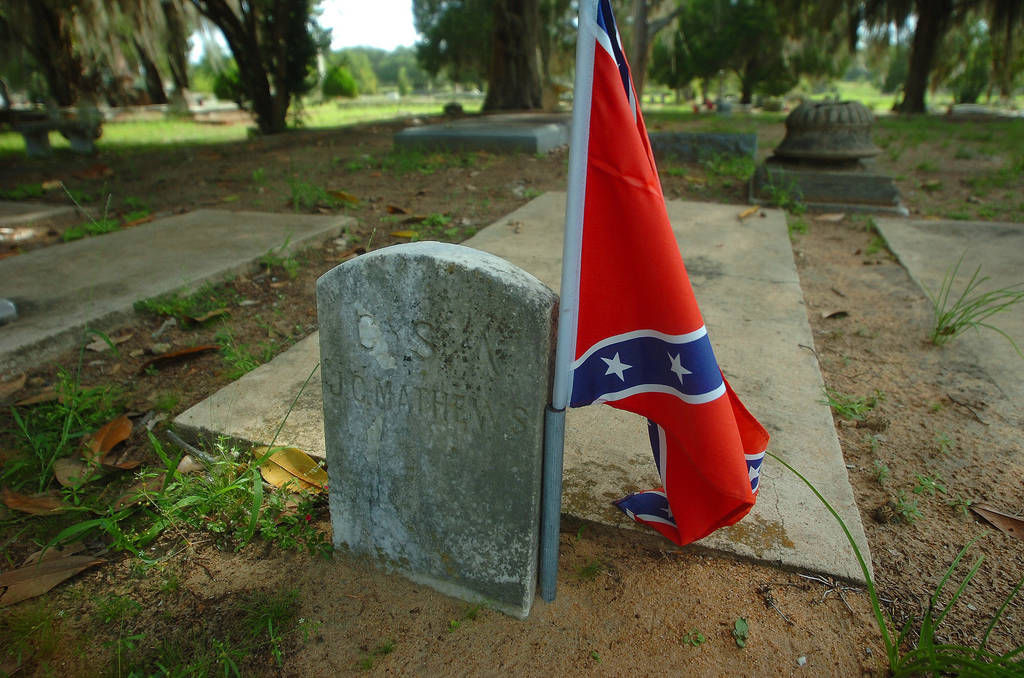
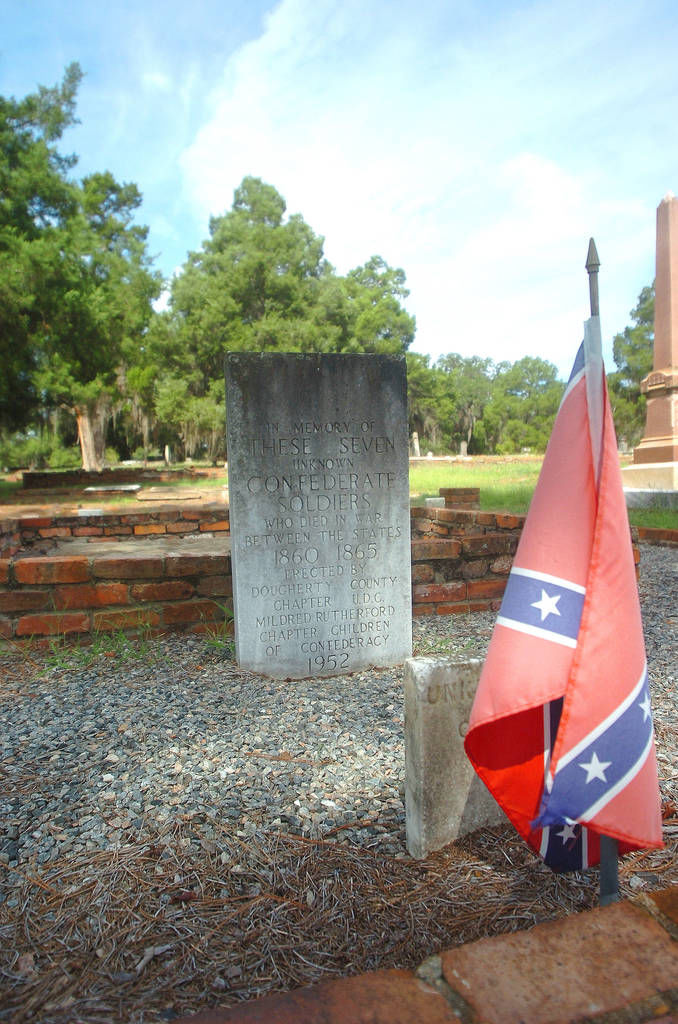
On June 25, 1974, the auditorium was added to the National Register of Historic Places and 12 years later, in 1986, massive restoration/renovation project began which displaced the statue again. This time it was moved to the historic Riverside Cemetery and placed among more than 300 Confederate graves.
Rumors persisted that the statue would return to the auditorium’s lawn, but since the memorial was not part of the original property, it was decided that it would not return to the site, according to Gregors, and the memorial found itself in limbo.
“The statue resided in the old cemetery for years,” local SCV president James King said. “We held several commemoration ceremonies out there and the statue actually served as a landmark during the flood of ‘94. The waters were so high, that practically nothing else in the cemetery was visible except the marble Confederate soldier, which could be seen standing resolute above the surface.”
The Flood of 1994 caused significant damage to Riverside Cemetery. Some graves released their buoyant interred coffins, which floated to the surface and had to be later reburied, with many marked as unknown. The new headstones of those unknown graves were inscribed with only a number.
“We have since gone through there (Riverside Cemetery) and marked every Confederate grave with a flag,” King said “There are more than 300 of them. We don’t want them to be forgotten. It was a terrible sacrifice that those boys made of both sides, north and south.”
Fourteen years after moving to the cemetery, the statue made its final journey to date and was installed and rededicated at the Confederate Memorial Park across from Chehaw, where it continues to stand as a historical reminder of tremendous suffering and monumental loss of American life.
“There were more people, Americans, killed in the Civil War than all other American conflicts combined,” King said. “That is what this statue stands for. It is history and it honors our Confederate dead.”
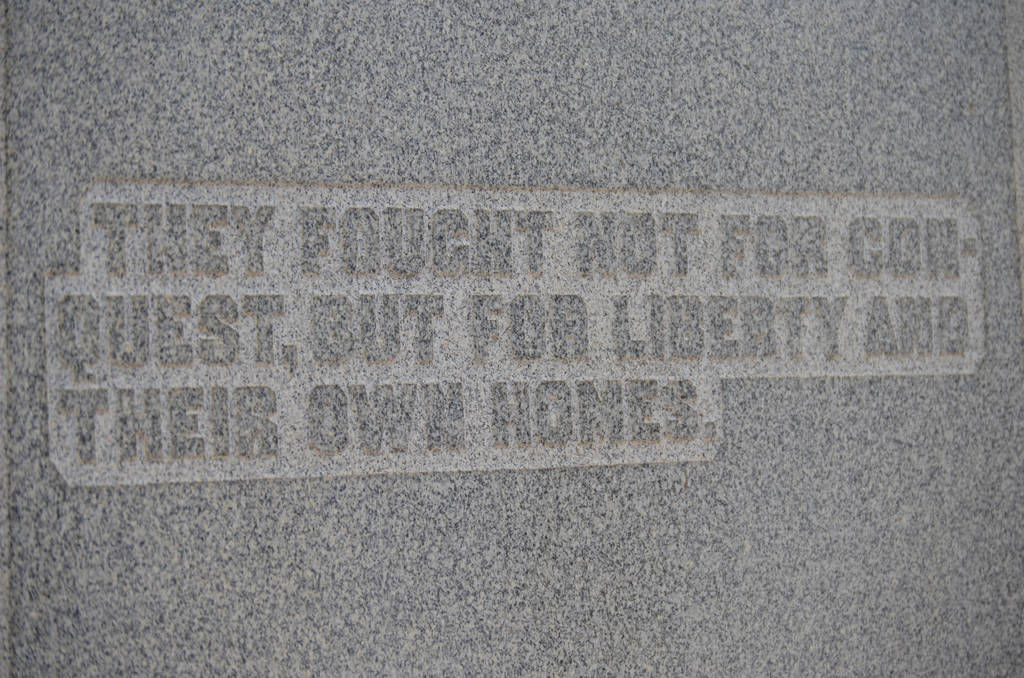
Inscribed on the monument’s column are the words, “They fought not for conquest, but for liberty and their own homes.”

Related Articles

Small actions can help save big on utility bills
The high temperatures of July and August can bring scorching utility bills as air conditioners hum to keep houses cool. Albany Utilities Residential Conservation Auditor Willie Jackson offered some tips on making summer cooling bills more manageable.
Bigger budget will mean improvements at Dougherty County’s landfill
“It’s certainly an opportunity where we can grow and make this very beneficial for years to the community. It’s a service that we provide for the community and I want to prolong that resource for the community. It’s not just fill it up and close it.”
Putting on the Ritz: The rise, fall and renewal of Albany’s Harlem District
On July 7, the Albany City Commission unanimously approved final construction drawings for a comprehensive restoration of the Ritz Theatre and Cultural Center, clearing the way for the project to move into competitive bidding after years of planning and preservation efforts. The decision marks the latest chapter in a decades-long effort to preserve one of Southwest Georgia’s most significant African American landmarks.
