
Ash pond closure method safety called into question by environmental groups
Safety concerns arise over closure methods of Georgia Power coal ash ponds
By Jon Gosa
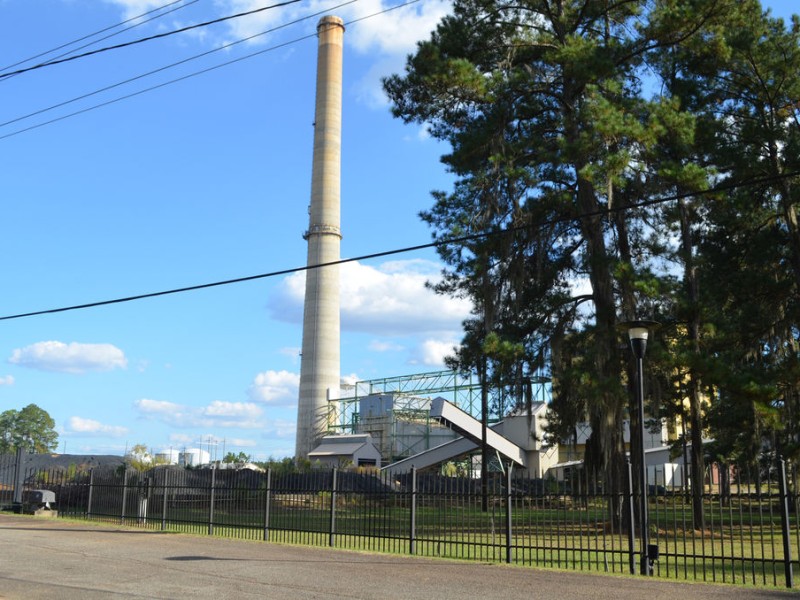
ALBANY — Georgia Power recently announced the closure plans for all of its 29 coal ash ponds across the state and several environmental groups, including the Southern Environmental Law Center, the Georgia Water Coalition and The Southern Alliance for Clean Energy, are concerned about the long term safety of those closure methods.
“As Georgia Power continues to release coal ash pond closure plan details and groundwater monitoring results, the coverage has largely included similar information from utility spokespeople without any counterpoints,” said Emily Driscoll, program communications manager for the Southern Environmental Law Center. “As a result, Georgia Power is moving ahead with closure plans before the public has the opportunity to understand the full picture and potential implications of the plans.
“Important questions need to be raised as Georgians face the prospect of having tons of coal ash left in place forever in leaking, unlined pits.”
According to the U.S. Environmental Protection Agency, coal ash, also referred to as coal combustion residuals or CCR’s, is produced primarily from the burning of coal in power plants and includes a number of byproducts, including fly ash, a very fine, powdery material that is carried up the smoke stack and captured by pollution control devices; bottom ash, a coarse, angular ash that forms in the bottom of the coal furnace; boiler slag, molten bottom ash from slag tap and cyclone type furnaces, and flue gas desulfurization material, a wet sludge consisting of calcium sulfite or calcium sulfate.
The EPA, along with state Environmental Protection Division, regulates the disposal of the industrial waste because coal ash contains toxins, including arsenic, lead, mercury, cadmium, chromium, selenium, barium, beryllium, boron, chlorine, cobalt, manganese, molybdenum, nickle, thallium, vanadium and zinc. If consumed or inhaled, these toxins can cause cancer, nervous system impacts, cognitive deficits, developmental delays, behavior problems, heart disease, lung disease, kidney disease, reproductive problems, gastrointestinal illness, birth defects and impaired bone growth in children.
According to the EPA, coal ash is one of the largest types of industrial waste material generated in the United States with more than 130 million tons generated per year. Typically power plants dispose of coal ash by storing it with water in what is know as an “ash pond.”
While emerging details about Georgia Power’s closure plans, which include completely removing and relocating the ash from 17 ponds located adjacent to lakes and rivers or recycling the ash for beneficial use in concrete and cinder blocks, appears to be an improvement over leaving the ash behind to leach into the groundwater, Driscoll warns that many of the utility’s largest ponds will be left in place.
“At some sites, ash ponds will be consolidated and then capped in place, piling tons of ash on top of other leaking, unlined pits,” Driscoll said. “What’s more, toxic pollutants including arsenic, selenium, and beryllium have been found at sites where the utility is planning to move ahead with plans to cap in place.”
According to the Georgia Power news release, “Ash pond closures are site-specific and balance multiple factors, such as pond size, location, geology, and amount of material; and each closure will be certified by a team of independent, professional engineers. Throughout the closure process, Georgia Power is monitoring groundwater around all of its ash ponds and reporting the results to the Georgia Environmental Protection Division, as well as posting to the company’s website.”
In an August 2016 letter to Jeff Cown, chief of the EPD Land Protection Branch, the Georgia Water Coalition wrote, “Coal ash cannot be safely disposed of in unlined, leaking pits adjacent to our rivers, lakes and streams or above significant groundwater recharge areas. Georgia Power has announced its intent to leave the vast majority of its coal ash on-site, in unlined pits. At several sites, coal ash contaminants have already been detected in groundwater beneath coal ash ponds. Massive amounts of coal ash will be buried forever adjacent to waterways at Plants Bowen, Branch, Hammond, McDonough, Scherer, Wansley and Yates.
“These facilities span the state and are located along rivers, lakes and streams in the Coosa River Basin, Altamaha River Basin, Chattahoochee River Basin and Savannah River Basin. Cap-in-place closure is not ‘clean-up’ and will not stop ground and surface water pollution.”
According to Aaron Mitchell, Georgia Power’s general manager of environmental affairs, 12 of the 29 ponds in Georgia will be closed in place.
“We will close those ponds in place, as well as implement advanced engineering controls with that closure in order to isolate those ponds from groundwater,” Mitchell said. “Ash from the excavated ponds will either be relocated to a permitted landfill, recycled or consolidated on-site to another pond such as one of those 12 where we can close in place and implement our advanced engineering methods.”
The advanced engineering methods proposed by Georgia Power will not work, Chris Bowers, senior attorney at the SELC, contends.
“The only way to have reasonable assurance that the waste (coal ash) won’t adversely impact human health and the environment is to move that coal ash to dry lined storage away from waterways, surface waterways and groundwater,” Bowers said. “The are several reasons why that is important, including catastrophic events. There is a folly in having these wastes sitting near rivers because of the fairly recent examples of what happened in Tennessee and North Carolina. There is flooding, there are dangers from earthquakes and there are dangers from dam failures.
“These earthen structures are essentially piles of dirt that can give way and that is what happened in Kingston, Tenn., when millions of tons of ash just suddenly gave way. There was no earthquake, it was just an event in which the laws of physics prevailed.”
On Dec. 22, 2008, the walls of a dam holding 1.1 billion gallons of coal ash crumbled, spilling toxic sludge into the town of Kingston, Tenn. The disaster was one of the largest industrial spills in U.S. history. A wave of ash wiped out roads, crumpled docks and destroyed homes.
“Another reason it is important to remove this ash, is the ‘cap-in-place’ technique, a method of pouring concrete over the tops of these ponds, is like having a bathtub with no bottom.” Bowers said. “The bedrock of Georgia is largely limestone, a very porous rock, and as the water table rises, toxins can leach into the aquifer underneath these structures. The cap may reduce lateral movement, but it does not address the slow percolation of toxic pollutants into the ground.
“Water and coal ash are not a good mixture because the pollutants that are contained in the ash, once in contact with water, become mobilized. They then find themselves wherever that water goes. Water tends to carry those pollutants into the aquifer and in places where they may do harm to wildlife or eventually to people.
“That is what happens when you are dealing with time scales of infinite duration,” he said. “Over a long enough time scale, the risks of something going wrong that you didn’t plan for is something that we feel the public should not bear the consequences of such a decision.”
According to the Southern Alliance for Clean Energy, the Georgia Department of Natural Resources’ EPD is set to vote on amendments to the state’s solid waste rules that would regulate coal ash, but the rules do not regulate municipal solid waste landfills that could receive millions of tons of ash. The alliance also contends the proposals allow for inadequate monitoring at Georgia Power disposal sites despite groundwater below 11 power plant sites already being contaminated.
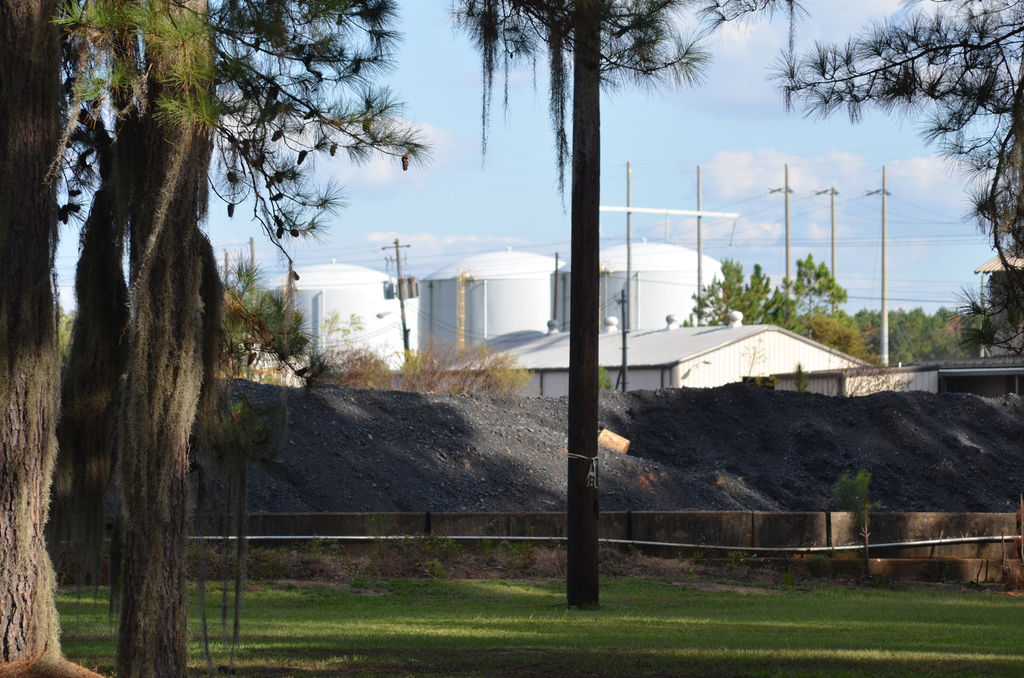
Georgia Power’s website confirms the contamination of specific sites such as Hammond, McIntosh, Yates, Branch, McDonough and McManus. Company official Craig Bell said that it was against company policy to allow photographs of those on-site ash ponds without a company media specialist present and that no media specialist would be available in the foreseeable future.
As the EPD ruling approaches, requests made by the Southern Environmental Law Center are that coal ash must be properly disposed of or stored, not capped in place in unlined pits. Also, the EPD should impose more stringent groundwater monitoring requirements and on a more frequent basis, while adding the more dangerous contaminants, such as arsenic, to its monitoring list, as well as treating CCR storage and disposal sites the same across the board, whether they are on a Georgia Power-owned site or a private or municipal landfill, the SELC argues.
“We oppose that loophole, which would allow for coal ash disposal at unsuitable facilities,” Driscoll said. “We need to fix the problem with coal ash disposal; not make it someone else’s.”
The EPD decision is expected Wednesday.
Related Articles

Albany police investigate suspicious Sunday death
A 21-year-old Turner Job Corps student who was found unresponsive on Sunday evening was later pronounced dead at Phoebe Putney Memorial Hospital. The death is under investigation.

James Rubino installed in new role at Marine Corps Logistics Command in Albany
James L. Rubino recently assumed the role as executive deputy of Marine Corps Logistics Command in Albany. In his new role he will oversee integrated logistics support.

Rain depresses voter turnout in Dougherty County
“A lot of people don’t vote when it’s raining. People don’t do a lot of things when it’s raining.”
