
Change Center to address long-term substance abuse recovery in southwest Georgia
Aspire Behavioral Health and Developmental Disabilities Services opens facility on Pine Avenue
Jennifer Parks
By Jennifer Parks
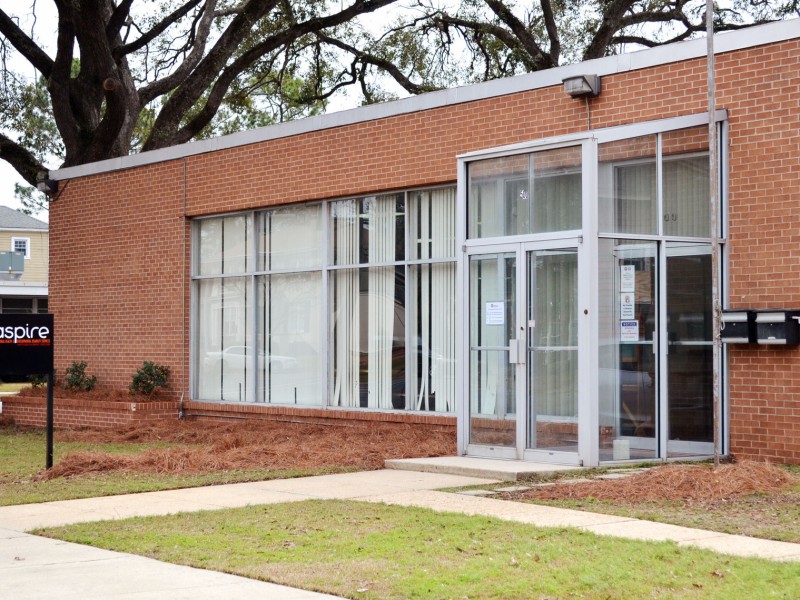
ALBANY — The Change Center, an addiction recovery support center offering non-clinical, peer-led activities that engage, educate and support individuals and families to make life changes necessary to establish, maintain and enhance recovery from substance use disorders, opened in December at 501 Pine Ave.
On Tuesday, Aspire Behavioral Health and Developmental Disabilities Services will conduct a formal ribbon-cutting to officially introduce the center to the public.
At The Change Center, the mindset is that there are multiple pathways to recovery from substance use disorders. These may include 12-step meetings, programs involving yoga and meditation, or faith-based recovery programs.
“One of the things we believe as an organization is that everyone (has access to recovery),” Babs Hall, corporate compliance officer at Aspire, said.
The center is currently staffed by four full-time Aspire employees. Officials at the organization said all four individuals identify themselves as living in long-term recovery from substance abuse — and they are diverse in age, race, gender, length of time living in long-term recovery and prior professional experiences.
“They are all certified or are working on becoming certified,” Hall said.
Hall said services are offered during the daytime hours Monday through Friday, with the possibility of two Saturdays a month being added to the schedule. Services are offered at no cost to the individual, who has the option of not giving their name.
“It is a place they can hang out, so (individuals in recovery) can go to be around those who are like-minded,” Hall said. “(These are) people who can relate to what they are going through.”
The activities are community-based services for individuals with a substance use disorder and consist of activities that promote recovery, self-determination, self-advocacy, well-being and independence. Recovery programs are individualized, recovery-focused and based on a relationship that supports a person’s ability to promote their own recovery — and include social support, linkage to and coordinating among other service providers, eliminating barriers to independence and continued recovery.
Using a strength-based approach, officials said individuals are encouraged to share “what is right with them today” instead of what is wrong or not going well in their life. That approach is designed to be a safe environment through which peers can achieve and sustain long-term recovery from substance abuse, and is the first of its kind in southwest Georgia.
Individuals in recovery can seek guidance on finding a job, or find a quiet corner to read. Hall said Aspire has a relationship with the Anchorage, which has brought some of the individuals in their program to the center.
Hall said individuals the center serves respond to the concept, as do other members of the community who are donating food and other items to Aspire to help maintain the program.
She said that, while the center addresses long-term recovery, the Albany area also has a chance to see other changes take place — including a reduction in crime.
“People are really engaged,” Hall said. “What you see is people coming because they want to and not because they are told to. The ripple effects are going to be endless. We will see the impact of this very quickly.”
The ribbon-cutting ceremony will be held at 3 p.m. on Tuesday. A reception will immediately follow with refreshments and facility tours offered.
The center hosted a community listening session on Dec. 11, during which representatives from the Georgia Council on Substance Abuse and Georgia Department of Behavioral Health and Developmental Disabilities were there to answer questions and help facilitate discussion. Sixty-four guests attended the session, and the event was recognized as one of the largest listening sessions held thus far in the state.
A “soft opening” was held for the site that month. A total of 230 services were delivered to 159 individuals who identified themselves as seeking recovery.
Kathryn Newcomb, program director for The Change Center, is a certified peer specialist through the CARES certification program with the Georgia Council on Substance Abuse and is also a WHAM facilitator through the Georgia Mental Health Consumer Network.
The Certified Addiction Recovery Empowerment Specialist, or CARES, earns certification through a training program parallel to the mental health-certified peer specialist program and began in September 2010 through a contract with the Georgia DBHDD. The mission of Georgia CARES is to promote long-term recovery from substance use disorders by providing experienced peer support and advocating for self-directed care.
The training program is part of an ongoing effort to create a recovery-oriented system of care through which peer-based recovery support is used as a fundamental part of community-based services to enhance the treatment and recovery experience. This is a 40-hour training course followed by continuing support of CARES faculty, trained peers and supervisors.
The WHAM training is a two-day, in-person peer support training that guides participants through a person-centered planning process to set a whole health and resiliency goal. There are two major components to the 10-session WHAM training. The first component follows the participant guide and uses a person-centered planning process in 10 health and resiliency factors to help create a concise whole health goal to begin the self-management process. The guide provides learning skills to enhance self-management, including eight weeks of WHAM peer support groups and a weekly action plan to create new health habits.
The WHAM training also focuses on mind-body resiliency to promote self-management skills. The health and resiliency factors included in the training are recommended by the Benson-Henry Institute for Mind-Body Medicine at Massachusetts General Hospital, and the primary goal of this training is to teach skills to better self-manage chronic physical health conditions — and mental illnesses and addictions — to achieve whole health.
Related Articles
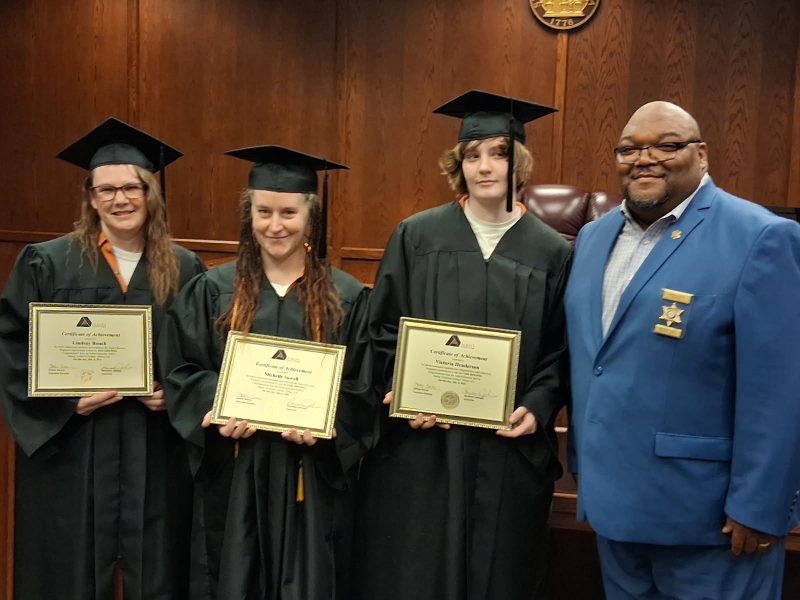
Dougherty Jail graduates first class of female GED recipients
“It was an escape. I can say this has been challenging. I want to express my gratitude for being able to attend this program.”

From cotton to cloud: In the data center debate, is rural Georgia once again being asked to carry the cost?
Across much of rural Georgia, the abandoned cotton warehouses and shrinking tax bases remain — enduring reminders that industries built to serve distant markets do not necessarily stay rooted in the communities that first sustained them.
Dawson Council approves $400,000 lifeline in emergency meeting as financial accountability remains elusive
Less than a week after city officials publicly acknowledged the City of Dawson cannot continue operating without additional financing, the Dawson City Council convened a hastily called emergency meeting Tuesday evening and unanimously approved authority to borrow up to $400,000 through a tax anticipation note.
