
Fight Albany Blight initiative making headway
Agencies working behind the scenes to make citywide improvements
By Carlton Fletcher
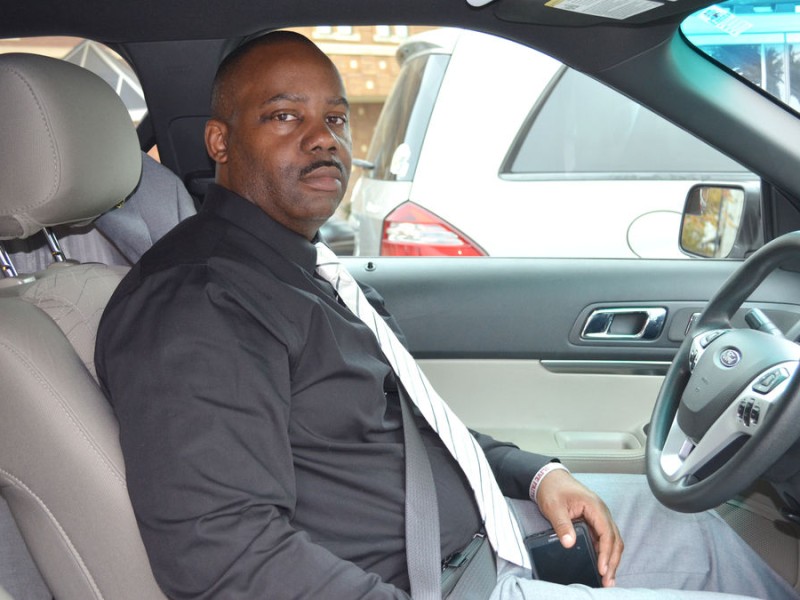
(Editor’s Note: I wrote an opinion column a few weeks back criticizing the city of Albany’s failure to move forward with its much-ballyhooed Fight Albany Blight campaign that started with a bang and had, apparently, fizzled out. I was immediately contacted by several city officials who assured me that the fight is ongoing. One of those officials, Albany Police Department Chief Michael Persley, put his money where his mouth was, so to speak, by taking me around for a bird’s-eye view of some of the work being done.)
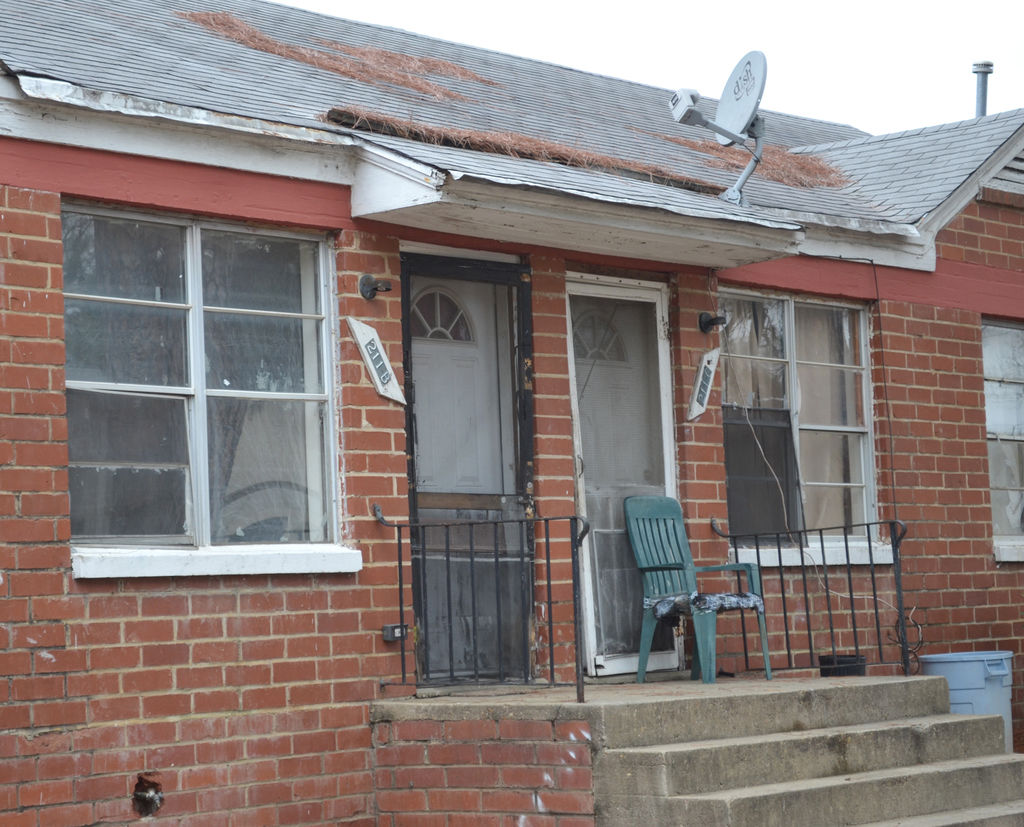
ALBANY — Michael Persley takes his rider into the heart of Albany’s inner-city, into once-well-kept neighborhoods that now are strewn with litter and whose houses are so run-down calling them “substandard” would be a complement.
“You go into an area like this, you see quality-of-life issues,” said Persley, the hometown hero who is a year-plus into his tenure as chief of his city’s police department. “If an area looks like a war zone, the people living there are going to conduct business as if it’s a war zone.”
Persley, Albany/Dougherty Planning Services Director Paul Forgey and personnel in a number of city departments are a half-year into a multi-agency program that has been dubbed Fight Albany Blight, an optimistic attempt to systematically eradicate blight in a community that, in some neighborhoods, is synonymous with the term.
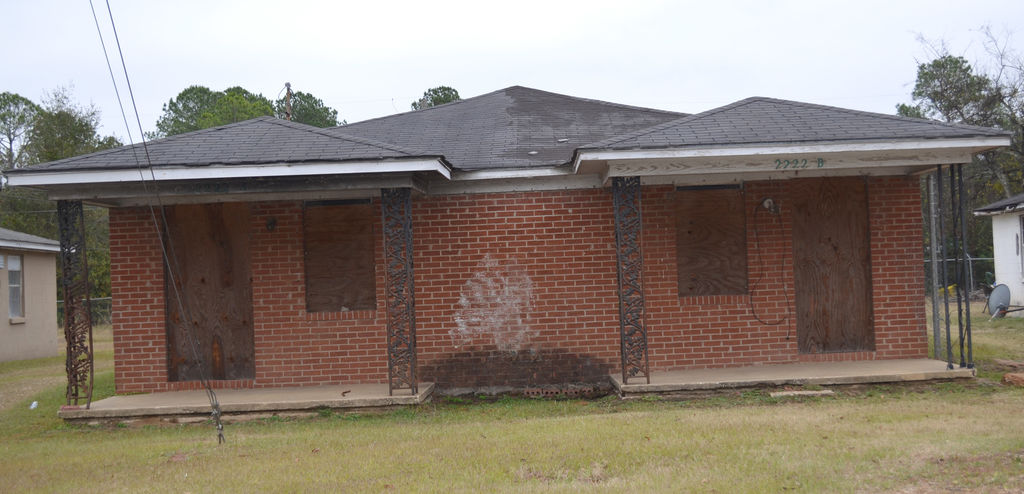
Abandoned and/or crumbling houses are the norm in some south, central and east Albany neighborhoods, and those structures are often frequented by the city’s homeless and criminal element. Abandoned buildings beckon to those who practice their illegal activities — the drug trade, prostitution, burglary — out of the view of law enforcement and the law-abiding citizens who are frequently the victims of their activities.
One of the primary objectives of the Fight Albany Blight program is to eradicate or upgrade as many of these structures as possible, to return a measure of pride to neighborhoods that gradually lost their grandeur.
“These houses didn’t get like they are overnight,” Persley said as he pointed out blocks of boarded-up and often graffiti-covered buildings. “When they were built, many of them back in the ’50s, people took pride in these neighborhoods. But as the people who lived in them grew older along with the houses, many of them were taken over by relatives who did not have the same pride as the previous owners or they were abandoned altogether.
“You also have to look at those quality-of-life issues I mentioned. You have to look at the dynamics and the demographics of these communities. If unemployment figures were lower and graduation rates higher, you’d see a lot of the problems we’re addressing disappear. If we had a more skilled work force, people would have jobs and money to put into their homes, and you’d see a lot more pride in these neighborhoods.”
One of the goals of the Fight Albany Blight initiative is to get a buy-in from the community, from businesses and from Joe Citizens who are most negatively impacted by the problems that blight engenders. Forgey notes that one of the successes of the program is the growing number of local stakeholders who are becoming actively involved.
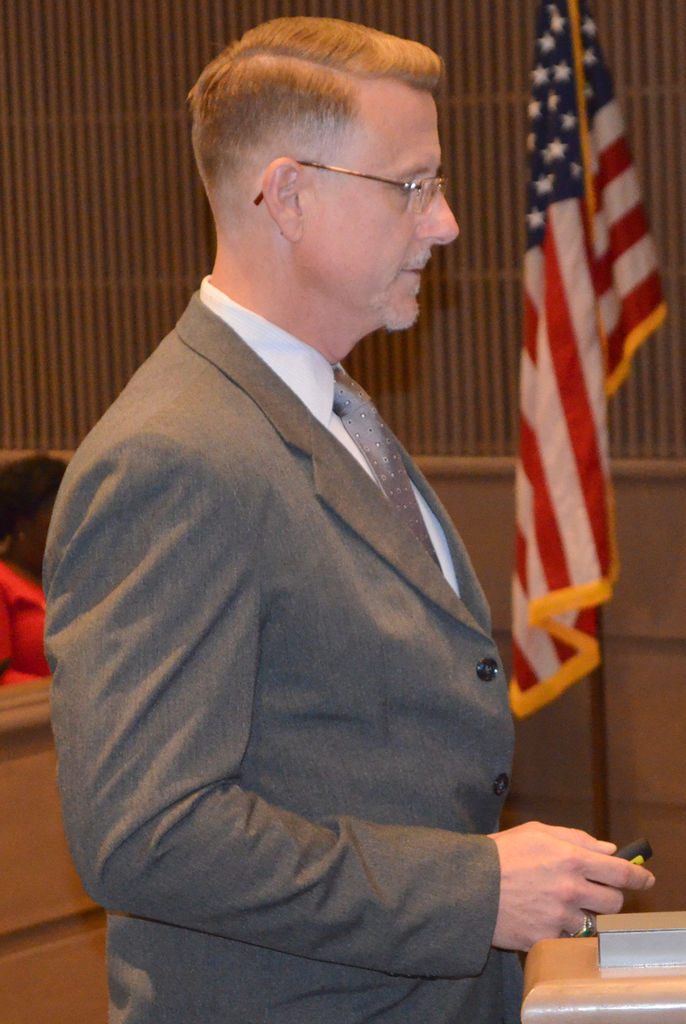
“You have to understand, with a comprehensive initiative like this, you’re not going to turn blighted structures into $200,000 houses in six months or a year,” the Planning Services director said. “This is a comprehensive program. When people think of a fight against blight, they think of just tearing houses and abandoned buildings down. It’s so much more than that. We’re focusing on a number of ways to improve our community.
“What the public doesn’t see is the m0mentum we’re gaining. We’re meeting on a regular basis, and more and more stakeholders are getting involved. Already you have agencies like Phoebe (Putney Memorial Hospital), Albany Technical College and Turner Job Corps involved. We’re also working with Habitat for Humanity and with other businesses and agencies to get a wider community buy-in. The more involvement we get, the more improvement you’ll see.”
While Forgey notes that bringing down abandoned housing is not the only concern being addressed by Fight Albany Blight, most in the program will agree that such action has the most lasting impact. City Attorney Nathan Davis’ office is working within the local court system to ramp up the demolitions that have left greenspace in locations that once were eyesores.
“I think what you’re seeing in Albany as we continue to address the problem of blighted properties is that the process is becoming much less arduous,” Davis said. “We’re getting a lot more demolition orders from the courts that fall within a 14- to 30-day time period (from the time the courts first consider condemnation notices). Until recently, even in good times, the quickest time was 60 to 90 days.
“A lot of that has to do with our current City Commission. In the past, there was more push-back from commissioners as we worked to get these structures through the court system. Now, we have a commission that understands that blight has become a major concern in our community and a city manager (Sharon Subadan) who supports what we’re doing 110 percent.”
While the process slowed somewhat in the holiday-heavy months of November and December, Davis’ office is averaging around 10 home demolitions a month. That total included 15 in October and seven each in November and December. Until recently, that average was closer to four or five demolitions a month.
“We’ve added staff to expedite the process, and one of the benefits I think we’ve seen is that we’re getting more and more court orders in the 14- to 30-day category,” Davis said. “Plus, it should be pointed out that there are property owners who, when faced with the possibility of having their structures destroyed, are stepping up and bringing those structures up to code.
“That’s ideal. The whole idea behind (Fight Albany Blight) is to get as many of these structures as possible either renovated or removed. One of the things that I’ve pointed out on a number of occasions is that once one of these dilapidated buildings hits the ground, the entire community benefits.”
Persley has added incentive for working to help eradicate blight in Albany.
“This is my home; I grew up here,” the police chief said. “I remember the days when a lot of these neighborhoods were well-kept. Now, when you see a house like that one over there (Persley points to a freshly painted home with a well-manicured lawn sitting like an oasis, surrounded by crumbling structures, most of them abandoned), it’s rare. Unfortunately, Albany has become a city of renters, not homeowners.
“More than 60 percent of the housing in Albany is rental housing. There’s just not the incentive to take care of a property when there’s no ownership.”
Still, Persley said he’s excited about the work being done by Fight Albany Blight.
“Ms. Subadan, I believe, sees this initiative as a part of her legacy,” the APD chief says. “She’s very supportive. That’s why I believe you’re going to see agencies in the city continue to pool their resources to take on this issue. And I think it’s important to remember that, while this initiative is about cleaning up the city and removing substandard structures to help improve the appearance of the city, it’s also important to provide adequate housing for our citizens.
“We’re all human beings, and everyone — no matter their circumstances — deserves to live in a decent, peaceful home.”


Author

Related Articles
Dougherty Commission considers $104 million budget for 2026-2027 budget year
“The other side of the coin is you could have higher revenues than projected. We’re very conservative in budgeting revenues. That also reduces the need to use fund balance”
Albany police investigate suspicious Sunday death
A 21-year-old Turner Job Corps student who was found unresponsive on Sunday evening was later pronounced dead at Phoebe Putney Memorial Hospital. The death is under investigation.

James Rubino installed in new role at Marine Corps Logistics Command in Albany
James L. Rubino recently assumed the role as executive deputy of Marine Corps Logistics Command in Albany. In his new role he will oversee integrated logistics support.
