
Former SOWEGA Council on Aging director speaks out against Meals on Wheels change
Kay Hind expresses concern about no longer allowing volunteers to participate in homebound meal delivery

By Jennifer Parks
ALBANY — In response to an announcement earlier this month that volunteers would no longer be used to deliver meals in Dougherty County as part of the Meals on Wheels program, the former executive director for the SOWEGA Council on Aging is speaking out.
Kay Hind, who served as executive director of the Council on Aging for 49 years, got a lot feedback from the community after the announcement was made that changes taking place effective June 1 will mean that volunteers will no longer be used to deliver to the homebound as part of the Meals on Wheels program in Dougherty County.
The Council on Aging said the decision supports legislation signed by Gov. Nathan Deal on May 8 to protect vulnerable seniors and those with disabilities, specifically SB 406 and HB 365.
Hind’s concern is that the change misrepresents the law, specifically SB 406, and that it is more likely the result of a Georgia Department of Human Services policy that has been on the books for several years and was never implemented. She also said not enough effort was made to inform the community of the change.
Hind wrote a letter to The Albany Herald stating her concerns to what she said has been “a real blow” to the community. She said she wanted to take a stand against the action, hoping the Council on Aging might be willing to reconsider and allow Meals on Wheels to continue as it has been.
The letter reads:
“My name is Kay Hind and I served as Executive Director of the SOWEGA Council on Aging for 49 years and 3 months. I retired last year, and I resolved not to interfere with anything happening at the Senior Center. It wasn’t hard to do since I was only consulted one time all year.
“However, my good resolve was devastated when I heard that the volunteers could no longer deliver Meals on Wheels and the meals would be delivered from Americus. I started that program in 1973 and hundreds of volunteers have delivered meals. We have never had an incident of abuse or any unpleasantness. Remember, most volunteers belong to a civic club, and they have had a criminal record check. Other volunteers volunteer through their church. The volunteers go in pairs as a further safety feature. We have always had insurance, but we have never had to use it.
“There is no law requiring volunteers to have a criminal records check to deliver meals. The new law mentioned by staff is for employees of nursing homes, personal care homes, and home care workers.
“As to the cost, many volunteers have said that they would gladly pay for their own criminal record check and for many others. One fundraiser would have covered the total cost if it had been necessary.
“You don’t know how much this program means to the elderly and the volunteers. There is no way one paid employee from Americus can give the love, attention and caring that these volunteers give. The meal is important, but the human contact is more important.
“The elimination of this program, as it has been operated, is a terrible blow to seniors. And that, combined with the loss of the Community Care Services Program last month, will set us back in the progress we have made over the last 40 years.
“I respectfully request that the Board of Directors reconsider this decision. It is not too late to save this valuable program.”
William Collins, the board president for the Council on Aging, said at the time of the announcement that as part of its compliance with the legislation, the agency would have had to subject its 300 volunteers involved in the program to background checks conducted by a national agency that would cost the council $15,000 a year to do. The decision was made to use Middle Flint, the company in Americus that prepares and delivers meals for the council’s other 13 counties, as the entity that will prepare and deliver food to the homebound in order to maintain Meals on Wheels in Dougherty County without the use of volunteers.
The change also means that two three-hour employees and one six-hour Council on Aging employee will be eliminated.
Officials with the council said the Division of Aging Services requires all volunteers and staff to have a COGENT background check. The Council on Aging explained that with the hundreds of volunteers providing delivery, providing background checks and maintaining a work force robust enough to deliver 140 meals, 250 days a year is logistically unmanageable.
Hind told The Herald after sending the letter that, in her years as executive director, there were never any issues with volunteers and that it has been her understanding that the change was made suddenly without giving a hint to those involved in the program.
“They should have let the community know it was in the works,” she said.
She also expressed concern that the program will not be the same without the volunteers, who managed to get as much out of it as the people receiving the meals. The former director said she has gotten feedback from volunteers who have been upset over the change, stating they might have been willing to help pay for the background checks themselves.
“(Middle Flint) won’t have that personal touch,” Hind said. “It is much, much more than just that meal.”
Hind said she has been in contact with aging officials on the state level who told her that it was their interpretation that the law should not apply to Meals on Wheels volunteers. One individual on that level later got back to her concerning a policy from DHS that had yet to be implemented after being on the books for several years, stating that volunteers did have to have COGENT background checks.
She said the legislation may not be playing a big factor.
“They can still deliver meals, but they have to have (the background checks),” she said. “It has nothing to do with the Senate bill. They are using the bill as a reason to require it.”
Asked if she thought it was a matter of dollars and cents, Hind said she did not believe so.
“It is not about the money,” she said. “They could pay the $15,000. They can have a small fundraiser (to pay for it).”
Collins said when the announcement was made that Middle Flint taking over the operations of Dougherty Meals on Wheels means it will cost the council 50 cents less to produce and deliver the meals than it currently does.
“Engaging our volunteers is so important to us,” he said at the time. “That is why we have put it off for as long as we have, even though it has cost us a little more.
“This is the result of something we did not want to do, but we hope it will allow us to serve more people.”
Officials with the Council on Aging said earlier this month that the agency will work to redirect the volunteers to other tasks and hopefully be able to serve more people with the money being saved. The board president added that the change will not impact the congregate meals currently served at the Kay H. Hind Senior Life Enrichment Center on West Society Avenue.
Anyone wanting to volunteer with the Council on Aging may contact the Kay H. Hind Senior Life Enrichment Center at (229) 435-6789. Individuals needing to receive deliveries through Meals on Wheels should call the Aging and Disability Resource Center at 1-800-282-6612 to be referred into the program.
Related Articles
Albany/Dougherty County among local governments looking at data centers
“Our understanding is that data center developments look like an easy fix for the problems that face rural America, but this is a Faustian deal at best. You can see the effects in communities across the state and country.
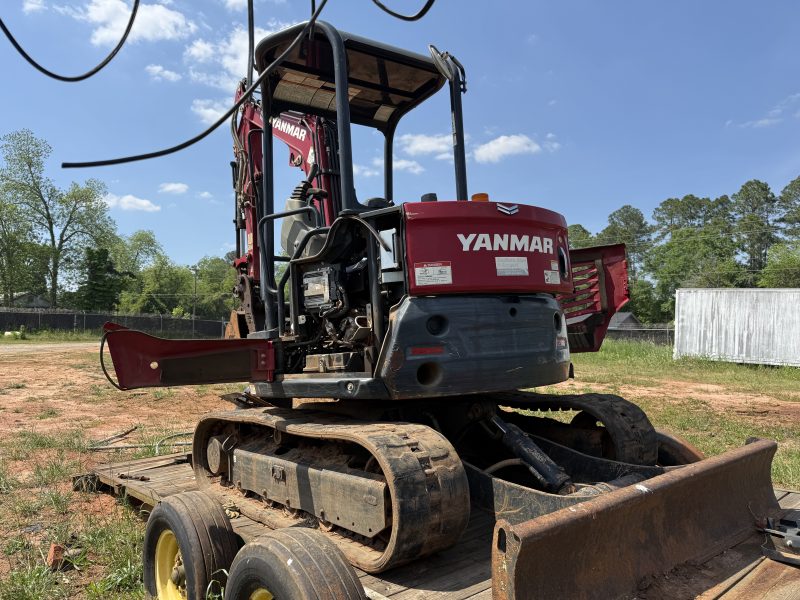
Dawson approves $68K excavator purchase after months of contradictory public statements
The decision concludes one portion of a controversy that has generated months of public scrutiny but leaves several unanswered questions regarding how the city’s original machine was damaged, whether employees were held accountable and what documentation supports the decision to replace rather than repair it.

Dawson proposes borrowing up to $420,000 to stay afloat as finances unravel
Documents obtained by The Dawson News show city officials are proposing to balance the budget through a transfer from the Public Utilities Fund while simultaneously seeking authority to borrow as much as $420,000 from a private financial institution to continue meeting payroll and other operating expenses as Dawson works to complete financial audits that have remained unfinished since 2023.
