
Gov. Deal vetoes Campus Carry Bill
Governor says HB 859 would not have improved campus safety
By Jim Hendricks
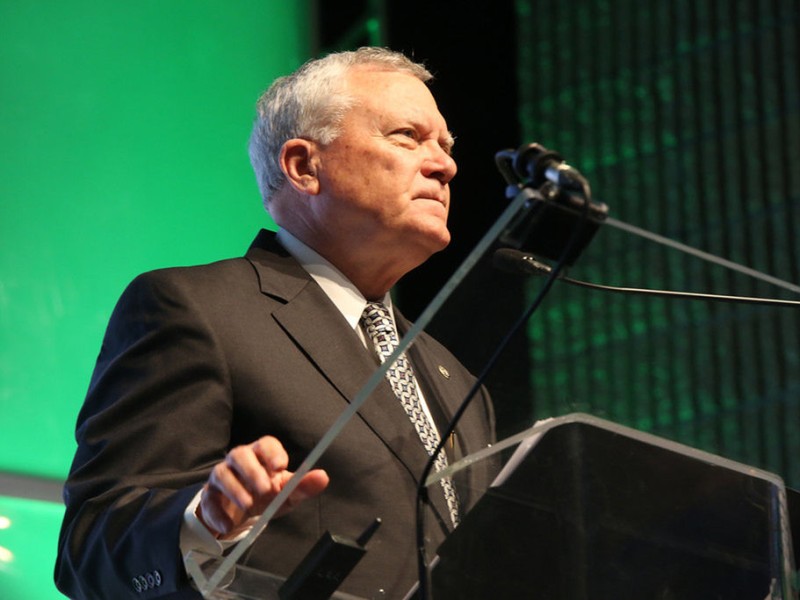
ATLANTA — Gov. Nathan Deal on Tuesday vetoed the Campus Carry Bill that would have allowed licensed gun holders to carry weapons onto state college and university campsus with exceptions including student housing and athletic events.
“From the early days of our nation and state, colleges have been treated as sanctuaries of learning where firearms have not been allowed,” Deal said in a veto statement. “To depart from such time honored protections should require overwhelming justification. I do not find that such justification exists.”
He also signed an executive order for the commissioner of the state’s technical college system and chancellor of the University System to report by Aug. 1 to him, Lt. Gov. Casey Cagle and House Speaker David Ralston on security measures in the state’s colleges and universities.
“If the intent of HB 859 is to increase safety of students on college campuses, it is highly questionable that such would be the result,” he said. “However, I understand the concerns of the authors of this legislation and the parents and students who want it to become law. They apparently believe that the colleges are not providing adequate security on their campuses and that civilian police are not doing so on the sidewalks, streets and parking lots students use as they go to and come from classes.”
Deal also said law enforcement agencies in cities and counties that have colleges and universities should review and, if needed, improve their security around the schools.
“Since much of the motivation for HB 859 is the commission of crimes involving the use of firearms on college campuses,” he said, “I suggest to the General Assembly that it consider making the unauthorized possession and/or use of a firearm on a college campus an act that carries an increased penalty or an enhanced sentence for the underlying crime.”
The veto was applauded by the state Democratic Party and groups such as the state chapter of Moms Demand Action for Gun Sense in America, while National Rifle Association issued a statement saying it was “unfortunate that Governor Deal vetoed a bill that would have made Georgia campuses safer for his constituents.” The Georgia Libertarian Party said Deal allowed “a minority of individuals determine his public policy without regard to constitutionally guaranteed freedoms.”
Deal vetoed several other bills on the final day before they would have become law without his action. Those included:
— HB 59, which he said would have created a blanket waiver of sovereign immunity, with limited exceptions, as to claims seeking a declaratory judgment or injunctive relief against the state and local governments. Deal said it would have allowed unprecedented judicial intervention into daily management decisions entrusted to the executive branch of government.
— HB 216, which would have expanding the eligibility for workers’ compensation benefits to firefighters diagnosed with cancer if a medical expert can prove by a preponderance of the evidence that the cancer was caused from work-related exposure. Deal said he was concerned about codifying an exception for one occupation and thre “relatively low standard” of proof with no time limitation on diagnosis or restriction on eligible types of cancer. “Signing this bill into law has the potential to exhaust our State Board of Workers’ Compensation and our state judicial system with litigation at the expense of our cities and counties,” he wrote.
— HB 219, which would have allowed pools at country clubs, subdivisions, condominiums and townhome associations for 75 or fewer people to opt out of state inspections and regulations.
— HB 370, which would have waived all fines, fees, and penalties in association with the failure to file, filing late, or filing incomplete campaign contribution disclosure reports and personal financial disclosure statements by locally elected officials and candidates for a period of Jan. 1, 2010–Jan. 10, 2014. “This retroactive measure amounts to amnesty for individuals who failed to follow correct procedure for the filing of these documents,” he wrote.
— HB 659, which would have required greater public transparency of financial information on both the local system and individual school levels. Deal said he vetoed the bill because it included authorization for a pilot program for local school systems to spend and report federal, state, and local funds in a consolidated manner without disclosure of how such funds are spent. He said he would add fiscal transparency measures of HB 659 to his 2017 legislative agenda.
— HB 726, which he said would have impacted the taxable base for cigars, loose tobacco and smokeless tobacco with limited public benefit.
— HB 779, which involved the use of unmanned aircraft technology (drones). He said the state and local government should await rules and regulations being developed by the Federal Aviation Administration before passing laws and ordinances, and that he planned to establish a commission to propose state-level guidelines until the FAA regulations are released.
— HB 916; Deal said he supported efforts to focus Medicaid provider audits on incorrect payment amounts, fraud and abuse rather than identifying routine clerical errors. he said the law would have modified the reimbursement policies of every department, agency, board, commission or authority of state government, which he said was unnecessary.
— HB 1060, a bill presented as a housekeeping bill to clarify provisions in HB 60 from 2014 on gun laws because, he said, in included a provision that would the change of policy in the state related to the carrying of a weapon or long gun into a place of worship. Deal said the bill would have penalized someone who carried a gun into a house of worship only that that person were told guns weren’t allowed and refused to leave the premises. Now, guns are illegal in worship places unless the worship place permits it. “This provision … completely reverses the process so that now it will be the places of worship that do not want weapons on their premises that must affirmatively establish such a policy, rather than the other way around,” he wrote.
— SB 243, which would have permitted full-time attorney positions in the Office of Legislative Counsel to become members of the Georgia Judicial Retirement System.
— SB 329, which would have adjusted coursework rigor requirements of the HOPE Scholarship and allowed the State Board of the Technical College System of Georgia to identify strategic workforce needs for the purpose of updating technical college certificate program requirements.
— SB 355, which would have allowed federal, state and locally-mandated assessments to be optional for certain students. Deal said local school districts have the flexibility to determine opt-out procedures for students.
— SB 383, which would have allowed for an agritourism facility to receive a Georgia Department of Transportation permit that would treat an on-premises advertising sign similar to a permitted outdoor advertising sign (billboard), while exempting it from a five-year waiting period required for new permitted outdoor advertisements.
Related Articles
Dougherty Commission considers $104 million budget for 2026-2027 budget year
“The other side of the coin is you could have higher revenues than projected. We’re very conservative in budgeting revenues. That also reduces the need to use fund balance”
Albany police investigate suspicious Sunday death
A 21-year-old Turner Job Corps student who was found unresponsive on Sunday evening was later pronounced dead at Phoebe Putney Memorial Hospital. The death is under investigation.

James Rubino installed in new role at Marine Corps Logistics Command in Albany
James L. Rubino recently assumed the role as executive deputy of Marine Corps Logistics Command in Albany. In his new role he will oversee integrated logistics support.
