
Herschel Walker continues support for those affected by mental issues
Heisman Trophy winner keynote speaker at South Georgia workshop
By Tim Morse
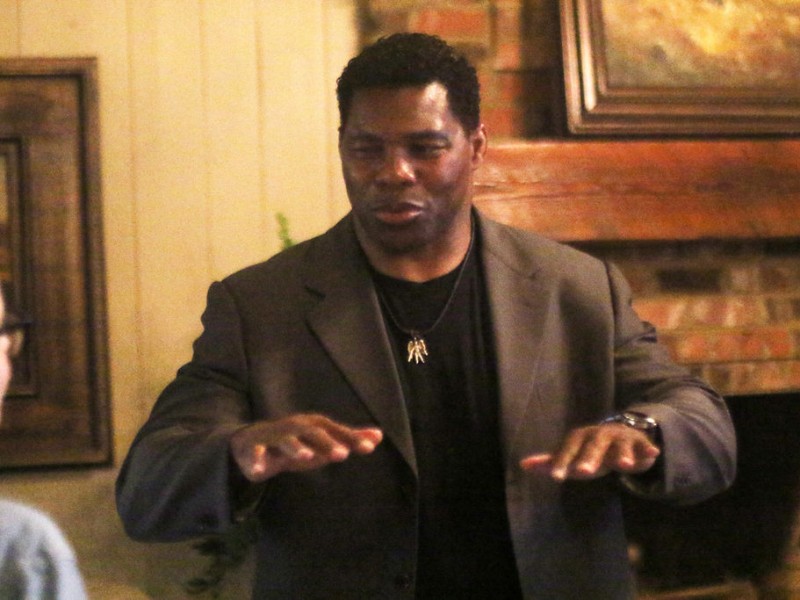
MOULTRIE — Even at 54, 6-foot-1, 225-pound former University of Georgia running back and Heisman Trophy winner Herschel Walker looks like he could still carry a herd of tacklers into the endzone.
And while football continues to be important in his life, Walker continues to show his support for those affected by mental illness.
The legendary Georgia player was in South Georgia on Thursday, serving as the keynote speaker at the “Effective Approaches for Clinical Success” workshop hosted by Turning Point Hospital, a behavioral health and addictions treatment center in Moultrie.
Walker talked to media outlets about his own struggles with mental illness and how he was able to overcome them.
“Everybody has problems,” Walker said. “And I’m not just talking the poor or rich or any type of class. We all have problems. I knew if I had a problem, I needed to get it taken care of, and there was someone who knew more about it than myself. That is one thing I’m so excited about here in Moultrie; there are a lot of great professionals here and that counts for a big deal.”
The seminar brought many mental health therapists and counselors from across South Georgia. They exchanged ideas and talked extensively on how to better help their patients manage mental issues more effectively.
After a 15-year career in the National Football League, Walker was diagnosed with DID, a multiple personality disorder, shortly after retirement. Walker was bullied as a youngster in Wrightsville and struggled with a speech impediment. He said he often didn’t like himself.
His mental illness came to a head after retirement when he noticed several changes in his behavior before he sought help.
“For a long time, I didn’t believe it,” he said. “I was raised in a Christian home. I don’t drink, I’ve never taken drugs, I won a Heisman Trophy, I’ve done all these good things, how in the world could I have a problem? But then you realize that it doesn’t just strike on any certain person or any certain class, it can be anyone.
“Sometimes, something happens maybe traumatic in your life or this ended up happening in your life, but you have to just go out and get (mental issues) taken care of.”
Walker impressed upon leaders the importance of moving past the stereotypes and stigmas of mental illnesses. He said mental health is still a subject that most don’t want to talk about.
“I don’t want to get into politics, but when you talk about mental health in Washington people don’t want to talk about it,” he said. “But yet, that is something we need to address. When I first approached the NFL 12 years ago to talk about mental health, they shied away from it. I’ve been talking about this for a long time and they see today that there are problems, all over, not just in football.
“Having a place here in Moultrie and places all over the country that can help people is important.”
Related Articles
Albany police investigate suspicious Sunday death
A 21-year-old Turner Job Corps student who was found unresponsive on Sunday evening was later pronounced dead at Phoebe Putney Memorial Hospital. The death is under investigation.

James Rubino installed in new role at Marine Corps Logistics Command in Albany
James L. Rubino recently assumed the role as executive deputy of Marine Corps Logistics Command in Albany. In his new role he will oversee integrated logistics support.

Rain depresses voter turnout in Dougherty County
“A lot of people don’t vote when it’s raining. People don’t do a lot of things when it’s raining.”
