
Mike Bankston DUI dismissal ruling expected soon
hearing conducted Tuesday in South Georgia Judicial Circuit assistant prosecutor’s case
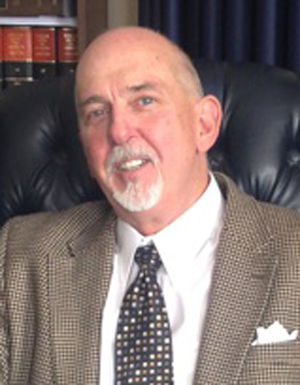
By Brad McEwen
CAMILLA — Assistant District Attorney Mike Bankston, a candidate for superior court judge in the South Georgia Judicial Circuit, will have to wait to find out whether his recently dismissed DUI case is actually dismissed.
Bankston, who is an assistant district attorney in the South Georgia Ccircuit and was once a State Court judge in Mitchell County, was in familiar territory Tuesday as he and his counsel gathered in the downtown Camilla courthouse to find out whether a judge appointed to conduct a hearing on the matter would uphold an administrative dismissal and nolle prosse in his Dec. 16, 2015 arrest on suspicion of driving under the influence.
A decision is expected within 10 days of the hearing. Bankston is running against Heather Lanier and Ryan Cleveland for the position currently held by retiring Judge Wallace Cato in the nonpartisan election this Tuesday.
Senior State Court Judge Kelly Turner of Lowndes County was appointed to preside at the hearing after Mitchell County State Court Judge Rick Waters and Danny Shepard, a part-time judge from Miller County, recused themselves from the case. Turner said that she was “in a public setting” to determine “the propriety” of the administrative dismissal that was filed on Feb. 16 with the Mitchell County Clerk of Court’s office by Charles “Chuck” Spahos, executive director of the Prosecuting Attorney’s Council of Georgia.
Spahos filed the administrative dismissal and nolle prosse while he was serving as solicitor general pro tempore for Mitchell County. The state attorney general’s office assigned him to the position after county Solicitor General Claire Chason recused herself.
According to briefs filed by Spahos, in his capacity as temporary solicitor, he reviewed the Bankston DUI arrest and chose to terminate the investigation and decline further prosecution of the case, thus filing the administrative dismissal and nolle prosse with the Clerk of Court’s office.
In that document and in his comments in court Tuesday, Spahos asserted that he didn’t pursue the case because of a lack of sufficient evidence.
In one of Spahos’ briefs, he also argued that Tuesday’s hearing was not necessary, citing O.C.G.A. 15-18-66, which states in part that “no accusation, citation or summons shall be considered filed unless such filing has been done with the consent, direction, or approval of the solicitor general.”
Because he had never consented to any accusation, Spahos said, there was never a case before the court and, therefore, nothing for the judge to rule on.
That was not the interpretation of the Mitchell County Clerk of Court’s Office, which has an active case number. According to Adayna B. Broome, the clerk of courts in Mitchell County for 24 years, when a Uniform Traffic Citation (UTC), such as the one presented to Bankston following his arrest, is filed, a case number is generated.
Any case created that way, Broome explained, typically remains active until the presiding State Court judge makes a ruling, even in the case of a dismissal.
Broome also explained that in most cases in Mitchell County, the UTC stands as the accusation of a charge and that, at the conclusion of a case, the outcome is noted on the actual UTC.
Since nothing had been noted on the UTC connected to Bankston’s case, in order to properly close its records to be reviewed by the state, the clerk’s office requested a judge’s order.
Turner confirmed as much Tuesday, stating that when she inquired as to what she was being asked to do, because she did not see a formal accusation, she was informed that in Mitchell County, “as a matter of course,” an accusation is “rarely” filed and that the court considers the filing of a UTC by a law enforcement officer to be the origin of the case.
Turner also offered that “each court does it a little bit differently,” but that in her court a solicitor would draft an accusation in order for the case to proceed.
Before Turner could discuss the matter with Spahos and his team, and Bankston and his attorneys, former Dougherty County district attorney Ken Hodges and Jay Brimberry of Albany, an outside party interjected himself into the proceedings.
Shortly after Turner entered the courtroom, Gilbert Murrah, an attorney from Bainbridge, approached the bench, asking to appear before the court as amicus curiae, “a friend of the court,” for the purpose of filing a motion. Murrah told Turner that he believed he had grounds to file the amicus brief based on precedent set in a civil court case.
Turner questioned why Murrah, a former district attorney in the South Georgia Judicial Circuit, was there, to which he answered that he wanted to ensure that Bankston’s case was properly presented.
“My interest is in seeing that this matter is fairly presented to the court,” Murrah said. “I don’t think at this point that it has been fairly presented.”
As Murrah tried to continue, Spahos, Hodges and Brimberry all objected to his being allowed to speak, stating that they felt Murrah should not be allowed to interject himself into a criminal proceeding.
Despite their objections, Turner did not forbid Murrah from being present. She also did not rule on Murrah’s amicus brief, but it was recorded by the clerk’s office.
In that brief, Murrah, who has paid for advertisements opposing Bankston’s bid for the judgeship, said that the state could not enter nolle prosse without consent of the court, meaning it was his assertion that Spahos’ administrative dismissal and nolle prosse were not enough to dismiss the case. The brief also challenged Spahos’ position that there was not enough evidence to move forward with the case.
Turner said she would review the matter to determine whether the administrative dismissal and nolle prosse of Bankston’s case was valid, and would make a ruling within 10 days.
When contacted about the case, Bankston said he he could not discuss it and referred questions to Hodges. A message left at Hodges’ office Wednesday was not returned.
When he was contacted by phone Wednesday, Spahos, who said he has served as solicitor general pro tempore in several other instances throughout the state, also would not discuss the specifics of the case, stating that he was waiting for the judge’s ruling.
Related Articles

Seventh annual Recovery in the Streets brings Saturday celebration
“We know that recovery is for the entire community,” Burgman said. “It affects us all, so we want to come together and celebrate.”
Dawson’s budget hearing: What the law requires and residents should ask
Dawson residents will have an opportunity Sept. 24 to question the city’s proposed budget before the City Council decides how to fund police, fire protection, streets and other services for the fiscal year already underway. But the documents available for review leave a basic question unanswered: How much does the city plan to spend, and what money will pay for it?
‘Tell them ordinary Americans did extraordinary things’
Twenty-five years to the day after the Sept. 11 terrorist attacks, veterans and their families gathered Friday at Veterans Park to dedicate a monument to those who served in the Global War on Terror.
