
Phoebe Putney Memorial Hospital sued by Equal Employment Opportunity Commission
Lawsuit filed against Albany hospital alleges Americans with Disabilities Act violation
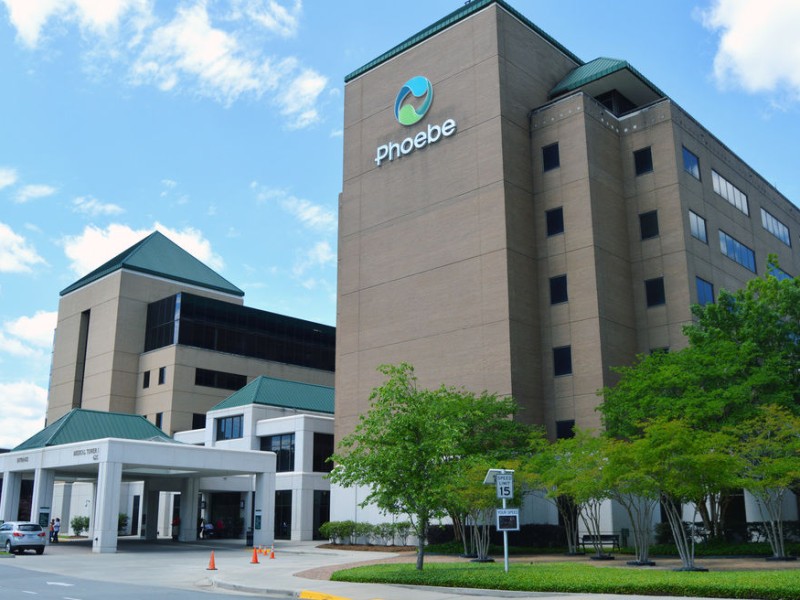
File Photo
By Jennifer Parks
ALBANY — Officials from the Equal Employment Opportunity Commission announced Wednesday the agency had filed a lawsuit in federal court against Phoebe Putney Memorial Hospital, contending it violated federal disability discrimination law.
The EEOC states in the suit that Phoebe fired an employee after she requested leave due to a medical condition.
According to the EEOC’s suit, in May of 2016, Phoebe discharged Wendy Kelley, a medical records analyst, rather than grant her request for a reasonable accommodation in the form of leave to receive treatment for her medical condition. Kelley was fired within days of requesting two weeks of medical leave to comply with her doctor’s restrictions that she not work during that time.
Due to her condition, Kelley said she fainted at the hospital’s facility on the way to meet with her supervisor about her request for leave. Instead of rescheduling the meeting, Phoebe denied Kelley’s request for leave and terminated her employment, the EEOC said.
EEOC officials said such conduct violates the Americans with Disabilities Act, and that EEOC v. Phoebe Putney Memorial Hospital Inc. was filed in the U.S. District Court for the Middle District of Georgia’s Albany Division after first attempting to reach a pre-litigation settlement through its conciliation process.
“An employer cannot discharge an employee because that employee has an actual or perceived disability or because she sought a reasonable accommodation,” Antonette Sewell, regional attorney for the EEOC’s Atlanta District Office, said in a statement. “The employee here sought to exercise her rights under the ADA to receive a reasonable accommodation, but instead of accommodating her, the hospital simply kicked her out the door. Such conduct violates federal law, and the EEOC is here to stand up for the victims of such thoughtless discrimination.”
Phoebe responded Wednesday afternoon by stating the hospital complied with the law, and that officials there do not agree with the grounds of the suit.
“Phoebe complied with the law in all respects in our dealings with Ms. Kelley, and we are disappointed that the government chose to file a lawsuit in this case,” Dawn Benson, senior vice president and general counsel at Phoebe, said. “While we don’t agree that the law required us to accommodate requests made by Ms. Kelley, we did make an accommodation that was entirely appropriate for the concerns that she expressed, and she declined to accept it.”
The EEOC is seeking reinstatement, back pay, front pay, compensatory and punitive damages for Kelley, as well as injunctive relief designed to prevent future discrimination.
“The EEOC is committed to stopping workplace disability discrimination in Georgia and across the country,” Bernice Williams-Kimbrough, district director of the EEOC’s Atlanta office, said. “An employee should not have to risk being fired when seeking an accommodation under the ADA or because the employer perceives the employee as disabled.”
The EEOC’s mission is to advance opportunity in the workplace by enforcing federal laws prohibiting employment discrimination.
Related Articles

Dawson approves $68K excavator purchase after months of contradictory public statements
The decision concludes one portion of a controversy that has generated months of public scrutiny but leaves several unanswered questions regarding how the city’s original machine was damaged, whether employees were held accountable and what documentation supports the decision to replace rather than repair it.
Dawson proposes borrowing up to $420,000 to stay afloat as finances unravel
Documents obtained by The Dawson News show city officials are proposing to balance the budget through a transfer from the Public Utilities Fund while simultaneously seeking authority to borrow as much as $420,000 from a private financial institution to continue meeting payroll and other operating expenses as Dawson works to complete financial audits that have remained unfinished since 2023.

Small actions can help save big on utility bills
The high temperatures of July and August can bring scorching utility bills as air conditioners hum to keep houses cool. Albany Utilities Residential Conservation Auditor Willie Jackson offered some tips on making summer cooling bills more manageable.
