
Potholes a growing problem in Albany
Officials estimate 200 of the 550 miles of roadway in Albany need resurfacing
By Brad McEwen
ALBANY — A driver doesn’t have to travel too far in any direction inside the Good Life City limits to notice what is becoming a growing concern for many citizens, city employees and officials — potholes seem to be multiplying at an alarming rate, and the city streets seem to be deteriorating rapidly.
In fact, the potholes, as well as the general state of the city’s aging infrastructure, are such a growing concern that Albany Mayor Dorothy Hubbard said it’s one of the issues that weighs nearly constantly on her mind.
“If there’s one thing in this city that I could lose sleep over, it’s our infrastructure,” said Hubbard. “Infrastructure is one of the fears that I live with. We are not ignoring the potholes or the infrastructure in general. It’s a problem.”
While Hubbard is hard at work with the rest of the City Commission and the city’s Public Works Department to figure out a way to tackle the growing problems, some city residents are taking matters into their own hands.
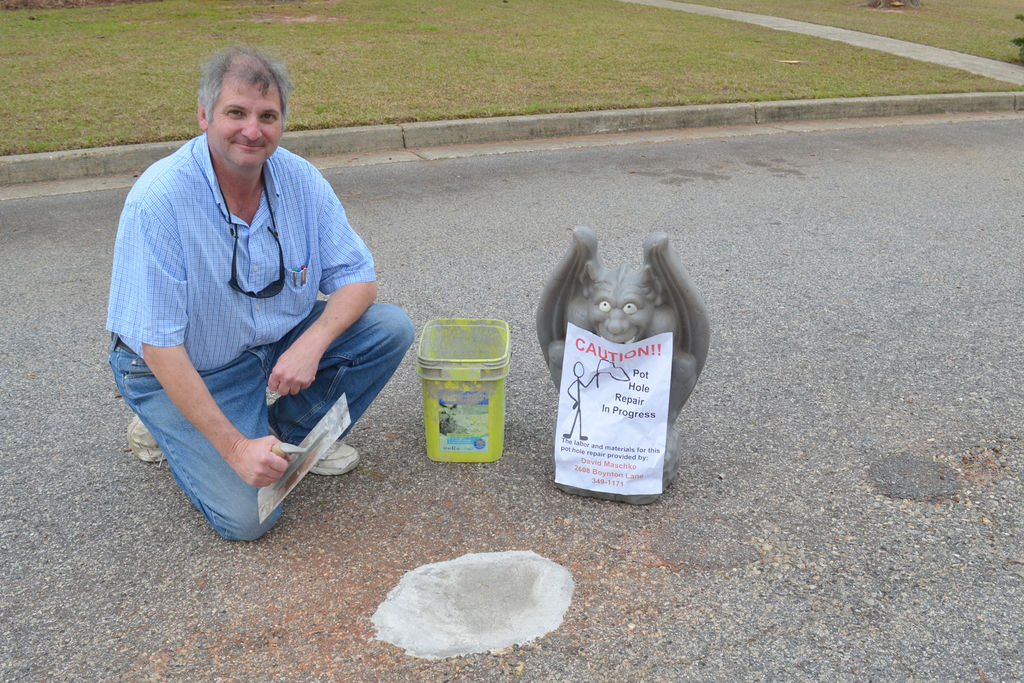
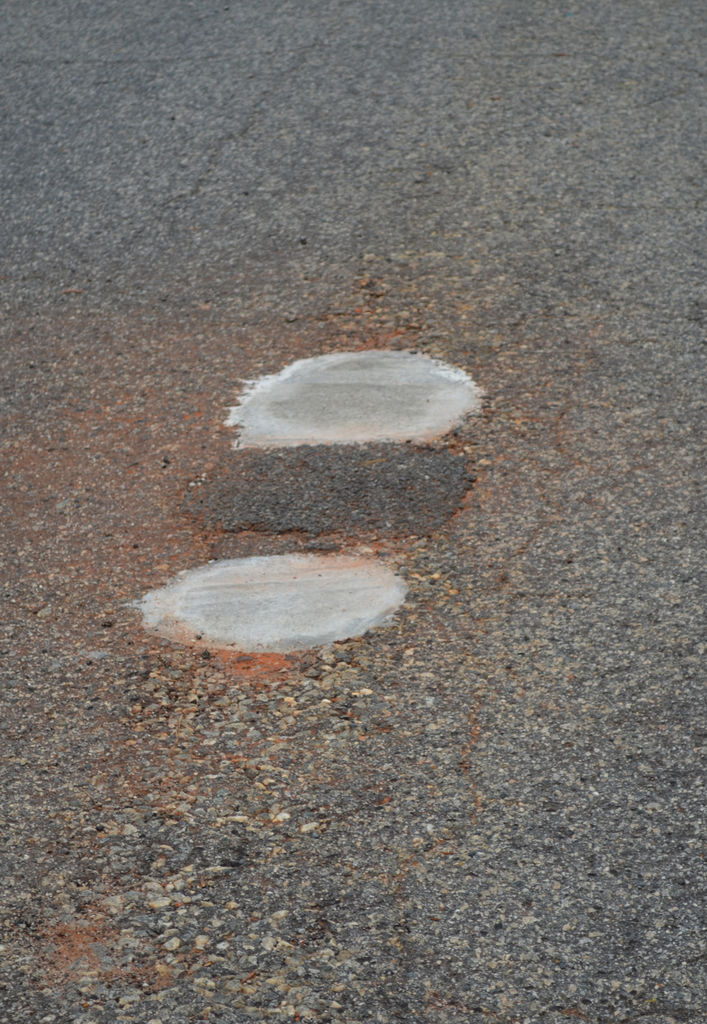
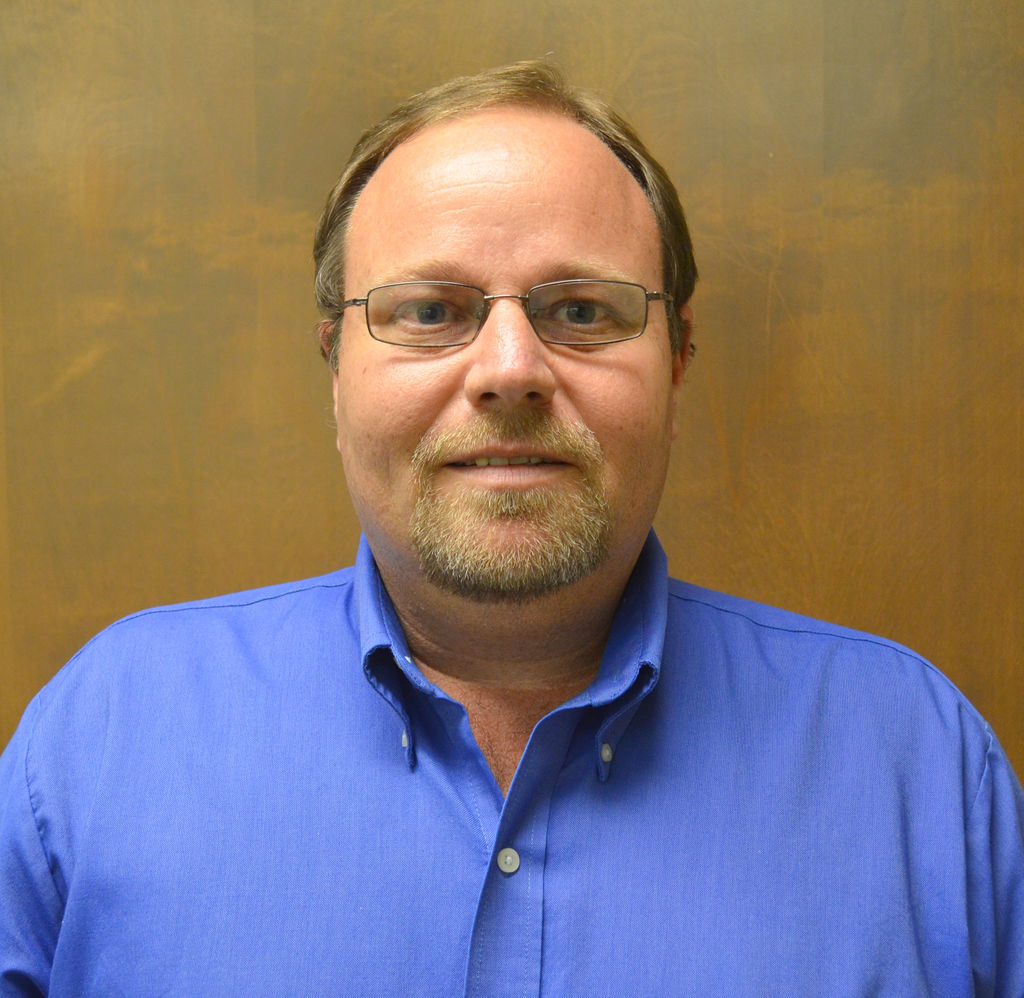
One such resident is former Dougherty County School Board member David Maschke, who has become so frustrated with the condition of not only the roads throughout the entire city, but also those in his Lake Park neighborhood, that he recently spent an entire weekend filling in seven potholes in front of his home.
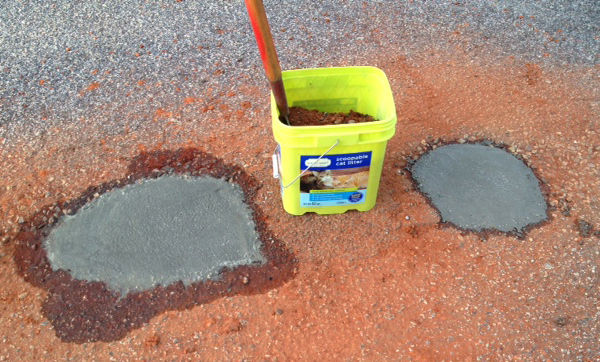
“I just fixed it,” Maschke said. “I went and bought 250 pounds of concrete and got out here a couple of weeks ago on a Saturday and Sunday, dug out all the holes, prepped all the holes, cleaned them all out, mixed the concrete, poured all the concrete and then I smoothed them off.”
Maschke added that he had fixed a pothole on his street 21 years earlier when he first moved to his current residence. After several more eventually appeared, he felt it was time to do it again.
“I just had enough of it,” Maschke said. “I’ve gotten frustrated.”
For Maschke the potholes in front of his home became a kind of symbol for all the ills he feels are impacting the city he calls home, and he simply got to a point where he had to something about at least one of the things that have been frustrating him.
“Albany and the school system, I follow all that stuff, and I’m getting pretty frustrated with this stuff again,” Maschke continued. “You’re driving the streets and there’s potholes all over the place, and then I started reading others’ squawks in The (Albany Herald) Squawkbox and all, and instead of just sitting around complaining I just decided to sort of take to the street with some constructive action.”
Maschke says he spent roughly 11 hours prepping and filling the seven holes and kept the area blocked off so anyone driving down the street would not hit the area and damage the repaired holes or their vehicles.
He also said he chose to fill the potholes with concrete rather than asphalt, which is what the city maintenance crews primarily use when patching holes throughout the city, and that he spent roughly $25 and used five 50-pound bags of concrete mix.
“I think these concrete patches are better,” said Maschke. “I think the proof is in the pudding with my 21-year-old patch.”
Regardless of how the potholes are filled, be it with asphalt or concrete, Maschke said he is more concerned with what he perceives as major problems throughout the city.
“I just got to the point where I’m very concerned about Albany and Dougherty County and frustrated with the economy and the city and the school system, and these potholes were something I could do myself right then,” he said.
While Maschke sees the potholes as being indicative of a larger issue plaguing Albany, Stacey Rowe, the city’s Public Works street superintendent, said he sees the pothole situation in Albany as something that is part of a specific issue: the overall condition of the city’s streets.
Rowe said that street maintenance is a major concern for any municipality, but said that it has increasingly become an even bigger concern for Albany in recent years.
Rowe, a long-time resident of the area who has served as street superintendent for 15 years, said that the city’s roads are as bad as he’s ever seen them and that increased cold weather and rain during the past few years have accelerated the problem.
“I would say they’re probably worse now (than in recent years),” Rowe said. “From the ’80s, it got a lot better, but in the last two or three years I see it’s getting worse, due to weather. The amount of rain we’ve had the last year, that’s caused us a lot of problems with our roads. I do know that the pothole situation has gotten worse in the last year. But that’s because we went from about six years of little to no rain, up to what we’ve been getting, and that affects the conditions of our asphalt.”
Weather, it seems, is a roadway’s worst enemy as temperature changes cause the asphalt to expand and contract. Rain that seeps into small cracks makes them bigger and erodes the street from underneath can alter a road’s integrity rapidly.
“The way these roads react (to weather) is really amazing,” said Rowe. “Rain and cold weather are huge factors.”
In addition to the weather issues that have impacted the streets, Rowe said that the city’s road system in general is simply getting older.
“We have an aging infrastructure, all of our roads and stuff,” he said. “A lot of our roads, the average age, they’re about 50 years old.”
Rowe went on to explain that as the roads age and are exposed to the changing weather, they inevitably develop what is called “reflective cracking,” which eventually turns into “alligator cracking,” a condition that is much worse, and is the main culprit behind the formation of potholes.
“Reflective cracking is just when you have a small crack that will just run off to nowhere, here and there,” he said. “That’s not a huge problem because they’re small cracks, and a lot of them really don’t go all the way through the asphalt. When you start getting into what I call alligator cracking, it’s just like it says, like the back of an alligator, how they have little small squares. That’s when you have a problem, and we have some of that in town.”
Indeed, widespread alligator cracking ultimately goes beyond forming potholes. It will eventually lead to a road being labeled as “poor” or “very poor” and therefore in real need of resurfacing.
Rowe said he keeps a database of Albany’s roads and that, according to his information, a large percentage of the city’s roads are in bad enough condition that he thinks they need to be completely resurfaced.
“We ride and evaluate all the streets throughout the city, and I have a program that I use to help me grade the streets,” explained Rowe. “At this time, I believe I have 101 miles of what is considered ‘very poor.’ That means these roads really need to be resurfaced now before we get into complete base failure.
“Then, I have like 99 miles of what’s considered poor. Whenever I say poor, they also need to be resurfaced right now. So, out of a little over 550 miles of road, we’ve got 200 miles that I’m saying right now need to (be resurfaced).”
Unfortunately, Rowe explained, resurfacing roads takes a considerable amount of money, and the city simply doesn’t have the funds to resurface everything as often as he and others would like to see.
Rowe said that, currently, the city is collecting money through a SPLOST referendum that, during its lifetime, will generate roughly $4 million in six years. Additionally, the city gets what is called LMIG (Local Maintenance and Improvement Grant) funds from the Georgia Department of Transportation (GDOT).
Rowe said in most years the city realizes approximately $704,000 in LMIG money, for which the city has to provide a 30 percent match, meaning the city can spend about $915,000 outside of SPLOST funds on road repairs each year.
Fortunately, that amount is set to increase in the next fiscal year with the city set to receive roughly $900,000 from GDOT. The city’s 30 percent match will then be in the neighborhood of $270,000.
Rowe is quick to point out, however, that while that might seem like a significant amount of money, it’s not enough to fund everything that’s needed.
“That sounds like a lot of money, but really that doesn’t go a long way,” he said. “At average, it costs a little over $138,000 a mile to do a two-lane road, an inch and a half resurfacing, so you can’t really go too far with that.”
In fact, Rowe said what he’d ultimately like to see is a scenario where the city is able to create some kind of plan where every city roadway is resurfaced on a schedule.
“The ideal would be to put our streets on a 15-year cycle to where each street would be resurfaced every 15 years,” he said. “For us to be able to achieve that, you’re looking at a cost that would be about $5 million a year. So, technically, what we get for a six-year SPLOST, I would need that money plus the money we’re getting from the state every year to be able to put all of our streets on a 15-year cycle.”
Rowe estimates that if the city could get on that 15-year cycle, it would eliminate somewhere in the neighborhood of 80 percent of its potholes.
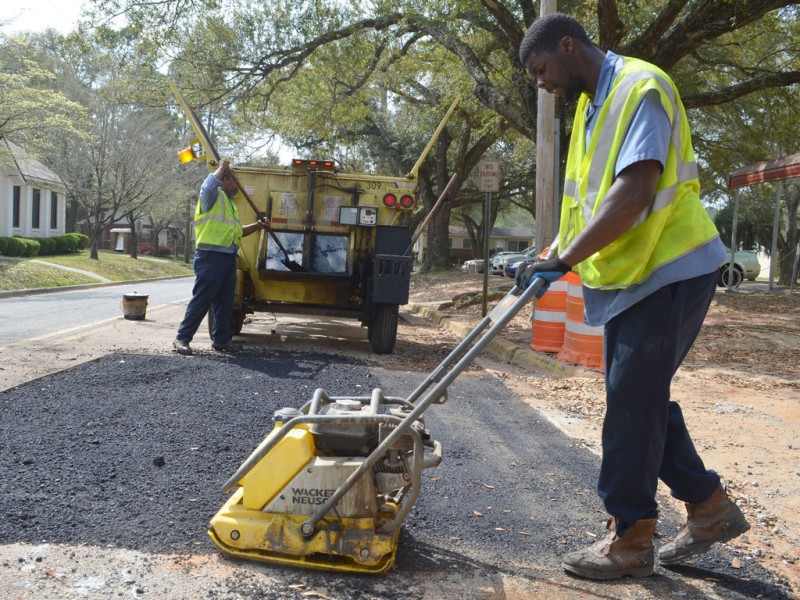
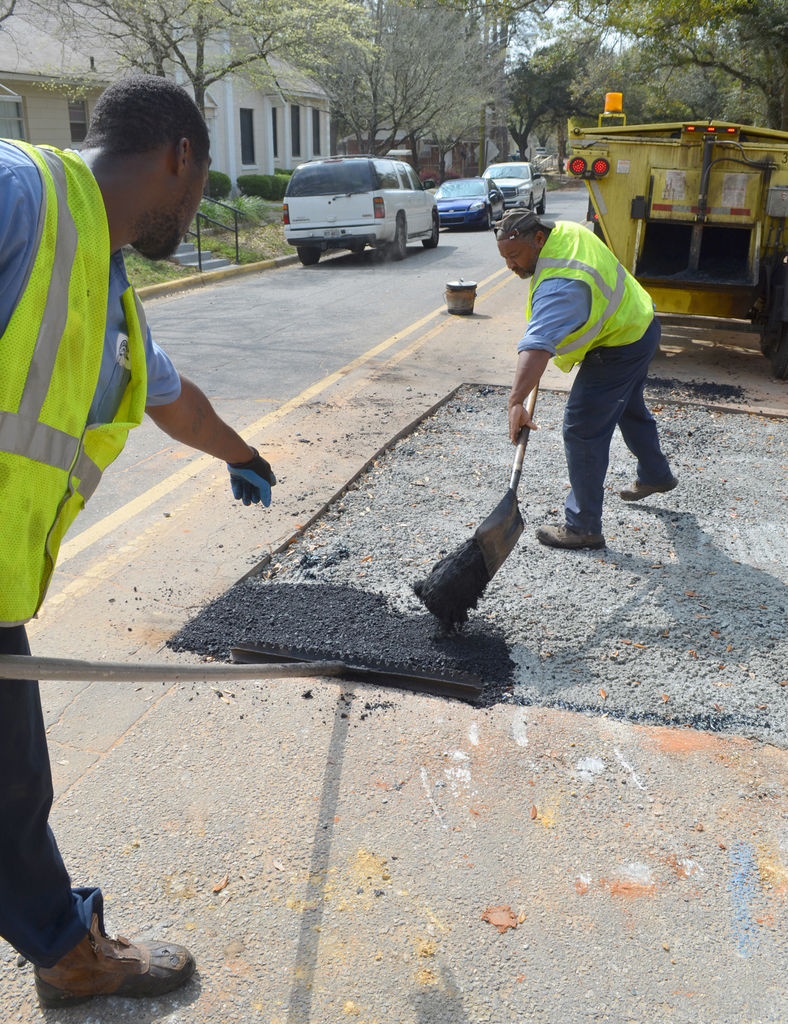
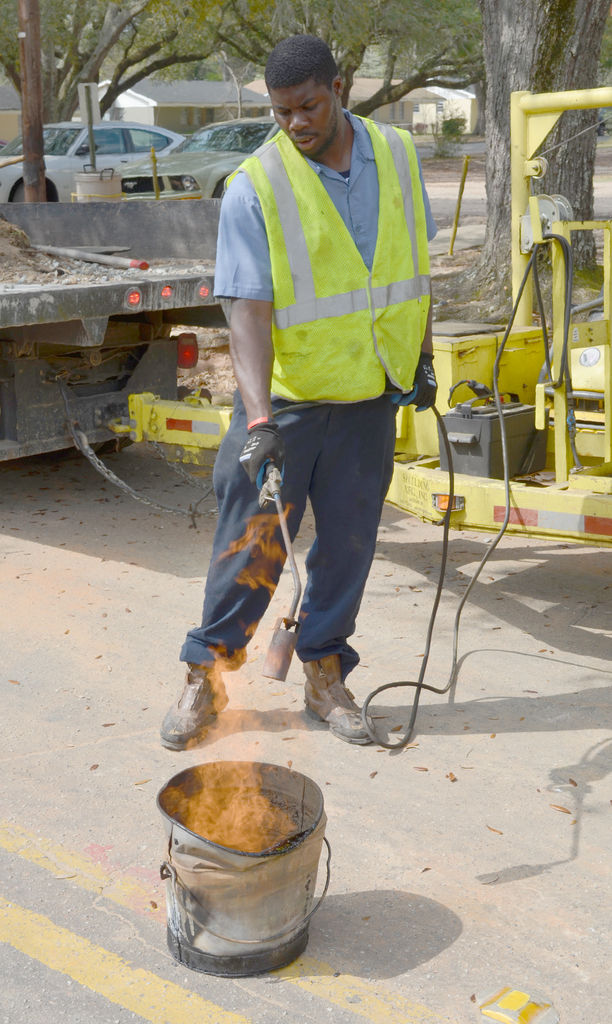
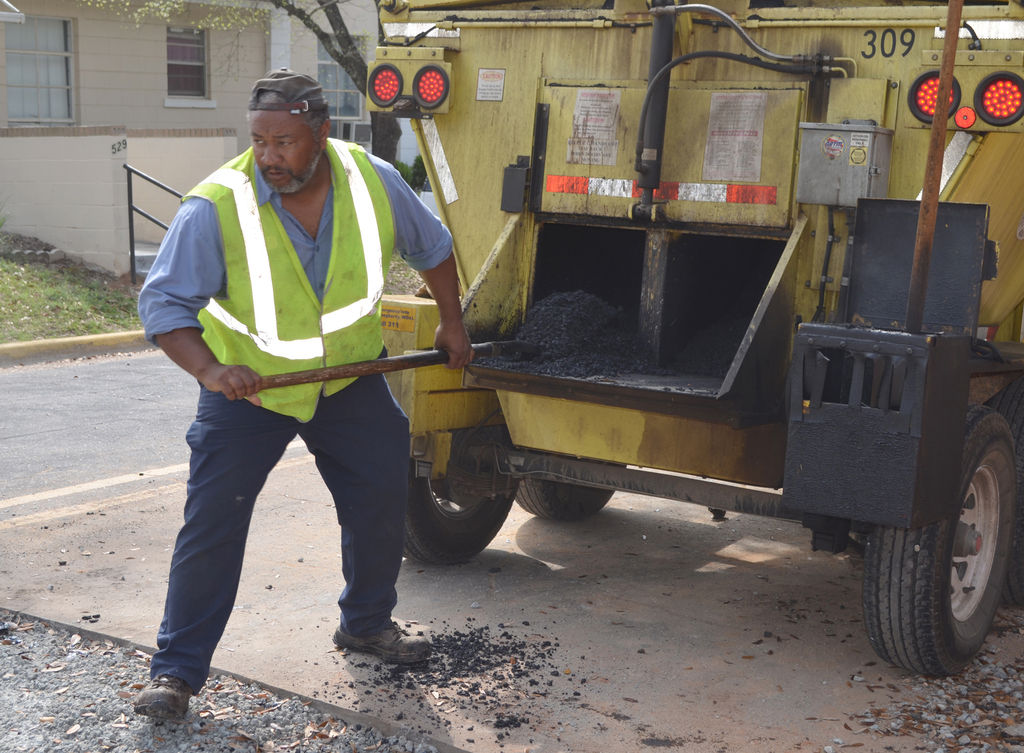
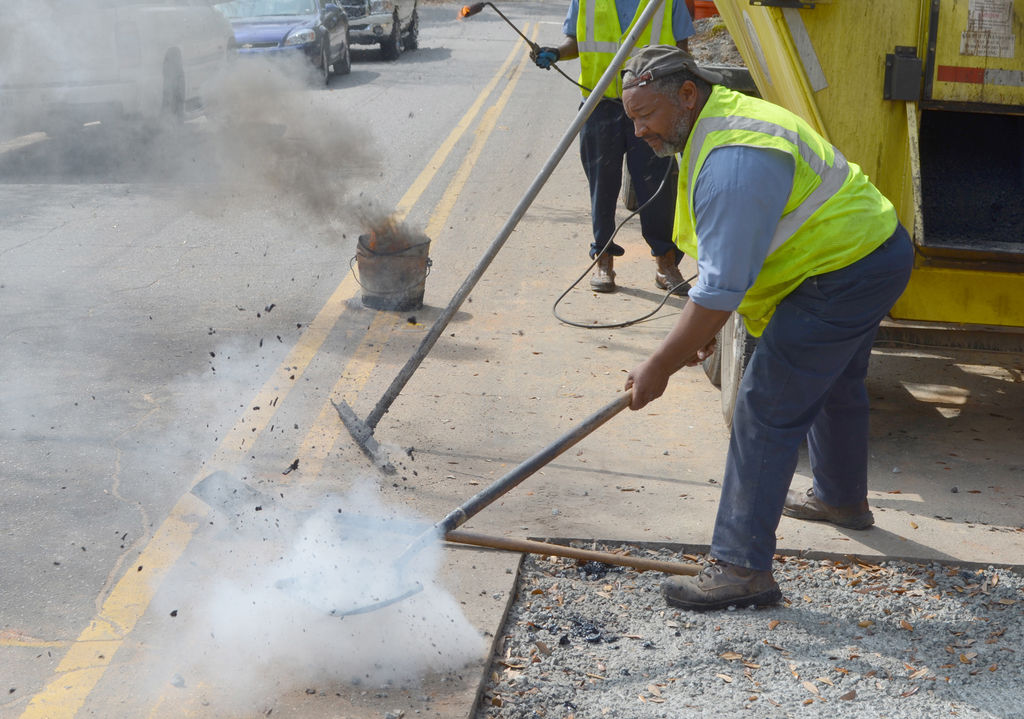
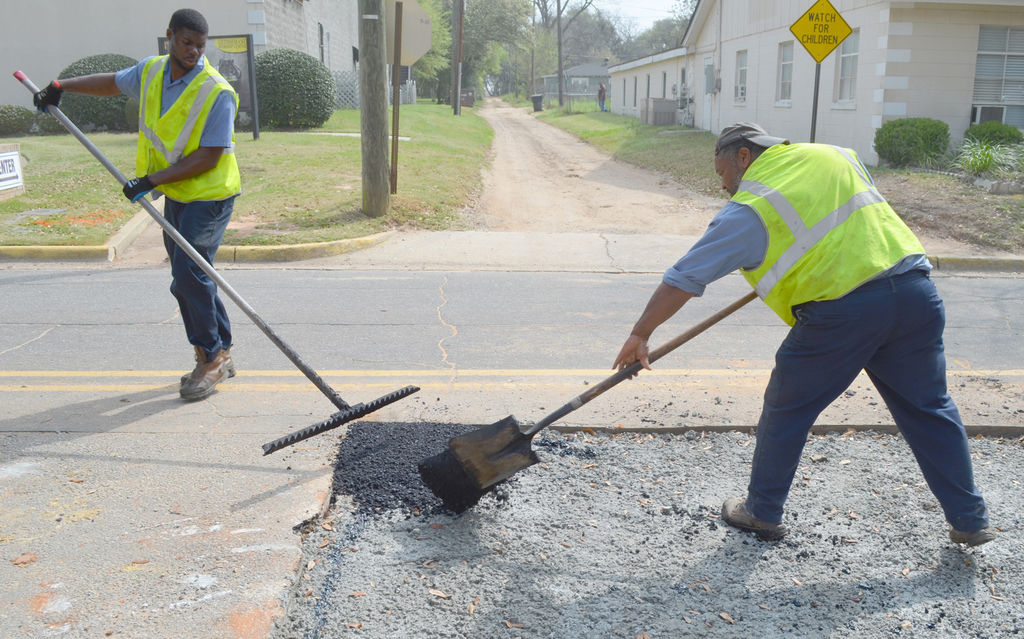
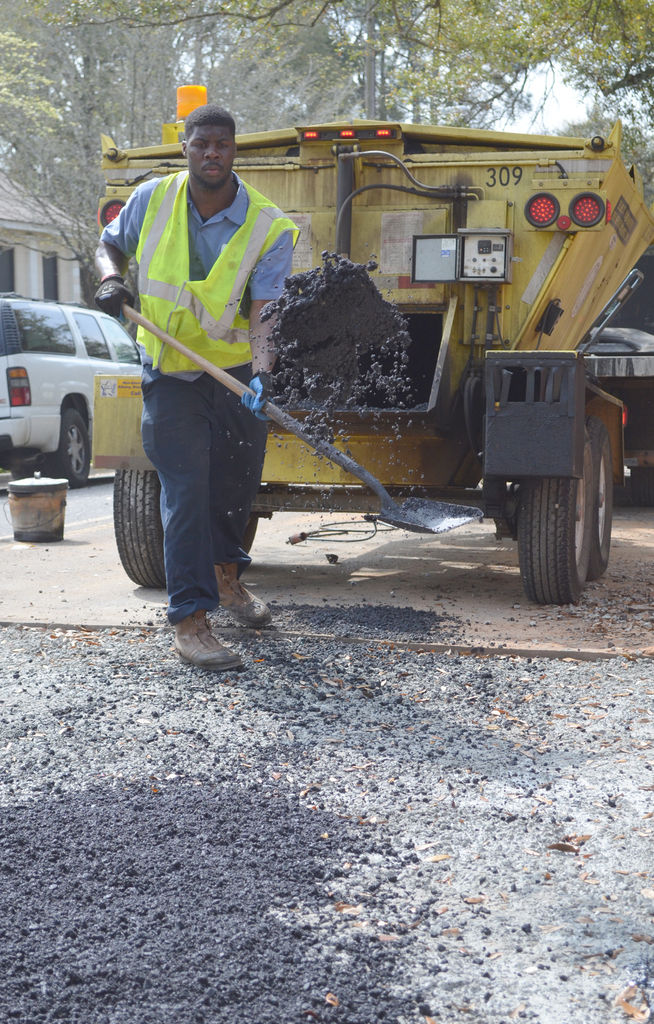
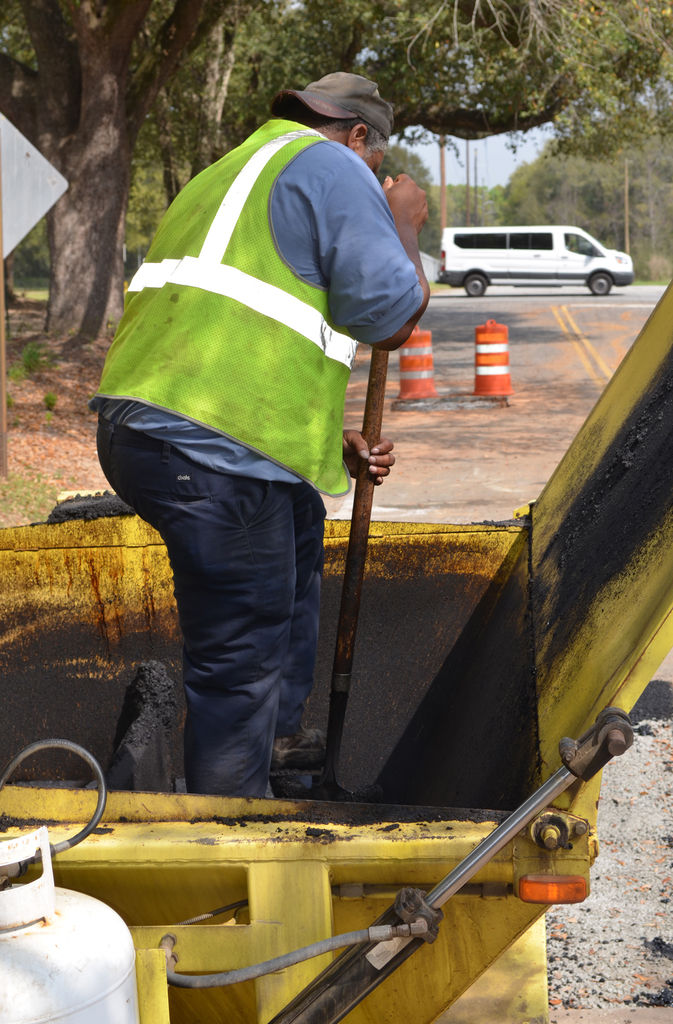
Since that plan is not in place and the city is still weighing various options, Rowe said his department is left with having to fill potholes as often as it can, which in itself has its challenges.
One such challenge is that the city doesn’t make its own asphalt and relies on local construction companies like Oxford Construction, Boyd Brothers Construction and Reeves Construction to have asphalt available.
“We can only get asphalt when one of the three local companies is running,” said Rowe. “We do not produce ‘hot mix’ asphalt. That comes from one of the three companies. It also depends on what type of mix they’re running. If they’re running what’s considered a ‘base mix,’ we still cannot fill potholes because that has the really big rock, the big aggregate in it. That’s not going to work. You have to have finish mix.”
Rowe added that the companies often don’t make asphalt in the winter months, meaning there can be a backlog of potholes that need to be filled. He said his crews have a temporary fix they can use during that time, but they still have to return to those potholes and re-do them with the proper material.
When asked about using concrete as Maschke had done, Rowe said it creates other problems that ultimately have to be addressed.
“Whenever you start putting concrete in the streets, we run into an issue because eventually after you overlay a street, usually the second time in that street’s lifetime, you mill it down,” Rowe explained. “Otherwise, if you don’t mill it, you’re changing the profile of the road, so you’ve got to mill it down before you resurface after one time. Plus it will not match the curb and gutter. You get like a valley between the road and curb and gutter if you don’t mill it. When you go out there and place concrete, that makes it really hard on the milling machine.”
“Also, it’s two different types of materials. If you put concrete in there and don’t really seal it properly, water will go down between the concrete and the asphalt and you can create additional problems under there.”
Another issue affecting the city’s ability to fill potholes on the roads as quickly as Rowe would like is the fact that the street maintenance department is also responsible for other things, like taking care of the city’s 175 miles worth of alleys. Many of the city’s alleys require pothole repair and the rest, that are dirt, have to be maintained as well.
Rowe said the street division also takes care of grubbing, cleaning, street sweeping, sidewalks, driveways, and any type of concrete or asphalt work.
Although Rowe has a bigger picture view concerning Albany’s roads, and therefore its potholes, he is not at all dismissive of frustrated citizens like Maschke, who are fed up with city road conditions.
“I promise you, I have never hit a pothole and thought, ‘Well, I don’t normally come this way, so I’m not going to worry about it,’” said Rowe. “I’m responsible for every street in this town, and I do not care where it’s at or how often I go over there. Everybody pays taxes, and they deserve the same level of services.”
Rowe said the best thing any resident who is concerned about potholes can do is to call the city’s 311 information line or call Public Works directly and let them know where the pothole is.
It is the department’s policy, Rowe said, to inspect and potentially fix any pothole they are notified about within 24 hours.
Rowe added that he doesn’t even mind reading about people’s frustrations about potholes in The Squawkbox vent column, but he does want those who call those complaints into the paper to be sure to also take the time to let his department know where a pothole is.
“They’re still welcome, of course, to put it in The Squawkbox, but those 25 holes you saw this morning, I need to know where they are, so I can go see them,” Rowe said. “It’s hard to find them out of 500 miles of city streets. I’m sure I’m going to find a bunch of them, but they’re probably not the ones you’re seeing every morning. And you’re thinking, ‘My God, I’ve put it in The Squawkbox and everything and they’re still here, (the city) won’t do anything.’ Well, that’s because I haven’t found them yet. I promise you, we’re trying.”
When it comes to residents such as Maschke who take it upon themselves to fix potholes, Rowe stops short of saying they shouldn’t do that. But he definitely has some serious concerns.
“I’m not sure what kind of legal ramifications you’re taking on yourself,” said Rowe. “Because if you alter something, that creates another problem. I don’t see how exactly the city could be liable. I think you’re taking on some liability then. It’s not a situation I feel any citizen needs to put themselves in, especially if you haven’t given us the opportunity to at least address your problem. Let us address it.
“I really don’t need every mom and pop at Lowe’s on Saturday buying some ready-mix concrete and digging up the street. I mean we’re going to run into a serious problem with that. And, legally, I think they’re asking for problems. I recommend they call and talk to us, give us a chance. We will respond.”
Related Articles
Athens man gets 30-year sentence for sexually exploiting a child
An Athens resident received the statutory maximum prison sentence allowed…

Albany man charged with sexual battery involving a juvenile
Gabriel McCoy has been arrested and charged with sexual battery after Albany police say he was charged with touching a 13-year-old child inappropriately.

Dougherty Police make arrests in drive-by shooting cases
Dougherty County Police officials announced the arrest of one person involved in a drive-by shooting that occurred on April 2, 2024,
