
Red Cross trains shelter workers in Albany
Volunteers will be certified and ready to deploy
By Cindi Cox
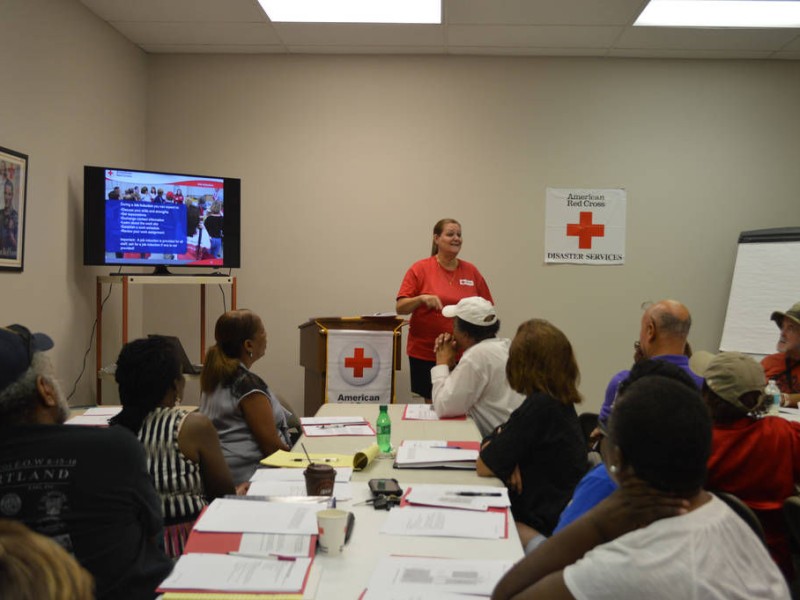
ALBANY — In the aftermath of Hurricane Harvey, thousands of flood victims are expected to turn to shelters. On Saturday, the Red Cross in Albany began training volunteers to work in those shelters once flooding subsides and workers can safely deploy to the area.
Sandi Cole, Red Cross disaster program manager for Southwest Georgia, gave the first of two scheduled training sessions for potential Red Cross shelter volunteers. The training took place Saturday morning at the Red Cross office on Pine Avenue in Albany. A second training is scheduled for 6:30 p.m. Thursday.
“This is basically a soup-to-nuts overview of everything that goes on at a Red Cross shelter, from preparing to open the doors to closing the shelter after the need has subsided,” Cole said. “We go over safety factors, logistics, positioning assets, working with storm victims … everything.”
Once a volunteer has completed the training, the individual will be certified to assist in a Red Cross shelter.
About 25 people came out to Saturday’s training. Most attending the session had some medical, military, emergency services or disaster relief experience.
Greg Hanweck, an active duty Marine stationed at Marine Corp Logistics Base Albany, said he read about the Red Cross training online and decided to attend in hopes of deploying to the flooded region.
Although he has never worked directly with the Red Cross, Hanweck said he has seen more than his share of hurricanes, typhoons and other natural disasters. While serving in Japan, Hanweck said, he was part of the logistics team working with evacuees in response to the nuclear crisis in Japan.
Tom Wilson, a retired firefighter and longtime volunteer with the Red Cross, also attended the training.
Wilson said he was working at a Fire Department in New Jersey when the World Trade Towers fell on Sept. 11, 2001. After moving to Albany nine years ago, Wilson said he got involved with the Red Cross because he “wanted to help people.”
Wilson said it is important to be prepared for natural disasters.
“We can’t stop them. We can only deal with them,” he said.
Cole said the shelter training was on schedule to take place in Albany before Hurricane Harvey hit the United States. This training, along with other types of training, is a vital part of the Red Cross disaster readiness program, she said.
Now that Hurricane Harvey has created such a crisis, Cole anticipates the Red Cross will accelerate its disaster training schedule with the likelihood of deploying all who finish the course.
“We anticipate deploying volunteers in the days and weeks to come,” she said. “Although we typically only open emergency shelters in disaster zones for about two weeks, this Hurricane Harvey relief effort could be much longer.
“We also are keeping a close eye on Hurricane Irma which is gathering strength and could present another crisis if it makes landfall on the East Coast.”
One thing about disaster relief is it is fluid. Cole told her audience that logistics, plans and the scope of work can change often and with short notice. In order to effectively serve as a disaster response volunteer, it is essential to be able to “go with the flow,” Cole said.
Shelter work is tough but rewarding, Cole said. In an interview during a training break, she shed a few tears as she talked about how she got started in relief work and recalled some of her past deployments to 9/11, Hurricane Sandy on the East Coast and Hurricane Ike, which hit Galveston south of Houston and did damage all along the Gulf Coast.
Clearly, disaster response is a bittersweet labor of love.
“We get more than we give,” she said. “As an EMT, after working with the fire department and riding in an ambulance for 18 years, I knew I could help make a difference. I knew there was a bigger need,”
At Red Cross shelters, all who need housing are welcomed, Cole said.
“None are turned away,” she said.
She told a story of a 98 year-old man who was being housed in a crowded Red Cross shelter after another disaster,
“The workers all thought he would do better at another nearby Red Cross shelter serving those with medical needs,” she said, “so we asked him if he liked it here or if he would rather move to a smaller and less crowded shelter.
“He immediately said he did not want to move. He said he loved being around all the children and all the activity.”
Cole said it is important to never make assumptions. She has seen whole families come with in with elderly family members, even some in hospice care with their team of hospice workers. Though family pets are normally not allowed at shelter, Cole said she has seen people arrive with special service animals — not just dogs, but Guinea pigs and even small ponies.
“We never really know what to expect but we do need our workers to know policies and procedures and we need to be ready to help and serve all who come to us for help,” Cole said.
Related Articles
Albany police investigate suspicious Sunday death
A 21-year-old Turner Job Corps student who was found unresponsive on Sunday evening was later pronounced dead at Phoebe Putney Memorial Hospital. The death is under investigation.
James Rubino installed in new role at Marine Corps Logistics Command in Albany
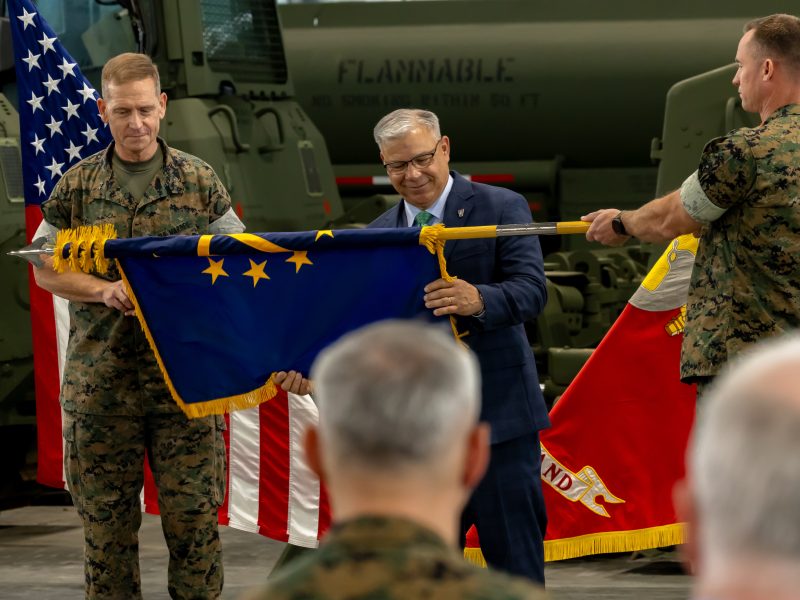
James L. Rubino recently assumed the role as executive deputy of Marine Corps Logistics Command in Albany. In his new role he will oversee integrated logistics support.

Rain depresses voter turnout in Dougherty County
“A lot of people don’t vote when it’s raining. People don’t do a lot of things when it’s raining.”
