
Riverkeeper: Albany has opportunity to overhaul sewer system after major spill
Multiple sewage spills recently have brought the city’s aging sewer system under scrutiny
By Jon Gosa
ALBANY – One month after more than 90,000 gallons of raw sewage spilled into the Flint River because of failed pumps at one of 112 lift stations in Albany, repairs have still not been completed.
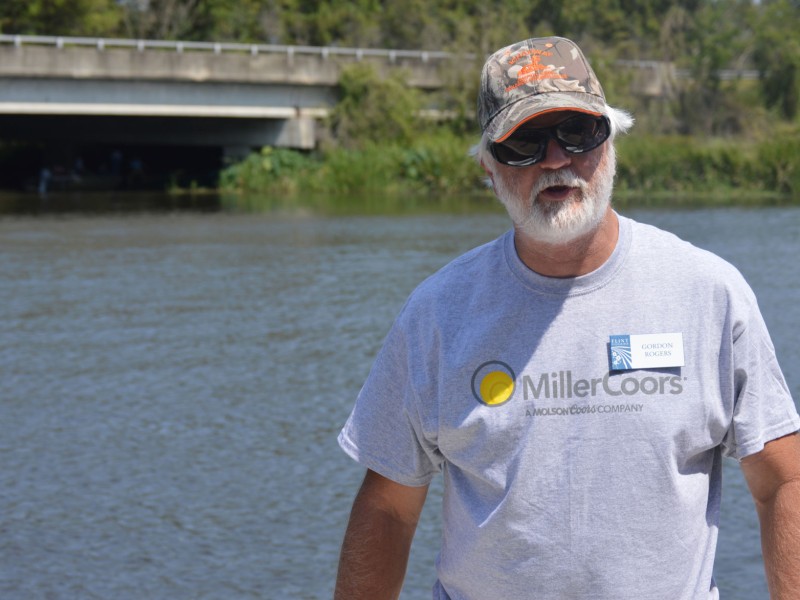
However, according to Flint Riverkeeper Gordon Rogers, the spill, which received an enormous amount of public attention, has turned a particularly nasty situation into an “opportunity.”
“We are going to call this an opportunity at this point,” Rogers said. “Because so many things have been elucidated. And that’s a good thing.”
Rogers was referring to the fact that due to all of the public attention, the city has recently been put under a microscope about a multifaceted issue consisting of an aged and failing sewer system, in some places more than 100 years old, and a permitted consolidated sewage overflow (CSO) issue, which allows waste to pour into the Flint during heavy rains.
These issues, according to Rogers, have been worsening for years, and the current situation at the failed pump station was the consequence.
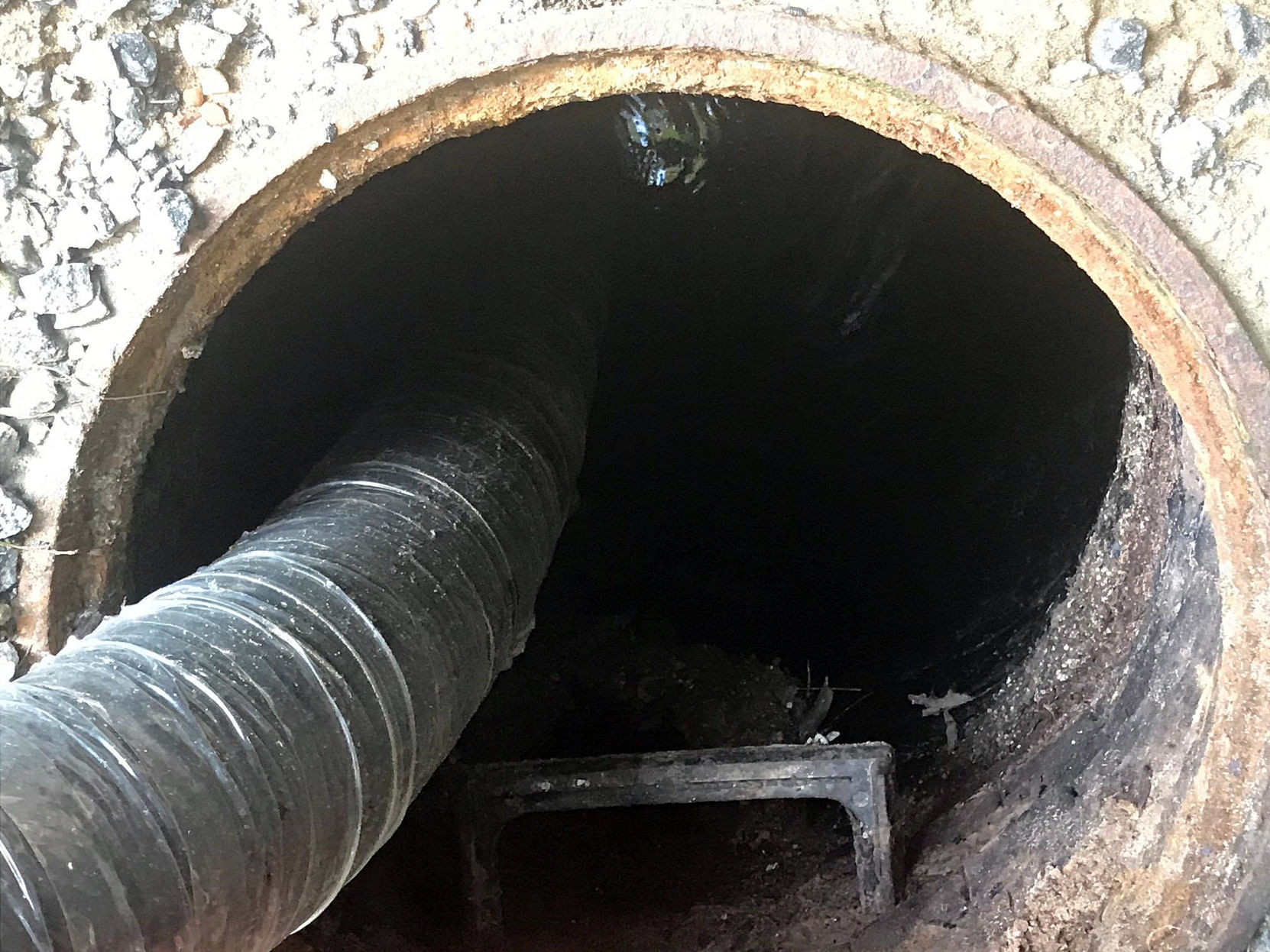
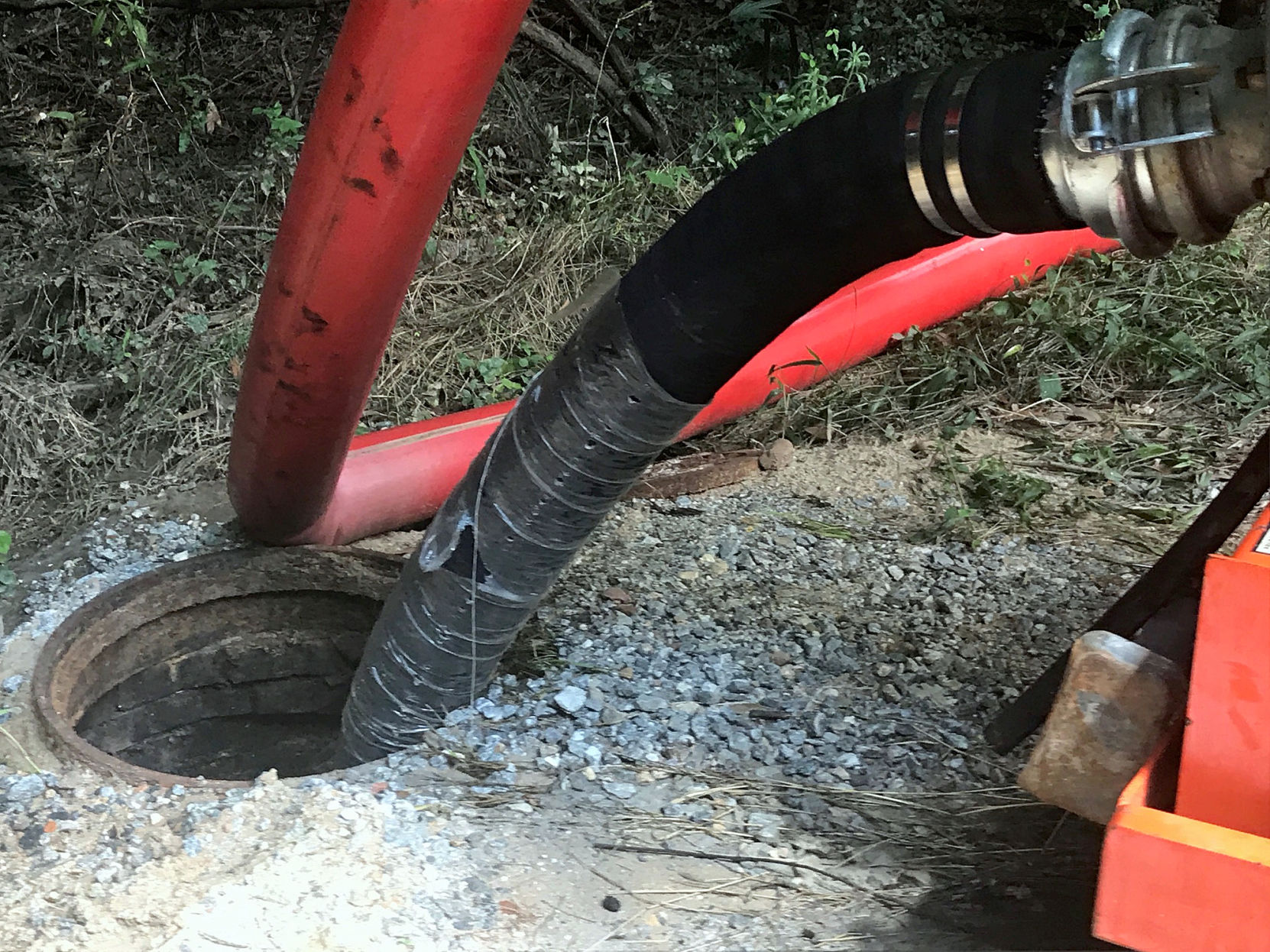
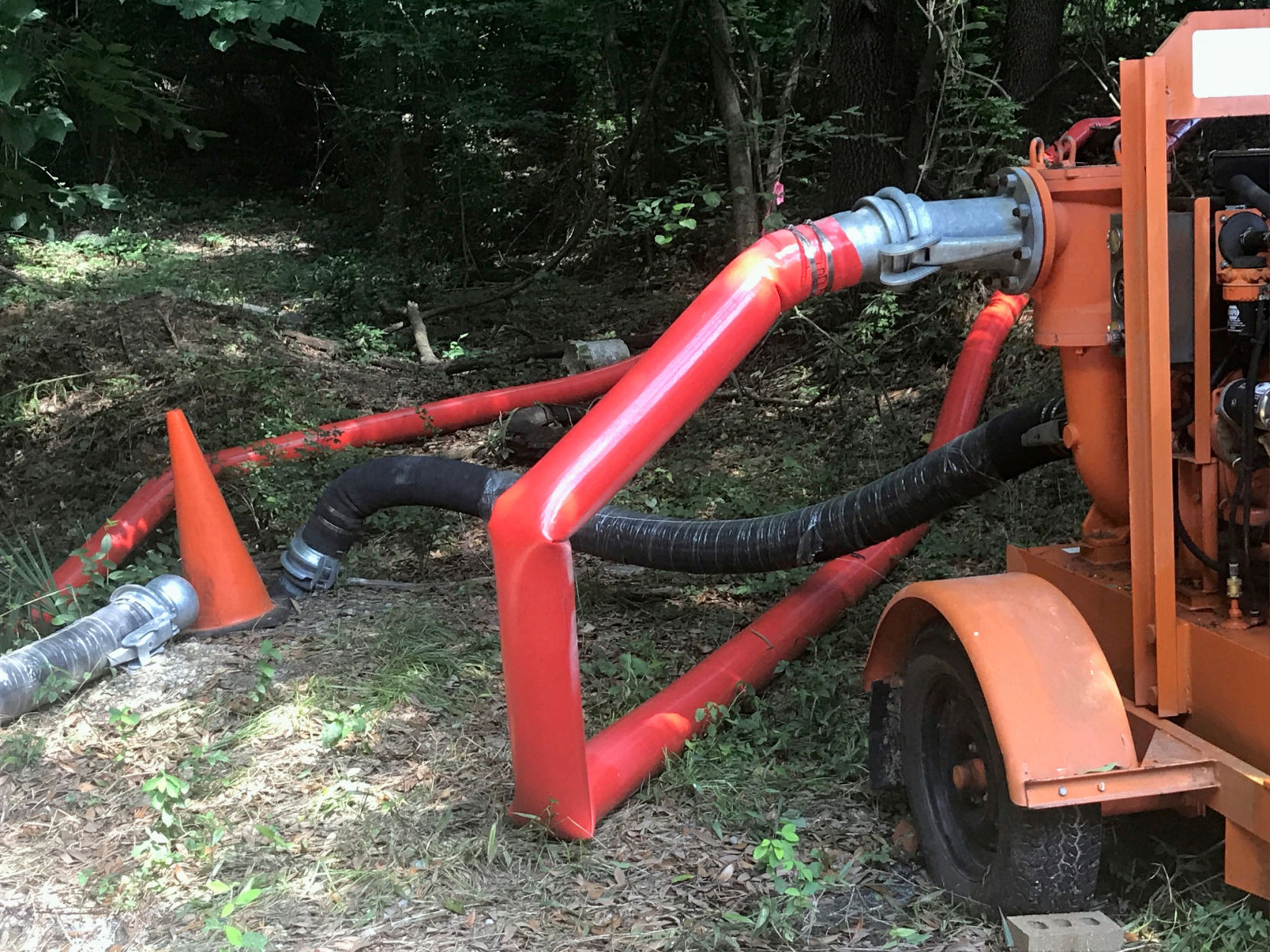
At LS-26 on College Drive, the roar of diesel engines can be heard from the woods below. A pair of large-diameter, bright orange hydraulic bypass hoses can be seen running from the open doorway of the station down through the trees and into the two portable diesel pumps, which in turn had hoses protruding down into open manholes.
The station, itself, surrounded by a 6-foot barbed-wire fence, was locked and inaccessible. But even from the perimeter the stench of sewage was pungent.
Albany City Sewer Superintendent Jeff Hughes confirmed two weeks ago that a temporary bypass had been set up and that repairs were underway.
“We have brought in the diesel pumps to move the sewage in that part of the system around the failed pump and to get it out to the treatment plant,” Hughes told The Herald on June 1. “We hope to have repairs completed soon, but these things take time.”
A follow-up call was placed to Hughes on Friday, but the superintendent was out of the office.
“The lift station issue is just one part of the problem,” Rogers said. “I’ve been calling it the little elephant and the big elephant.”
Rogers explained that Albany’s sewage spillage issue is really a two-part problem. On one hand, there is the issue of the aging and failing infrastructure, the exact kind that led to two spills in May at LS-26 and an earlier spill due to a broken pipe near Turner Landing. There is also the issue of the CSO, which is permitted by the state.
“People need to understand that, yes, the city needs to clean up spills quickly, but they can’t fix all of this infrastructure quickly,” Rogers explained. “So, the little elephant, I don’t know the exact size of it, but the $15 million that the city has allocated, is sort of a down payment. It’s not the whole problem. I don’t know exactly how big it is, but Mrs. Subadan (Albany City Manager Sharon Subadan) has directed staff and the contractor, Jacobs Engineering, to get those estimates to them, and we are looking forward to seeing them.
“She has also directed them to estimate the time and the cost of the CSO issue, and that’s the big elephant. That’s the one where people are really going to get some serious sticker shock. But the quicker we can get past the sticker shock portion of the problem, the quicker we can roll up our sleeves and go find the money.”
Rogers said an issue, with that kind of price tag, could not be simply taken out of the rate base, even over a 10-year period.
“If I had to guess, this is something that will be stretched out over a long time,” he said. “Possibly even into the next generation or two, which is not very popular these days. But nevertheless, it is going to have to be done, because this (tin) can has been kicked down the road by so many previous governments in Albany that it is this government that is going to have to deal with it.”
Rogers cited the career of Atlanta’s former mayor, Shirley Franklin, who was forced to deal with metro Atlanta’s sewage woes and became known as the “The Sewer Queen.” Rogers explained that Franklin turned a dirty job into a political victory.
In fact, Franklin was the recipient of the 2005 John F. Kennedy Profile in Courage Award for her courageous leadership in restoring fiscal stability and ethical government to Atlanta.
It will take this kind of leadership and courage to tackle the big problems that Albany faces, Rogers said.
“Franklin turned a bitter pill into a political win,” Rogers said. “That is the opportunity that we have here now. We have to take the bull by the horns and wrestle it to the ground. That’s the opportunity here, and it is way better than getting into a lawsuit like Riverkeeper did in Atlanta.”
In 1995, Chattahoochee Riverkeeper filed a lawsuit in federal court against the city of Atlanta for failing to control the discharge of raw sewage and other pollutants into waterways from combined sewer overflows.
CRK won the case in 1997 and settled it in 1998.
Subsequently, the U.S. EPA and state Environmental Protection Division pursued an enforcement action, which was made a part of the original lawsuit and was based on a five-month investigation of the city’s entire sewage system.
That investigation resulted in an enforceable plan to overhaul the city’s entire sewage system pursuant to a consent decree overseen by Federal Judge Thomas Thrash with all work to be completed by 2014 at an anticipated cost of more than $2.5 billion.
“Believe me, I’m glad Riverkeeper did what they did in Atlanta, because Atlanta was being recalcitrant,” Rogers said. “They were not playing ball, but the opportunity here is to completely avoid all of that time and millions of dollars of litigation and let’s just start working on the problem here.
“So, I am really happy by what Mrs. Subadan has said during the commission meetings, and I am assuming she has not done that in a vacuum, but she has done that in consultation with her staff and with the mayor. I mean, that is my assumption. So it looks like we are all on the same page. The next step, the city just needs to scope the issue. It’s like any project, if you or I were going to build a deck onto the back of our house, you have to scope it and lay out a budget and a timeline.”
Rogers pointed out again that the issue involves two separate, but related problems.
“Everybody needs to remember that this is two different scopings,” he said. “They are related, because it’s sewage. And they are related because when it rains hard, we have problems that show up in both situations. But, the latent maintenance issue, the force main issue, is a different issue from the CSO issue.
“I have said many times in my career that I wish water problems were easier to explain then they are. Unfortunately, they are complicated. But in a way it is simple – we don’t want human crap going in the river.”
Related Articles
Albany Rescue Mission in recovery but still can use some help
“We can’t do this without the community. We are so grateful for the willing vessels. We just can’t thank them enough. We also appreciate the other ministries that have sown seeds into our ministry.”
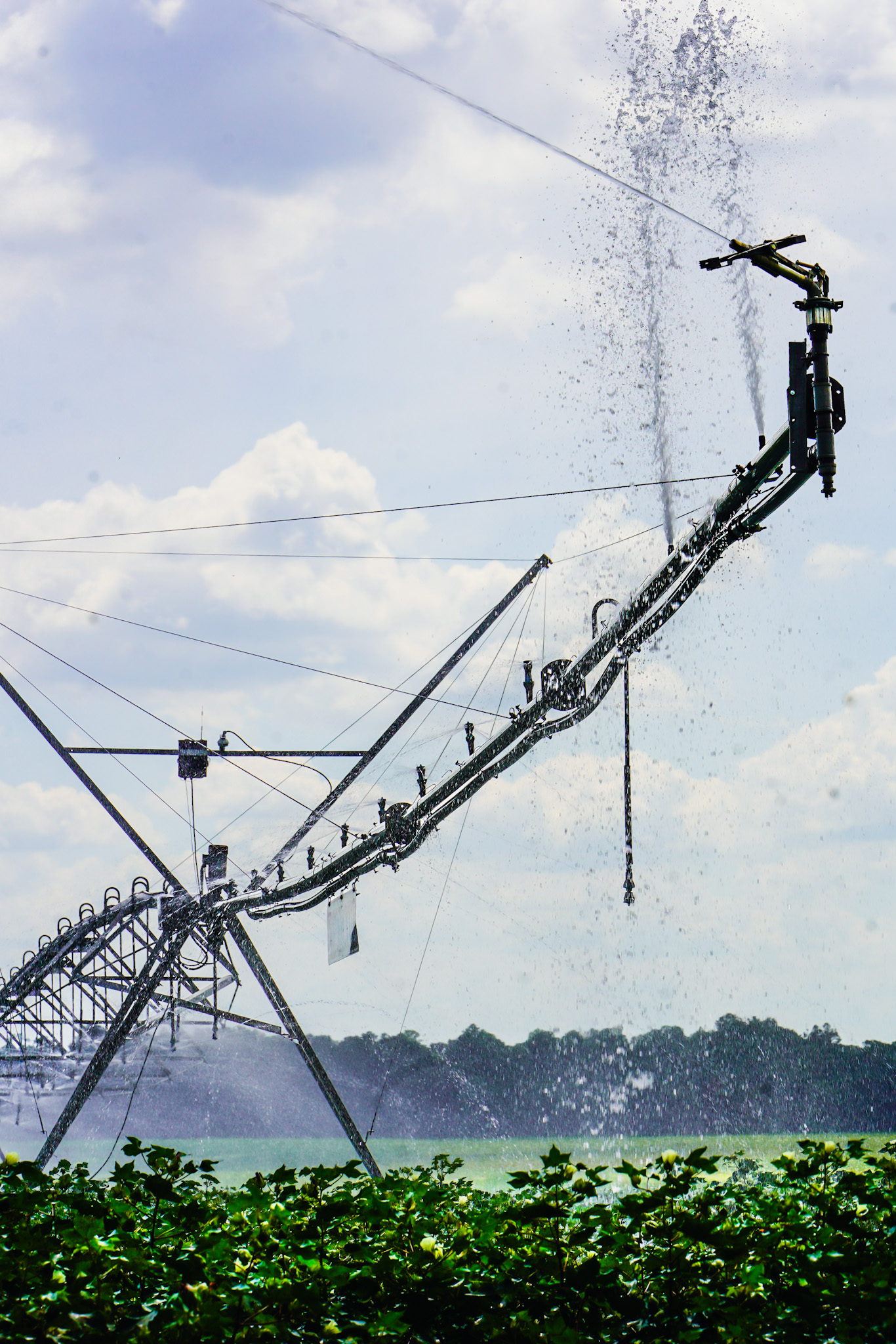
Plenty of oil, not enough diesel — and southwest Georgia farmers are paying for it
Sedrick Rowe doesn’t spray herbicides on his 10 acres of organic peanuts. He fights weeds with his tractor instead, which means he runs it more often than most farmers — and burns at least 30 gallons of diesel on a typical day. This harvest season, every one of those gallons costs more than it has at any point on record.

Dougherty schools plan task force as SNAP changes raise concern over free meals
The Dougherty County School System plans to create a task force to help families retain food assistance and navigate new reporting requirements as district officials warn that declining SNAP participation could eventually affect the federal provision that allows every student to eat free at school.
