
Southwest Georgia experiencing annual flu season peak
Deaths reported in Southwest Georgia due to flu-related illness

By Jennifer Parks
ALBANY — Evidence of a flu peak in Southwest Georgia has been seen in the last two weeks, which was later than what some officials were anticipating.
Southwest Public Health District officials said the activity has not been too much out of the ordinary otherwise.
Officials at Phoebe Putney Memorial Hospital said there had been 10-15 positive flu tests per week in its emergency center, a number that jumped to about 70 in the last two weeks. There have been three deaths connected to the illness reported in Dougherty County this year.
It is not unusual to have a peak in flu activity during the month of February, and Phoebe officials said the current flu season had previously been a relatively mild one. Many other areas of the country have already seen peaks in activity, and officials said it was only a matter of time before it got to Southwest Georgia.
Dr. Steve Kitchen, chief medical officer at Phoebe, said flu typically peaks and starts to decline in late February and early March. While the flu cases remained low in the area, the Centers for Disease Control and Prevention was reporting upticks in the state and nationally.
Eventually, Phoebe began seeing the flu numbers consistent with a peak.
“It looks like the lag we had been seeing is beginning to catch up,” he said.
This year’s vaccine, manufactured annually based on the strains experts believe will be most prevalent, has been reported to be a good match. Kitchen said fluctuations in travel patterns might explain the change in the flu trend this year, but that it was hard to say for sure.
If the usual pattern holds true, the current peak will be shortlived.
“I would be surprised if we see the present number of flu (cases) after the next couple of weeks,” Kitchen said.
Health officials usually stress three things during flu season: vaccination, staying at home until symptom-free for 24 hours and the practice of proper handwashing — or even the utilization of masks, gloves and gowns for those who have weaker immune systems. Young children and the elderly are among those most prone to complications from flu.
Health officials have said that Influenza A is the most common strain this year, which is covered by this season’s vaccination, along with Influenza B. They added that there is potential for a high rate of cases in March and April.
“We continue to monitor flu activity all around Southwest Georgia district,” said Southwest Public Health District Director Dr. Charles Ruis. “It does appear we still have widespread activity around the district.
“Compared to last year, the overall numbers are not higher. There have been some clusters in some areas.”
Ruis said the three deaths are unusual, along with the increased activity seen this year in children that has resulted in heavier school absenteeism. The activity in children has not been explained, but Ruis said it is possible the discontinuation of the nasal midst vaccine has played a role.
“There is still a possibility for flu to stay in the community for another month,” he said.
The Public Health director said he has seen some years in which the peak hits closer to Easter, so fluctuations in activity are not surprising. The recent storms may have played a role in access to flu treatment and flu shots, so his counsel was to expect the unexpected and plan to get the shot early.
“You never know what surprises may come,” he said.
Those developing symptoms of the flu — including chills, sore throat, fever and body aches — are encouraged to get medical attention within 48 hours in order to ensure the effectiveness of the antiviral medications.
“After that, the medication is probably not going to help anybody,” Ruis said.
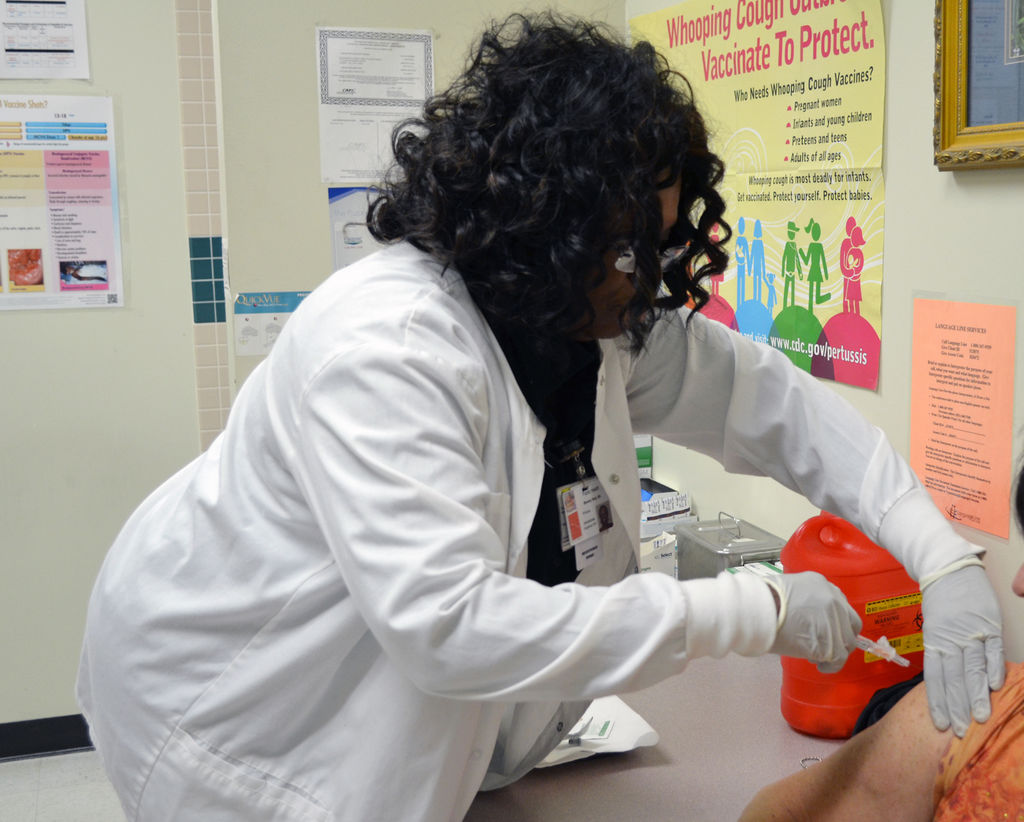
Everyone 6 months of age and older should get vaccinated against the flu, health officials say, and those exposed to or caring for someone with the flu are encouraged to talk to a health care provider about preventive antiviral medications. Ruis said promotions for next year’s flu vaccine will begin in August, prior to availability of the vaccine in September.
Kitchen said those entering Phoebe experiencing flu-like symptoms are encouraged to notify hospital personnel.
The Georgia Department of Public Health (DPH) reported the first flu death of the season in the state on Jan. 10. For the week of Feb. 19-25, the most recent week for which data is available, DPH reported “high influenza-like illness activity in Georgia with widespread occurrences of sustained flu transmission.”
During that week, there were 67 hospitalizations due to flu, making for 704 hospitalizations in the state during the flu season overall.
Those seeking additional information on flu are encouraged to speak to their county health department or health care provider.

Related Articles

Dougherty Commission OKs agreements for trash traps, Radium Springs Grant effort
The placement of two traps will help take a bite out of the amount of trash making its way into the Flint River. The Flint Riverkeeper and partners will be involved in placing, monitoring and monitoring the traps as well as removing and disposing of trash and recyclables.

Albany officials ponder future needs, mull tax hike
“Utilities have to sustain themselves. They can’t be fleeced. They can’t be (starved) to the point they can’t provide the services.”

Albany Police Chief Michael Persley to retire in February after 33-year career
“That doesn’t mean I’m going to disappear from Albany, Georgia. There are other things I will be involved in. This is not retire and go just sit in the rocking chair.

