
Titan Medical provides important tools to doctors to combat opioid epidemic
Compliance monitoring important tool in nationwide fight against drug abuse
By Jon Gosa
ALBANY — As the nation’s opioid crisis continues to escalate, becoming the leading cause of death in the United States, one business in the Albany area, Titan Medical Marketing, is working to combat the growing epidemic.
Titan Medical Marketing, founded in 2012, is a medical marketing firm that trains and manages a sales force in partnership with manufacturers, pharmacies and laboratories operating on the front lines of what health officials are calling a national emergency.
“The company started as an arm of a pharmacy,” Titan Managing Partner Jo Cotroppa said. “We grew to add more product lines and specifically focused in the pain management and addiction area.”
Addiction and opioid abuse/death have exploded in the U.S. over the last few decades, according to The National Institute on Drug Abuse (NIH). In 2016, more than 2 million Americans had an addiction to prescription or illicit opioids.
NIH reports that during the late 1990s, pharmaceutical companies reassured the medical community that patients would not become addicted to prescription opioid pain relievers, and health care providers began to prescribe them at greater rates.
This subsequently led to widespread diversion and misuse of the medications before it became clear that they were indeed highly addictive.
The number of opioid prescriptions dispensed by doctors steadily increased from 112 million prescriptions in 1992 to a peak of 282 million in 2012, according to the market research firm IMS Health. The number of prescriptions dispensed has since declined, falling to 236 million in 2016.
The incredible volume of opioids dispensed during that time has resulted in thousands of deaths.
The Centers For Disease Control and Prevention reports that, during 2015, 52,404 overdose deaths were reported in the United States, including 33,091 (63.1 percent) that involved an opioid; an average of 91 opioid overdose deaths each day, a figure that outnumbers traffic crashes and gun-related deaths.
Cotroppa explains that the services of Titan Medical and their laboratory partner, Infinitilabs, provide doctors with a powerful weapon to combat the growing crisis and an opportunity to be compliant with existing Georgia Medical Board regulations.
“Titan, with our main partner Infintilabs, helps doctors make sure that their patients are being tested (through drug screenings) in compliance with their medical management,” Cotroppa said. “That way, doctors know that the medications that they are prescribing are in the patient’s bodies, and what else could, potentially, be in there that could cause the patient problems.”
Georgia Composite Medical Board rules require regular medical drug screening for anyone prescribed Schedule II or Schedule III controlled substances.
Georgia Composite Medical Board Rule 360-3-06 (pain management) states, “When prescribing a Schedule II or III controlled substance for 90 consecutive days or greater for the treatment of chronic pain arising from conditions that are not terminal or patients in a nursing home or hospice, a physician must monitor compliance with the therapeutic regimen. This means that body fluid analysis (drug screens) must be performed at least four times a year on a random basis or done at the same frequency proportionate to the period of treatment.”
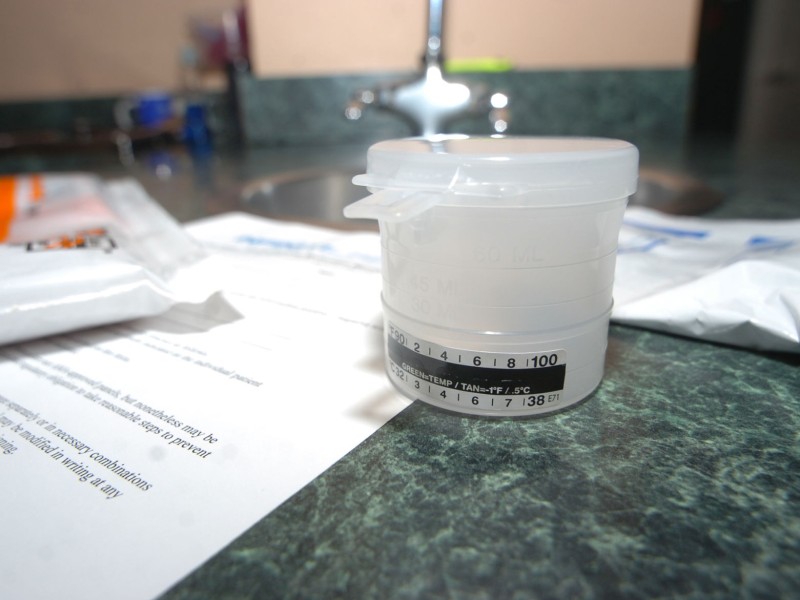
Cotroppa explains that Titan/Infinitilabs provides extremely accurate “confirmation testing” or screening services, which provide doctors with potential life-saving information about their patients.
“If you were just to get an in-office test, that’s just a qualitative test,” Cotroppa said. “That kind of test basically tells you yes or no if a potential substance is in the urine. With confirmation testing, it is a quantitative test. We can tell you exactly how much is in the urine, and we can tell you which metabolites from certain medications are in the system. With an in-office or over-the-counter test, there is a huge probability of false positive or negative results. That is the chance you take when you only do that type of testing and you don’t send it off for confirmation testing.”
According to Cotroppa, it is vital to monitor patient compliance for several reasons, including protecting the health of the patient by ensuring that there are no other substances in the patient’s system that could produce an adverse reaction to the prescribed medication; protecting the doctor, in case there was an adverse reaction resulting in injury or death, by confirming the doctor performed his/her due diligence; and to the public at large, by keeping highly addictive medication out of the hands of drug dealers and off the streets.
“These are highly addictive medications that can not only impact the patient, but can also cause problems within the home,” Cotroppa said. “There is obviously a large black market for selling these medications. Overall, they are controlled substances for a reason. If a doctor performs testing and the prescribed medication is not in the patient’s blood, that should be a red flag. Now, whether the patient is giving that medication to a family member who needs it or they are selling it, those are both real possibilities and things that we encounter on a daily basis.
“Any doctor who is prescribing those medications without testing a patient is taking an enormous risk. From a litigious standpoint, if a patient is distributing a narcotic that his/her doctor wrote a prescription for, then there are serious medical legal implications for that doctor. Also, as a doctor, if you are taking the Hippocratic oath of ‘Do no harm’ and prescribing highly addictive medications with no boundaries, then how are you living by that do-no-harm philosophy?”
Raising awareness about the importance of drug screening patients prescribed controlled substances, and doctor participation — which remains an issue, Cotroppa said — could make a big impact on the fight in the opioid crisis.
“We believe Titan is a conduit to help these offices perform these duties in an efficient way that does not burden the practice while providing a better level of service and health care to the patients,” Cotroppa said. “This is a no-cost service to the office. We are there to perform the tests, help them interpret results, put protocols in place and really to become a partner to the office. Our reps are going to be there to ensure better patient care and safety. Titan provides the work force, and it costs the office nothing. The only reason a doctor would not want to do this is because he knows his patient is doing something wrong, and they don’t want to lose patients.”
Asked if Phoebe Putney Health System doctors were compliant with GCMB 360-3-06, Phoebe Chief Medical Officer Dr. Steve Kitchen said the hospital closely follows rules established by the Georgia Medical Board.
“Phoebe’s current practice for monitoring patients who, as a result of their care, are being prescribed Schedule II and III drugs is entirely consistent with Georgia Composite Medical Board rule 360-3-06,” Kitchen said. “Phoebe physicians who see these patients in the hospital or in Phoebe clinics do have written contracts with those patients and must see them at least every three months, in full compliance with the rule. As appropriate, patient drug testing is performed to ensure compliance with the medication regimen prescribed.”
For more information about Titan Medical Marketing, visit Titanmm.net.
Related Articles

Dawson approves $68K excavator purchase after months of contradictory public statements
The decision concludes one portion of a controversy that has generated months of public scrutiny but leaves several unanswered questions regarding how the city’s original machine was damaged, whether employees were held accountable and what documentation supports the decision to replace rather than repair it.

Dawson proposes borrowing up to $420,000 to stay afloat as finances unravel
Documents obtained by The Dawson News show city officials are proposing to balance the budget through a transfer from the Public Utilities Fund while simultaneously seeking authority to borrow as much as $420,000 from a private financial institution to continue meeting payroll and other operating expenses as Dawson works to complete financial audits that have remained unfinished since 2023.

Small actions can help save big on utility bills
The high temperatures of July and August can bring scorching utility bills as air conditioners hum to keep houses cool. Albany Utilities Residential Conservation Auditor Willie Jackson offered some tips on making summer cooling bills more manageable.
