
Vigilance encouraged in fire prevention
Albany Fire Department involved in community outreach to promote fire prevention education
Jennifer Parks
By Jennifer Parks
ALBANY — Vigilance can go a long way in preventing disaster, including fires and burns.
The National Fire Protection Association has a role in educating the public on fire hazards and preventing the injuries associated with them. At the Albany Fire Department, Eugene Anderson, assistant chief of fire prevention and education, is among a group of individuals with the responsibility of spreading that message.
“Our hope is that we heighten awareness to the public,” Anderson said.
The focus is often geared toward children and the elderly, because they are usually limited in their capability to defend themselves. With children, Anderson promotes the 3-foot rule while dinner is still on the stove.
“If kids are 3 feet away from the stove, what are the chances of them getting burned?” he said. “And turn the handle in and not out.”
The NFPA said U.S. fire departments responded to an estimated average of 172,100 home structure fires per year started by cooking activities in 2012-2016, or an average of 471 home cooking fires per day. These fires caused an average of 530 civilian deaths, 5,270 reported civilian fire injuries and $1.1 billion in direct property damage per year.
Anderson recommends taking a spoon when it is necessary to leave the kitchen while something is cooking as a reminder that the stove has been left unattended. He also said it is important to check the water heater and pay attention to where it is set.
He noted that the 3-foot rule is good to practice anywhere else in the house. When using a portable space heater, it should be at least that far away from anything that can catch fire. The use of kerosene heaters is discouraged without taking extreme caution.
“If a person is going to use a kerosene heater, your biggest concern is that heater turning over,” Anderson said. “(It is recommended to use) an electrical space heater with a lab sealer, (which means) it has been laboratory tested and signed off on.”
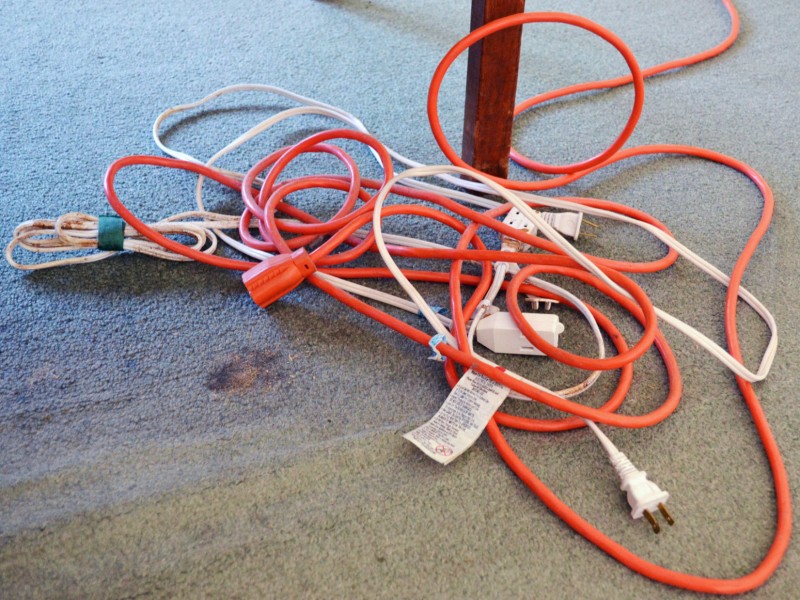
Electrical fires are often the result of frayed wiring, as well as the overuse of extension cords.
“Extension cord usage should be at a minimum,” Anderson said. “Don’t put anything on an extension cord that carries a lot of power. If your breaker is constantly going off, it is pulling too much amperage. When that happens, an electrician really needs to take a look at the wiring.”
Between 2010 and 2014, U.S. municipal fire departments responded to an average of 45,210 home structure fires involving electrical failure or malfunction. These fires caused annual averages of 420 civilian deaths, 1,370 civilian injuries and $1.4 billion in direct property damage, the NFPA said.
Candles getting too close to something that can catch fire, or falling over, is also a common way for a blaze to start. Anderson said it is recommended to use battery-operated flameless candles and battery-powered lights. When a candle has a real flame, use safe and sturdy candleholders.
“Avoid bedroom, bathroom and sleeping areas (with candles),” he said. “Extinguish (the candle) when you leave the room or go to bed, and keep children and pets away from candles.”
In 2011 through 2015, U.S. fire departments responded to an average of 8,690 home structure fires that were started by candles per year, the NFPA said.
Anderson said before a fire does occur, there should be an escape plan involving at least two routes out and the establishment of a meeting point for all family members to ensure everyone is accounted for.
“Having the plan is only the first step,” he said. “You need to practice the plan.”
Anderson is one of a group of fire personnel going into schools, community events and day cares as part of its community outreach to expand fire prevention education, fire extinguisher training and tips on what to do when in a building that is on fire — such as staying low, opening the window to alert firefighters that someone is in the house and sheltering in place if escaping is impossible.
The goal of the AFD is to get more aggressive in its outreach.
“People think, ‘It will never happen to me’,” Anderson said. “It’s good to get to that safe place in your head, but what have you done to make sure that it doesn’t happen to you?”
For more information on fire education, visit www.nfpa.org.
Related Articles

Dougherty Commission considers $104 million budget for 2026-2027 budget year
“The other side of the coin is you could have higher revenues than projected. We’re very conservative in budgeting revenues. That also reduces the need to use fund balance”

Albany police investigate suspicious Sunday death
A 21-year-old Turner Job Corps student who was found unresponsive on Sunday evening was later pronounced dead at Phoebe Putney Memorial Hospital. The death is under investigation.

James Rubino installed in new role at Marine Corps Logistics Command in Albany
James L. Rubino recently assumed the role as executive deputy of Marine Corps Logistics Command in Albany. In his new role he will oversee integrated logistics support.
