
Michael Persley: From ‘CHiPs’ to Albany police chief
Jim West
ALBANY —Watching cop shows on television with his dad in their South Harding Street home, a young Michael Presley had a yearning to someday be in law enforcement.
“My dad used to watch ‘CHiPs’ on TV,” Persley said. “’The Blue Knight,’ ‘Police Woman’ with Angie Dickinson, ‘Ironside.’ That’s what drew me.
“I had a friend across the street who was also into ‘CHiPs’ and the two of us would find sticks that looked like handlebars so we could act like we were on motorcycles.”
Fast forward to today and Persley is chief of police of the Albany Police Department. At a recent lunch interview at the Longhorn restaurant on Dawson Road, Persley spoke over a chicken and strawberry half salad about growing up in Albany, his military background, his ideas on fighting crime and how he plans to operate as chief. Persley was accompanied by APD spokeswoman and public relations head Phyllis Banks.
Persley’s older brother and sister had served in the Army, and that intrigued him. The plan became to wear a different sort of uniform than police blues for 20 years or so, then retire and go into law enforcement.
“I originally signed up with the Navy because I wanted to do something different,” Persley said. “But when I graduated high school, I didn’t make the final cut because I had mild hypertension. Well, everybody has mild hypertension. I needed a job, so what do I do?”
What Persley did, he said, was to go to work for Hardee’s restaurant on East Oglethorpe Boulevard. Then in August 1989, he enrolled at Darton College.
“I wasn’t sure how to go about it, but I knew I’d need an education to become a police officer,” Persley said. “When I finally applied in March of 1992, I got as far as the polygraph exam, but they didn’t call me back. That’s when I joined the Army National Guard.”
When Persley returned from Guard training, he applied once more to the Albany Police Department. This time he was hired by then-Chief of Police Washington Long.
“In my mind, the difference was that the military kind of polished me a little,” Persley said. “I was cleaner, crisper and more disciplined about myself. Since then, I’ll say that not being able to enlist in the Navy was a blessing.
“We all have paths we want to take, but a lot of times God determines how you’ll get there. I can’t honestly say that everything I’ve received so far is because I’ve done it by own ability.”
Persley feels that his “generalist” background in law enforcement and the military prepared him for the chief’s hat he now wears. During his career, he’s worked at “most everything” in law enforcement, he said, including patrol, investigations and commander of the APD East District.
“Some people want to become subject matter experts in just their one area,” Persley said. “At one time, I wanted to be a traffic investigator so that when I retired I could work as an insurance investigator. Doing that, I could easily have become a subject matter expert. But when you get to the position of a lot of leadership and authority, are you really ready to oversee that?
“When you sit at the top of any organization and you get to know what the people in the mail room are doing, delivery guys, the program managers, you have a better view of your agencies. I understand the day-to-day operations of a police department.
“When I was East District commander, I took it as being chief of that district. I was in charge of 33 officers. Look at the average-size police department in the U.S., against the area I had and you could classify me as chief on the lower scale of a mid-sized police department.”
Intervention is something he sees as necessary to keep youngsters off a criminal path. According to Persley, there’s no easy way to predict whether genetic or environmental factors might change an otherwise “normal” child into a hardened criminal.
“There are so many factors involved in the making of a criminal,” Persley said. “Two people could grow up in the same socio-economic situation and have a totally different view. It mostly depends on the upbringing. I grew up with people whose parents had good jobs and lived in nice neighborhoods, but they made the wrong decisions and hung around with the wrong folks.
“When it comes juvenile offenders, I believe in intervention and prevention. Now, sometimes to get to that point a person has to be charged with a crime and go through the appropriate judicial system. There’s a guy in town telling everybody I saved his life because I charged him with a crime, he went to jail, got involved with a substance abuse program, and now he’s off drugs for several years.
“I’d much rather a child have just one blemish on their record and because of the one brush with the law he makes a conscious effort that ‘I don’t want to go through that again.’ Usually juveniles have just made a bad decision, and as long as that’s outside of the seven deadly sins (murder, rape, kidnapping, armed robbery, aggravated child molestation, aggravated battery and aggravated sodomy), there’s always a way they can recover from that.”
Related Articles

Albany police investigate suspicious Sunday death
A 21-year-old Turner Job Corps student who was found unresponsive on Sunday evening was later pronounced dead at Phoebe Putney Memorial Hospital. The death is under investigation.
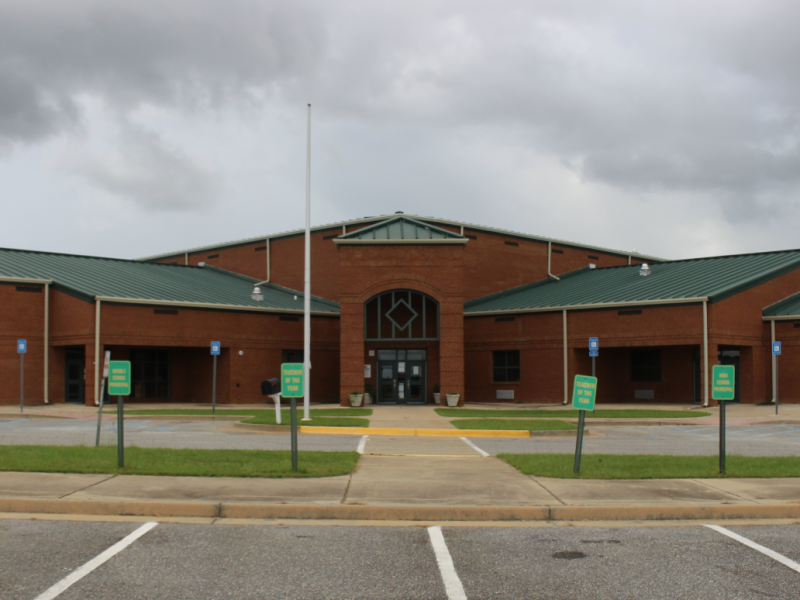
Unexplained checks, missing records, benefit errors surface in Terrell schools audit
A payroll performance review commissioned by the Terrell County School System found widespread documentation deficiencies, unexplained payroll discrepancies, inconsistent employee benefit deductions and weaknesses in internal controls, while also crediting district leadership for taking steps to improve oversight after significant staff turnover.

Terrell schools project $1.36 million revenue decline in proposed FY ’27 budget
The Terrell County Board of Education is scheduled to receive Superintendent Dr. Shereca R. Harvey’s monthly report and review budget information during its regular meeting at 7 p.m. tonight, Monday, June 22, with agenda materials outlining the district’s current financial position, fiscal year 2027 projections, a new grant award, state policy updates and enrollment trends.
