
Phoebe engages in patient safety partnership
HPI has led comprehensive safety culture transformations in more than 1,300 hospitals
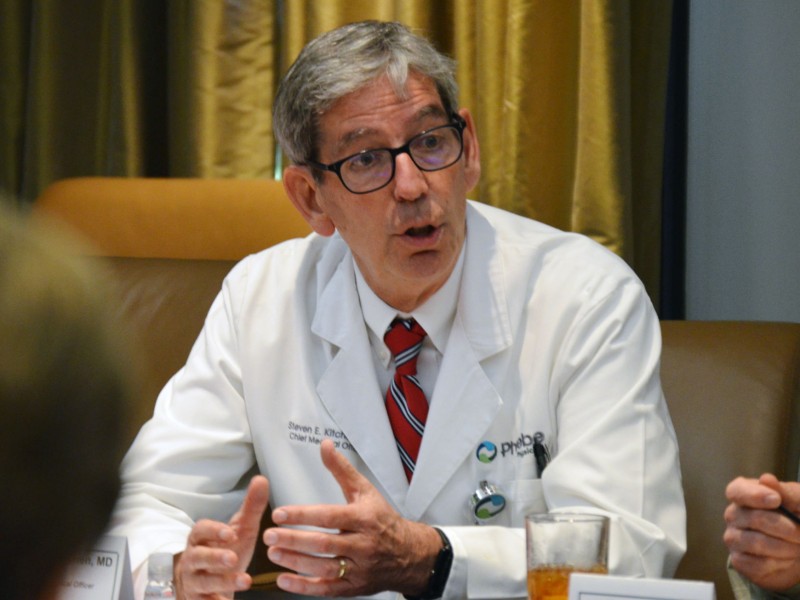
File Photo
By Jennifer Parks
jennifer.parks
@albanyherald.com
ALBANY — Is it possible to attain zero preventable harm in a hospital setting? Phoebe Putney Memorial Hospital Chief Medical Officer Dr. Steven Kitchen says it is.
In its quest to improve patient safety at the hospital, Phoebe has engaged Healthcare Performance Improvement, a subsidiary of Press Ganey, to help it reach that goal.
“We made this decision to help better meet patient needs,” Kitchen said in a presentation to the Hospital Authority of Albany-Dougherty County at its meeting Thursday.
Healthcare Performance Improvement, or HPI, has led comprehensive safety culture transformations in more than 1,300 hospitals, including several in Georgia. It has a reputation for positioning safety as a core value and leverage point for realizing improvements in safety, quality, patient experience and physician and staff engagement.
The results have been reduction in serious safety events, decreased professional liability exposure and claims.
Kitchen said the tipping point in health care is seen in the 1999 “To Err is Human” report from the Institute of Medicine.
The report showed that up to 98,000 deaths annually were due to medical errors, the No. 8 leading cause of death in the United States.
“That is when the patient safety movement began,” Kitchen said. “That was the tipping point in health, and we are not seeing the rate of change in patient safety that the patients deserve.”
Kitchen said safety problems occur due to increased complexity with few standards, a rapid rate of technological change, information overload, and reliance on memory, multiple and competing regulations, a culture of autonomy in medicine, and poor communication and unreliable handoffs.
Technical and procedural improvements have made surgery safer, but future innovation will focus on reliably organizing patient care, Kitchen said.
He added that the five principles of a high reliability organization (HRO) are a preoccupation of failure, sensitivity to operations, deliberately questioning assumptions, commitment to resilience and deference to expertise regardless of rank.
As such, high reliability organizations earn their status by changing processes to anticipate human errors and correcting them before they result in harm.
In addition, they aim for a singular goal of zero harm achieved through cultural transformation rather than technical improvement tools while keeping safety as a core value. A system error taking place on one floor can impact another, and everyone from the medical student to the senior manager has a responsibility to speak up.
“I think taking a team approach and peer coordination is going to be the secret sauce,” Kitchen said.
The approach HPI uses is the time-tested methods and practices of other HROs.
“Rather than focusing on traditional process improvement as a means to better outcomes, HROs place a concurrent focus on and integration of process design and human behavior accountability,” Kitchen said in the presentation. “While process improvement focuses on detecting and correcting system errors, behavior accountability focuses on the prevention of the human error that leads to events of harm or untoward outcomes.”
Kitchen said the engagement with HPI will come in five phases, from initiation through sustainability, including an in-depth diagnostic assessment. The process will take 30 months overall, with diagnostic assessment and implementation planning taking five months.
The other 25 months are dedicated to implementation and sustainability. The entire Phoebe work force is to receive training.
Commitment from Phoebe’s medical staff, senior leadership, board and Phoebe Putney Health System President and CEO Scott Steiner has been placed on the table.
“This is a process about accountability,” Steiner said. “Even if you are wrong, it is O.K. It is worth it taking a few seconds, or a few minutes, to keep the patient safe.”
Related Articles

Strother’s District 4 seat headed to March 16 special election
The Dougherty County Board of Education accepted Melissa Strother’s resignation Nov. 9. It also asked for a special election on March 16, 2027, so District 4 voters can choose who will fill the term she won but will not serve.
PHOTOS: Albany State-HBCU-UP Showcase
Click the arrow to scroll through the photos.

Beyond the holidays, Albany Homeless Coalition urges ongoing support
The Albany-Dougherty Homeless Coalition brought service providers together at the Albany Civic Center on Tuesday to offer food, clothing, health screenings and help accessing veterans benefits, while organizers urged the community to look beyond the holidays at the needs of people without stable housing.
