
AARON JOHNSON: Are the job numbers fake now?
GUEST COLUMNIST: President Trump is touting numbers in labor report he previously dismissed
By Aaron Johnson
When similar results were posted in past employment data, Trump was dismissive and calling them lies. Now that the first labor report of his nascent presidency has been released, he is changing his tune. Trump officials are now openly touting the numbers as evidence that they are facilitating change. In reality, it is not much different than what we have seen over the last year.
There was an increase of 235,000 jobs and a modest decrease of the unemployment rate is 4.7 percent. Certainly, this is a positive development, but we should also recognize that there were 2,000 more jobs created at this time last year.
Having said that, Trump should receive some credit for the upbeat news. His promise to introduce more business-friendly legislation is being warmly received by business leaders and that’s reflected in bulging stock markets. Also, his efforts to reduce environmental oversight has already reaped benefits in manufacturing. After a long period of stagnant growth, there have been 57,000 jobs added in the past three months with almost half of that total occurring in February.
On the other hand, there hasn’t been demonstrative change in other employment factors. The labor force participation rate has changed little to 63 percent from 62.9 percent last year. Also, the employment-population ratio edged up slightly from 59.8 percent to 60 percent. An alternative measure of unemployment accounting for those only marginally attached to the labor force dropped to 9.2 percent. While continuing a long-running downward trend, its rate was matched as recently as last December.
As for wage growth, it continues to fall short of the 3 percent threshold that’s been elusive in recent history. In fact, we haven’t reached that growth level in almost six years. Currently, wages have grown by 2.5 percent over the past 12 months. While that’s better than last month, the average wage growth for the first two months of this year (2.3 percent) is slightly behind last year’s pace of 2.4 percent.
Until Trump passes a legislative agenda that reflects changes to taxes and regulation, it is unfair to judge his record, regardless of whether the future economy expands or contracts over the next few months. Let’s wait until this time next year where we can then more accurately measure his economic stewardship as commander-in-chief.
In summary, the employment picture is brightening, but that trend started long before the inauguration of Trump last November. It is more accurate to say that he effectively crafted a misleadingly gloomy view of employment prospects that elevated him to an improbable victory.
What’s fake is insinuating that the labor market is only now experiencing positive change.
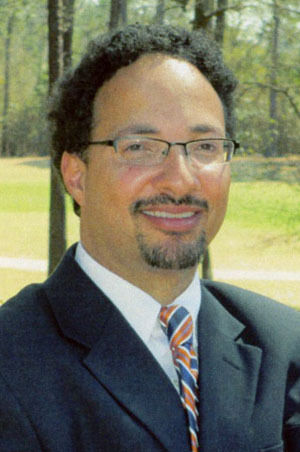
Aaron Johnson is an assistant professor of economics at Albany State University. In this role, he is also ASU’s economics spokesperson, contributing to TV, newspapers and community groups as a resource to local, regional and national economic trends.
Related Articles

TARA FLETCHER: Women are often trapped by abusive partners
Today, and every day after, in the United States, three women will be murdered by their significant other.
CARLTON FLETCHER: Great — and maybe not so great — expectations
During his heyday, mostly in the ‘80s and ‘90s, Lewis Grizzard was one of, if not the, most celebrated columnists in America.
MICHAEL FERGUSON II: A family reunion, an AR-15, and the truth America must face
A family reunion should never become a battlefield.
