
BO DOROUGH: City wants equity in LOST tax distribution
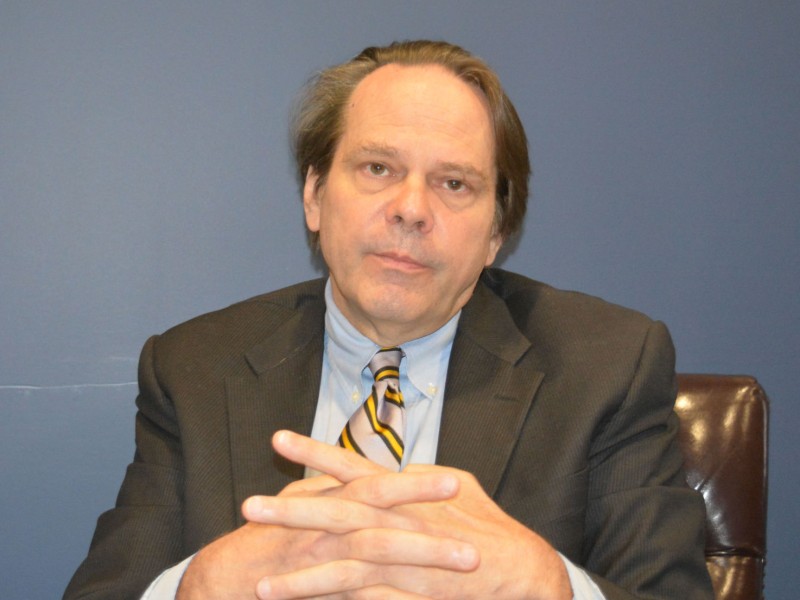
File Photo: Alan Mauldin
By Bo Dorough
The city of Albany and Dougherty County are currently negotiating how to share a 1% Local-Option Sales Tax, which provides an important source of revenue for both local governments, while also providing property tax relief for homeowners and businesses.
The city has historically received 60% of the revenue, and the county has received 40%. The distribution has remained the same, despite the fact that Georgia law directs local governments to renegotiate the allocation within two years of each decennial census. The statute that governs calculation of the proper distribution of LOST prioritizes population and service delivery. By those standards, Albany is entitled to a significantly larger share of these tax dollars.
The city, in the past, has agreed to less than its fair share, because the county has veto power. If the county doesn’t sign a renegotiated certificate, LOST collections expire.
Dec. 30 is the deadline for filing the renegotiated certificate with the State Revenue Commissioner. It is imperative that local elected officials reach an agreement by that date; failing to do so would potentially sacrifice more than $200 million, which would be collected over the next decade. A large percentage of LOST is, of course, paid by visitors and shoppers from surrounding counties. Failing to continue LOST collections would needlessly shift a greater burden onto our property owners.
A comparison with other communities shows how out of balance we are here in Dougherty County. Brunswick residents are 19% of Glynn County’s population, Dalton residents are 32% of Whitfield County’s population, Gainesville residents are 19% of Hall County’s population, Newnan residents are 26% of Coweta County’s population, Rome residents are 38% of Floyd County’s population, and Savannah residents are 51% of Chatham County’s population.
Brunswick receives 27% of the LOST collected in Glynn County, Dalton receives 36% of the LOST collected in Whitfield County, Gainesville receives 17% of the LOST collected in Hall County, Newnan receives 31% of the LOST collected in Coweta County, Rome receives 42% of the LOST collected in Floyd County, and Savannah receives 57% of the LOST collected in Chatham County. In contrast, Albany’s share of the costs of services provided throughout the county far exceeds 60%.
Put simply, Albany provides the most services to the most people.
The challenges that confront Albany and Dougherty County are compounded by population loss. Dougherty County’s population declined by more than 9% from 2010 to 2020, and the city’s population went down by more than 10%. LOST collections were $17,119,808 in 2000, fell to $16,638,851 in 2010, and were $17,187,175 in 2020. (The purchasing power of $17,119,808 in 2000 dollars was almost $26 million in 2020.) Both local governments are struggling with recruiting and retaining employees, particularly those working in public safety.
The challenges confronting the city are magnified. Albany is in the process of moving forward with major construction and infrastructure projects. The city has nearly twice as many employees, with 1,170 budgeted positions, compared to the county’s 650.
The City Commission and County Commission met on June 29, at which time the city proposed to “right size” the distribution, with 70% to the city and 30% to the county. The County Commission insisted that it continue to receive 40% of the LOST proceeds.
In such situations, Georgia law calls for local governments to choose mediation or arbitration. The city requested arbitration, in which a disinterested neutral considers the statutory factors and issues a decision. A mediator, on the other hand, seeks to facilitate a compromise between the parties. Whereas arbitration is an open meeting, mediation is confidential. The city eventually acquiesced to the county’s insistence that the issue be submitted to mediation and further accepted the mediator initially proposed by the county.
The County Commission has consistently sought to deflect negotiations from the statutory considerations by offering irrelevant arguments, such as the fact that the city has other sources of revenue, including utilities. Chairman (Chris) Cohilas was quoted as saying the mediator was unnecessary, even though the county’s inaction after the June meeting required the intervention of a third party. He referred to the mediation as “an embarrassment to the entire community” — even though it was the County Commission that compelled mediation when it rejected arbitration. If anyone should be embarrassed, it is those county representatives who walked out of the mediation rather than endeavor to resolve the distribution of LOST proceeds in a professional and an equitable manner.
One member of the County Commission was quoted as saying: “We just want the thing the same as it’s always been.” The City Commission is simply seeking a distribution that is compatible with state law and sufficient to assure the city will continue to provide efficient services to its citizens without increasing property taxes.
There are those who contend this is a senseless dispute, as “all of the money is dedicated to the benefit of the people of Albany and Dougherty County.” This is incorrect, as not one dime paid to the county is spent on resurfacing streets, funding recreation programs, installing sidewalks and streetlights, etc. in the city, or paying the salaries of policemen or other city employees, even though city residents are county taxpayers as well.
Citizens should be aware that the county has significantly raised property taxes over the past decade. In 2013, the millage rate of the three taxing entities (the city, the county and the Dougherty County School Board) was 40.529. A resident with a home having a fair market value of $150,000 paid $2,431.74 in property tax. The millage rate is now 46.762, and a resident with a home having a fair market value of $150,000 will pay $2,805.72 in 2023. The county is solely responsible for this increase, as its share of the millage rate, which was 11.894 in 2013, is currently 19.069. The city and school board have both lowered their millage rates. The county, as a result of these millage rate increases, will receive nearly $14 million more from property owners in Albany and Dougherty County in 2023 than it received 10 years ago.
The City Commission, at its regular meeting on Dec. 13, voted to propose a distribution, whereby the 60/40 split would continue for another four years, until July 1, 2027, when the allocation would change to 61% for the city and 39% for the county. The city share of the allocation would increase by 1% each year, until 2032, when the split would be 66% for the city and 34% for the county.
The County Commission met on Friday and rejected this proposal without discussion.
The city’s proposal would minimize any difficulties that would result from the county receiving a decreased share of LOST collections. (The county received $7.5 million from LOST in FY 2022, and would receive $8.3 million in 2027, should it accept the modified distribution.) The city’s proposal will, moreover, move the two local governments incrementally to a distribution that more accurately reflects population and service delivery.
The County Commission has not indicated it would reduce the county’s millage rate, which is currently 2 times that of the city, should the current allocation be continued.
Every resident of Dougherty County has a stake in assuring that LOST collections are continued. Every citizen concerned about maintaining the level of current services and avoiding property tax increases should encourage their county commissioners to approve the city’s proposal, which finds common ground and would avoid the financial catastrophe which would result should LOST be allowed to expire.
Author

Related Articles

TARA FLETCHER: Women are often trapped by abusive partners
Today, and every day after, in the United States, three women will be murdered by their significant other.
CARLTON FLETCHER: Great — and maybe not so great — expectations
During his heyday, mostly in the ‘80s and ‘90s, Lewis Grizzard was one of, if not the, most celebrated columnists in America.
MICHAEL FERGUSON II: A family reunion, an AR-15, and the truth America must face
A family reunion should never become a battlefield.
