
EDITORIAL: Stopping crime is a complex job
There are no simple solutions to stopping crime

By The Albany Herald Editorial Board
A rash of violence over a period of about two and a half hours Tuesday night had a sad toll. Four incidents involving gunfire resulted in three deaths and three injuries.
Details on the events were scarce Wednesday, but three people died in a shooting at an East Alberson Drive residence, leaving a child and a toddler, who, thankfully, were physically unharmed. Later in the evening, two shootings were reported near each other in another area of town, and in a fourth incident at a Clark Avenue convenience store, a man who works as a clerk there was shot by one of two men who he said were trying to steal his car.
The shooting deaths Tuesday make four this month. Going into the month, seven people were listed as murder victims in the city of Albany from Jan. 1 to May 31. That was one more murder than the six that had been reported by the end of May in each of the two previous years. Seven had been reported by the end of June last year, though one was later reclassified.
These latest crimes also come in a year that saw fewer crimes reported through the first five months of 2017 in all the major categories except murder. From Jan. 1 until May 31, APD crime stats released June 9 show, there were nine rapes, down from 10 last year and 14 in 2015 for the first five months of those years. robberies, at 56, were down from 75 in 2016 and 65 in 2015. Aggravated assaults were nearly flat with previous years’ numbers, through still down. There were 235 through the end of May, compared to 245 in 2016 and 237 in 2015.
Continuing to compare in the first five months of 2017 with the first five months of 2016 and 2015, burglaries were down — 346 in 2017 to 391 in 2016 and 435 in 2015. There were 1011 larceny cases, compared to 1,026 last year and 1,049 in 2015; 44 auto thefts to 63 in 2016 and 79 two years ago, and five cases of arson, down from nine each of the two previous years.
So, what’s to be made from this?
First, the idea that police aren’t doing their job is a simple answer for a complex problem, and an answer that is simply wrong. While some things can be done by law enforcement to prevent crime — stepped up patrolling in problem areas, better training, educational interaction with the public and others — a person can’t be arrested before he or she commits a crime. No police officer, sheriff’s deputy or any other law enforcement official has the ability to see the future or read someone’s mind. When a law enforcement official becomes involved, the crime — or at least an attempt at the crime — already has taken place.
Second, there’s no magic solution. Crimes have been committed since the beginning of recorded history. If you have something, there is someone out there who, given the chance, will do his or her best to take it away from you. And some people will do it violently.
What we can do, however, is take steps to make ourselves tougher targets. Be alert in regard to your surroundings, report things that raise your suspicions, lock your home and auto, keep an eye out for your neighbor’s home when he or she is out of town, join a neighborhood watch group if there’s one in your neighborhood. If there’s not a neighborhood watch in your neighborhood, perhaps you’re the person who can get one started. And if you’re called to jury duty, serve.
There are some people who, for whatever reason, will commit crimes, but there are others who can be redirected to a different path if they’re reached in time. To make a real dent in the problem will take a concerted efforts on a number of levels — family, schools, government, businesses, support groups, churches, medical professionals and, yes, law enforcement and the court system.
It’s a complex problem that will take complex solutions. No one’s found the right formula yet, but, as a society, we have to keep trying, for all our sakes.
Related Articles
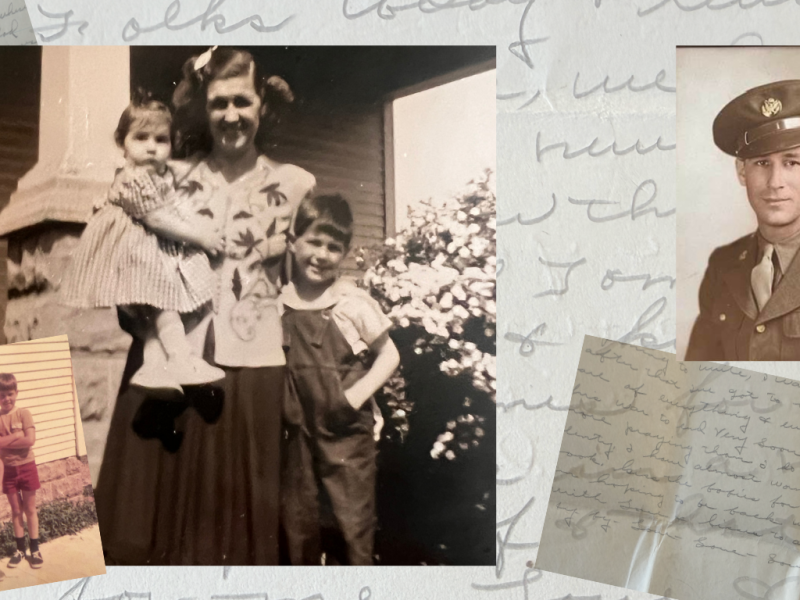
My Grandpa Was Killed in World War II. I Met Him Through His Letters Home
Gina Wolf’s grandfather died before she was born. His letters sent to her grandmother from Europe during World War II made it possible to know what kind of man he was.

TARA FLETCHER: Women are often trapped by abusive partners
Today, and every day after, in the United States, three women will be murdered by their significant other.
CARLTON FLETCHER: Great — and maybe not so great — expectations
During his heyday, mostly in the ‘80s and ‘90s, Lewis Grizzard was one of, if not the, most celebrated columnists in America.
