
As the football transfer portal swells, high school players are left behind
There was no yelling when Jake McCrae talked about college football. No theatrics. No finger-pointing.
ALBANY — There was no yelling when Jake McCrae talked about college football. No theatrics. No finger-pointing.
That restraint made what he said harder to ignore.
McCrae has spent 30 years roaming football sidelines, including time at the University of Florida under Jim McElwain. He has seen systems evolve, schemes recycle and trends come and go. What he is watching now, he believes, is not evolution at all.
It is adults choosing convenience over responsibility — and calling it progress.
The transfer portal and the money flowing through it have reshaped college football, often in ways that don’t show up on television graphics or recruiting rankings. McCrae sees it most clearly at the high school level.
His Deerfield-Windsor Knights just finished second in the state in GIAA Class AAA, losing in the championship game. His quarterback, Lane Sceals, threw for 3,375 yards, 37 touchdowns with just five interceptions as a senior — more passing yards than any high school player in Georgia.
He has size. He has film. He has leadership. He has character.
He has zero Division I offers.
His top receiver, Gabe Daniel, caught 99 passes for 1,367 yards and 15 touchdowns — fourth-most receiving yards in the state.
He also has zero Division I offers.
“Before the portal, I would have 30 college coaches come by wanting to talk to kids,” McCrae said. “This year I had four. They’re not using high school football as the farm system anymore. The portal is where they’re going.”
McCrae has the contacts. He has made the calls. He has sent the film. The silence remains.
That silence exists alongside a portal now swollen with roughly 4,500 Division I players — older, stronger, more experienced athletes already inside the system.
“I’ve always told my guys only the top one percent get to play Division I football,” McCrae said. “Now you’re adding 4,500 players who are already in that group back into the mix. Where does that leave the 18-year-old kid?”
It leaves him outside the door — while adults insist the system is working.
This is not a talent problem. McCrae has coached too long to mistake one for the other. Lane Sceals is still exactly the kind of player college coaches say they want. Which raises an uncomfortable question about whether they are being honest anymore.
“In this win-now mentality, coaches don’t have time to develop a Lane Sceals,” McCrae said. “They can go get a 20-year-old with college experience from the portal and try to save their job.”
That sentence explains modern college football more clearly than any mission statement.
This is no longer about development. It is about fear.
College coaches are operating in survival mode — dog-eat-dog, job-to-job, year-to-year. Nobody is willing to put dinner on the table in the hands of an 18-year-old when a ready-made transfer is sitting there, plug-and-play.
“The pressure to win now, even in places that have never won, is unreal,” McCrae said. “Fan bases with unrealistic expectations drive it. Money drives it.”
College football still markets itself as education and opportunity. In practice, it has quietly removed opportunity from the youngest players — while congratulating itself on efficiency.
The get-rich-quick scheme used to be something college athletics claimed to resist. Now, McCrae argues, it is the foundation of the entire system.
“The whole reason you wanted to go to college has flipped on its head,” he said. “It’s disheartening for these kids.”
And it doesn’t stop at the Division I level.
McCrae said Division II programs are now waiting on portal players before offering high school seniors. Everyone is waiting. Everyone is hedging. Nobody wants to commit.
“I’ve got kids who would have had offers by now, and I can’t get a sniff,” he said. “These kids just want an opportunity to play football and get a college degree.”
Point University has offered Sceals and Daniel. Others have not. McCrae finds himself explaining a system where patience is preached, development is promised — and opportunity keeps getting deferred.
What troubles him most isn’t the chaos.
It’s the acceptance.
“Money is flowing hand over fist,” he said. “How can adults who say they care about college football look at this and say this is a good thing? Where are the dadgum adults?”
He paused.
“It’s greed,” he said. “And the ones paying for it are the kids.”
McCrae doesn’t expect the transfer portal to disappear. He doesn’t expect college football to correct itself without intervention. But he believes the sport is sprinting toward something it won’t recognize when it arrives — a system where development is inefficient, loyalty is optional and education is reduced to a slogan.
High school football will keep producing players ready to be developed.
College football, meanwhile, has decided development takes too long — and has made its peace with who gets left behind.
Author

Related Articles
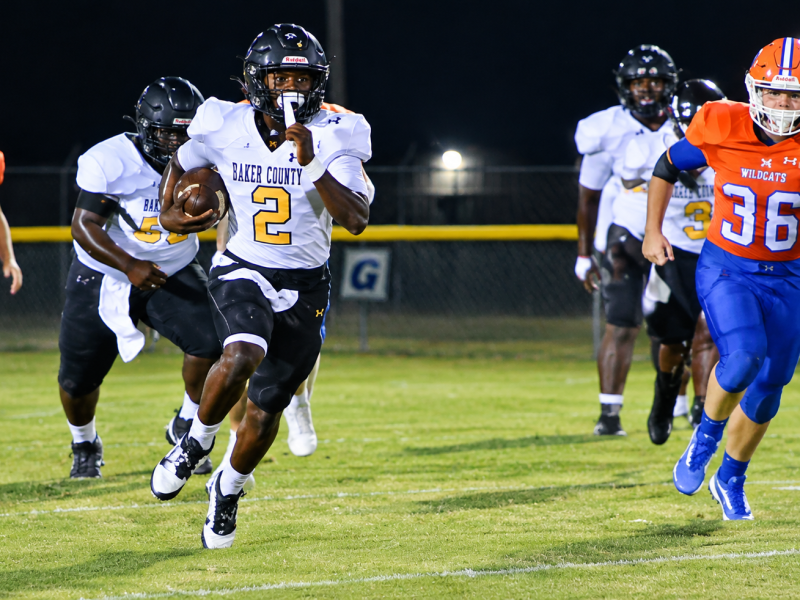
Taylor Sanders rewriting record book while helping change Baker County football
Terrance King has been around Baker County football from the beginning.
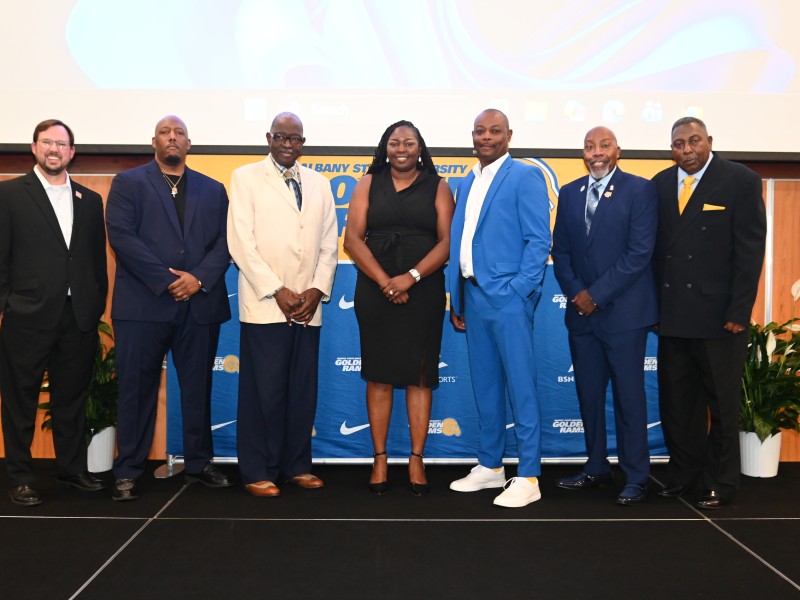
Albany State honors 2026 Hall of Fame class
Albany State University celebrated generations of athletic achievement Friday night, honoring former Golden Rams who left their marks as athletes, coaches and community leaders while also recognizing a championship team from Darton State College.
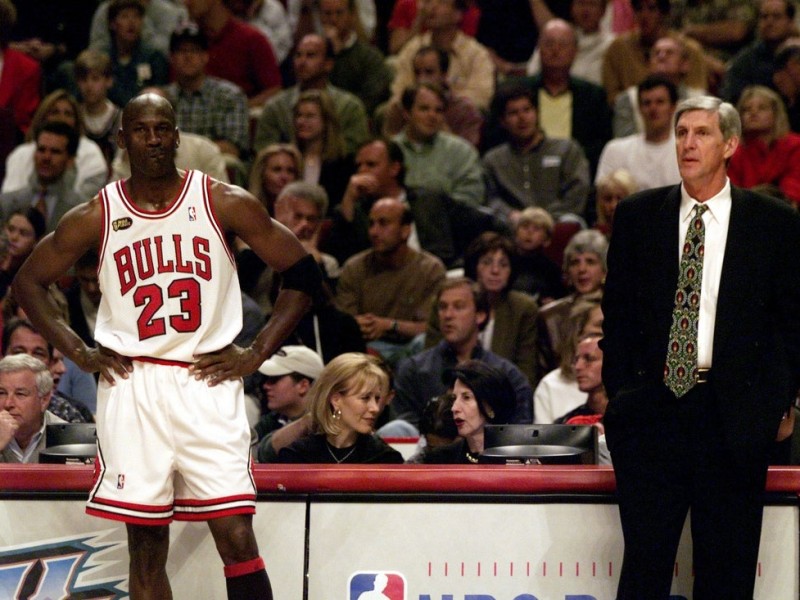
Michael Jordan’s ‘Last Dance’ jersey sells for record $12.26M
Michael Jordan’s jersey from Game 3 of the 1998 NBA Finals sold for $12.26 million on Tuesday, breaking the record for a piece of Jordan memorabilia.
